Best Mirakl Alternatives in 2026 (Top-Rated Competitors Reviewed)
Compare the best Mirakl alternatives for 2026. See features, pricing, and use cases for Carro, Marketplacer, Logicbroker, Rithum, and more. Find your fit.

Key Takeaways
- What is Mirakl: Mirakl is a well-known SaaS platform that enables businesses to launch and manage third-party online marketplaces.
- Mirakl's Limitations: While powerful, Mirakl's significant costs, potential for vendor lock-in, and reliance on separate ecommerce platforms lead many to seek alternatives.
- Best Mirakl Alternative: For businesses prioritizing ease of use, rapid product expansion, and cost-efficiency, Carro stands out as a leading dropship and marketplace infrastructure platform. It is the only alternative on this list purpose-built for inventory-free assortment growth, with a hand-matched supplier network, automated order routing, and usage-based pricing that scales with revenue rather than penalizing it.
- What Sets Carro Apart: Carro is the only platform on this list that combines a hand-matched supplier network of 1.5M+ products with automated order routing, real-time sync, and structured settlement, all from a single layer above your existing storefront.
- How to Choose: Focus on three factors: how fast you need to go live, whether you need a curated supplier network or only supplier management tooling, and whether your pricing tolerance is usage-based or enterprise-contract.
Mirakl Alternatives at a Glance
| Platform | Pros | Cons | Key Features | Pricing Starts |
|---|---|---|---|---|
| Carro | Go-live in weeks, usage-based pricing tied to revenue, curated 1.5M+ product supplier network, unified dropship and marketplace infrastructure, white-glove onboarding support | Does not support the sale of digital goods, services, or subscription-based products. Strongest fit is US-based retailers. | Hand-matched supplier network, automated order routing, real-time inventory sync, multi-platform integrations (Shopify, Magento, BigCommerce, WooCommerce, EDI/SFTP) | 5% of sales (Standard); custom for Growth/Enterprise |
| Marketplacer | Seamless third-party seller integration, highly scalable for enterprise needs | Can require technical expertise for implementation. Pricing not publicly available. | Seller onboarding, catalog management, pre-built connectors for Shopify Plus, BigCommerce, Salesforce Commerce Cloud, Adobe Commerce | Custom (contact vendor) |
| Logicbroker | AI-powered product discovery, real-time order tracking, and advanced automation. Predictable annual subscription with no transaction fees. | Onboarding may be complex for smaller teams. Enterprise-oriented pricing. | AI-driven vendor onboarding, automated order routing, 200+ integrations, EDI/API/XML/CSV/JSON support | ~$3,000/year (custom quotes) |
| Rithum | Centralized inventory, order, and ad management across 420+ channels. Massive commerce network ($50B+ GMV). | May be overly complex for simple marketplace models. Users report significant post-merger price increases. | Multi-channel listing management, repricing tools, retail media advertising, AI-driven supplier discovery | Custom (contact vendor) |
| Rokt Catalog | Extremely fast AI-driven onboarding, curated product catalog of 1.2M+ products | Primarily focused on post-purchase and transaction moments, not full marketplace operations | AI-automated product onboarding (90%+ automation), transaction-moment merchandising, premium brand catalog | Custom (contact vendor) |
| Virto Commerce | Strong B2B features, composable and scalable architecture. Open-source Community Edition available. | Higher initial cost and complexity. Requires .NET/C# development expertise. | API-first headless architecture, contract pricing, multi-tier approvals, bulk ordering, 800M+ SKU capacity | 0.5% of GMV or $2/order |
| Shopify | Affordable, massive app ecosystem, and exceptionally user-friendly | Native marketplace functionality is limited without apps | Storefront builder, Shopify Payments, 8,000+ App Store (including Carro), POS for omnichannel | $39/month (Basic) |
| Adobe Commerce | Comprehensive ecommerce suite, robust analytics, and strong support | Can be expensive and resource-intensive for small businesses | Advanced catalog management, marketing/analytics suite, marketplace extension, multi-store management | Custom (contact vendor) |
What is Mirakl?
Mirakl is a global leader in marketplace software, providing enterprise-level businesses with the technology to launch and scale a third-party seller model. Its platform is designed to manage everything from seller onboarding and catalog management to order processing and payments. Companies like Macy's, Kroger, and Airbus use Mirakl to expand their product assortments without holding physical inventory.
The platform excels at providing a scalable infrastructure and a wide range of integrations. However, its strengths also come with trade-offs. The high cost, GMV-based pricing model, and the need to integrate it with a separate ecommerce storefront lead many businesses to explore Mirakl alternatives that offer more flexibility or a better total cost of ownership.
Mirakl's pricing starts at $699/month for the Growth plan and $2,299/month for the Pro plan, with additional GMV-based transaction fees on top. Independent analyses estimate that total annual platform fees can reach ~$90,000/year before transaction costs are factored in. For businesses processing significant GMV, these costs compound quickly, making cost structure one of the primary reasons teams evaluate Mirakl competitors.
Why Look for Mirakl Alternatives?
While Mirakl offers a robust solution, its model isn't the right fit for every business. Common reasons for seeking alternatives to Mirakl include:
- High Costs: Mirakl's pricing, which often scales with your gross merchandise volume (GMV), can become prohibitively expensive as your marketplace grows. The Growth plan starts at $699/month, the Pro plan at $2,299/month, and enterprise contracts are negotiated individually – all before GMV-based transaction fees.
- Vendor Lock-In: As a proprietary SaaS platform, customization is limited. You operate within Mirakl's framework, which can restrict unique business models or deep integrations.
- Dependency on Other Platforms: Mirakl is not an all-in-one ecommerce solution. You still need a separate platform like Shopify, Adobe Commerce, or Salesforce for your storefront, which adds complexity and cost.
- Complex Onboarding: Implementing Mirakl, especially for complex B2B use cases, can be a lengthy and resource-intensive process requiring significant technical support. Multiple user reviews cite a learning curve that stretches beyond a month before teams can use the platform effectively.
- Support Variability: While Mirakl provides live online sessions, webinars, and documentation, user reviews note that the interface is not always intuitive. Newer users report needing substantial training before they can navigate the platform independently.
What Happens After You Sign With Mirakl
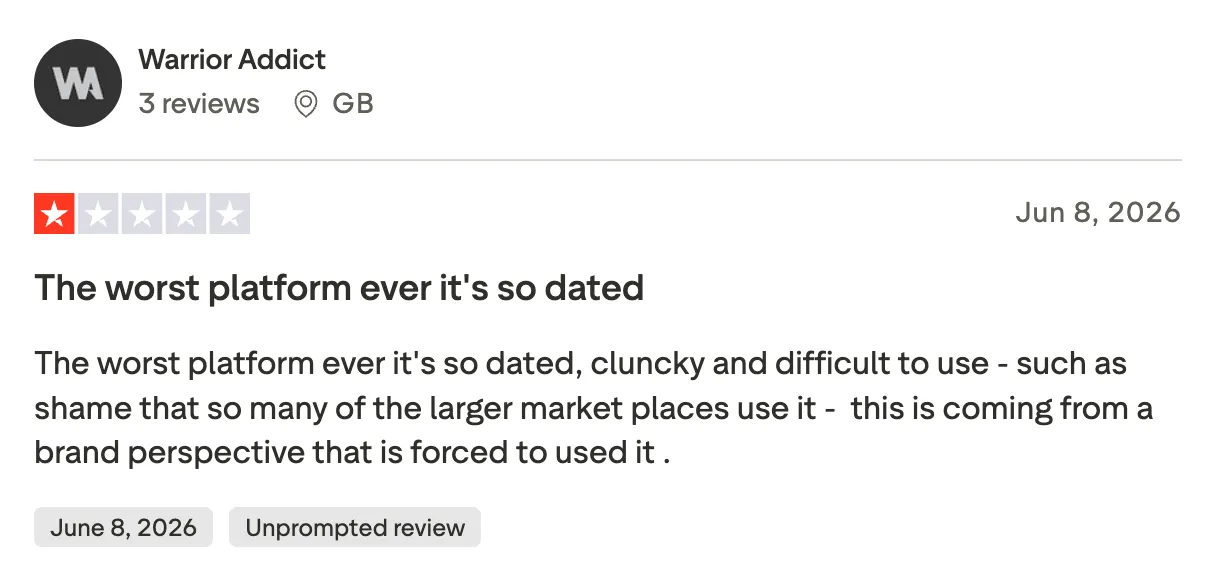
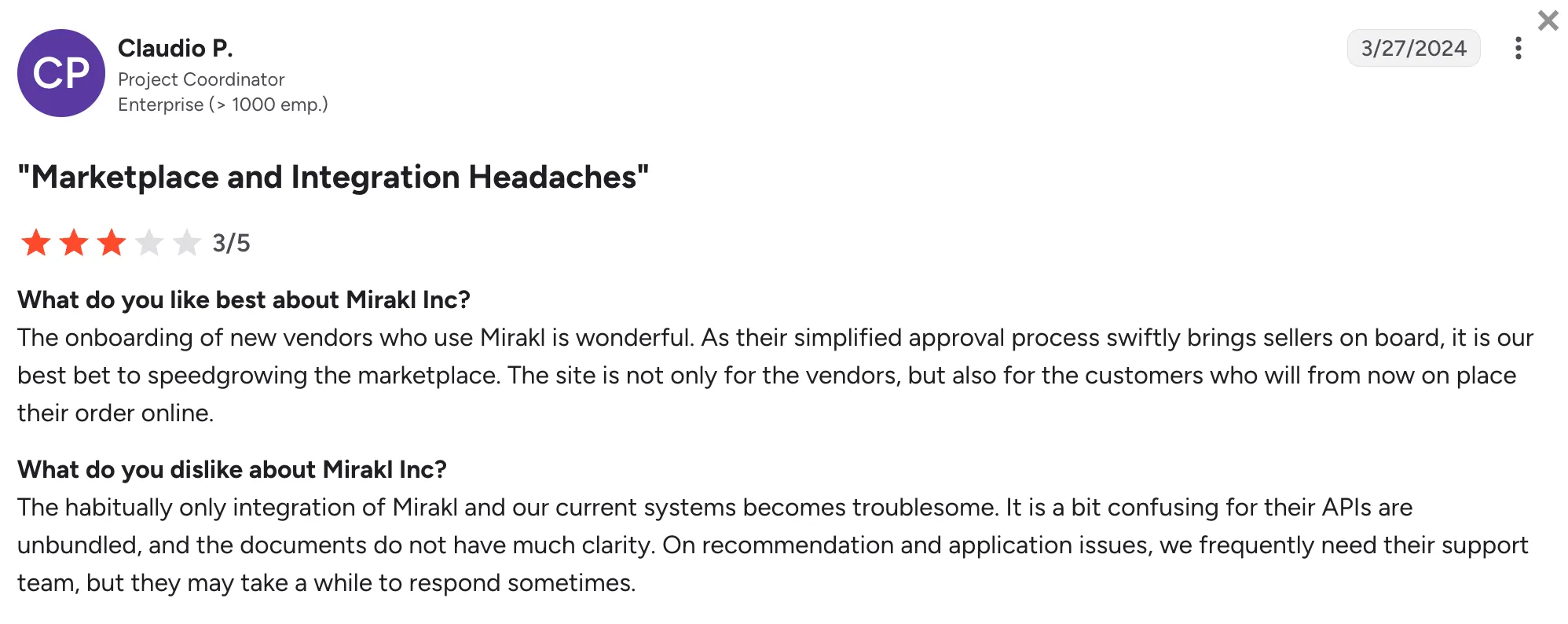
When looking at real user feedback across major review platforms like G2, Capterra, and Trustpilot, a pattern emerges. Three concerns come up repeatedly from teams that have implemented and operated Mirakl.
Pricing that doesn't always match what you signed up for
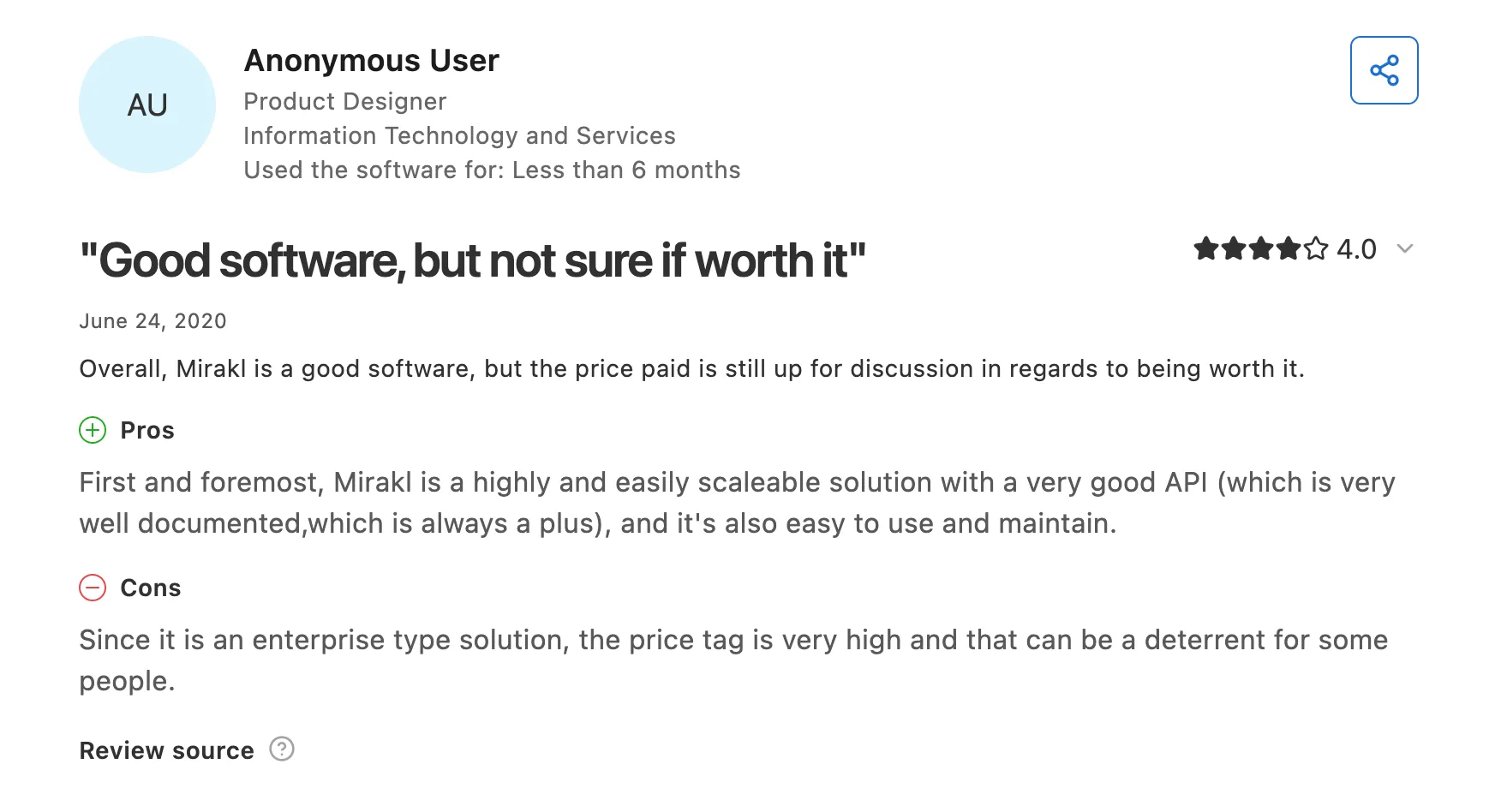
Several reviewers describe Mirakl's enterprise pricing as a deterrent, and the cost surprises don't stop after onboarding. One reviewer on Capterra noted that while the platform is scalable and well-documented, the enterprise price tag remains a barrier – calling it "very high" and "a deterrent for some people." On Trustpilot, a seller reported being charged an additional €400/month because Mirakl classified their catalog as 50,000 SKUs when only 3,500 were being pushed through the platform.
A learning curve that stretches longer than expected
Mirakl's interface is powerful, but reviewers across Capterra and G2 consistently flag that it is not intuitive out of the box.
One reviewer described it as having a learning curve of "more than 1 month." Another on G2 noted that Mirakl's APIs are "unbundled" and the documentation "does not have much clarity," making integration more difficult than anticipated. A Capterra reviewer summarized it as a platform that is "not the most intuitive software, but it's learnable."
Support tickets that go unanswered for weeks
On Trustpilot, a reviewer cited a specific support ticket that went unanswered for weeks, with no one from Mirakl responding despite repeated follow-ups. On G2, a reviewer described needing to "frequently need their support team, but they may take a while to respond sometimes".
This pattern - good product, inconsistent support – appears across enough independent reviews to flag it as a real concern for teams evaluating alternatives to Mirakl software.
Top Mirakl Alternatives for 2026: In-Depth Review & Comparison
Exploring different marketplace solutions is key to finding a platform that aligns with your budget, technical resources, and long-term goals. Here are the top Mirakl alternatives to consider for 2026.
1. Carro
Overview
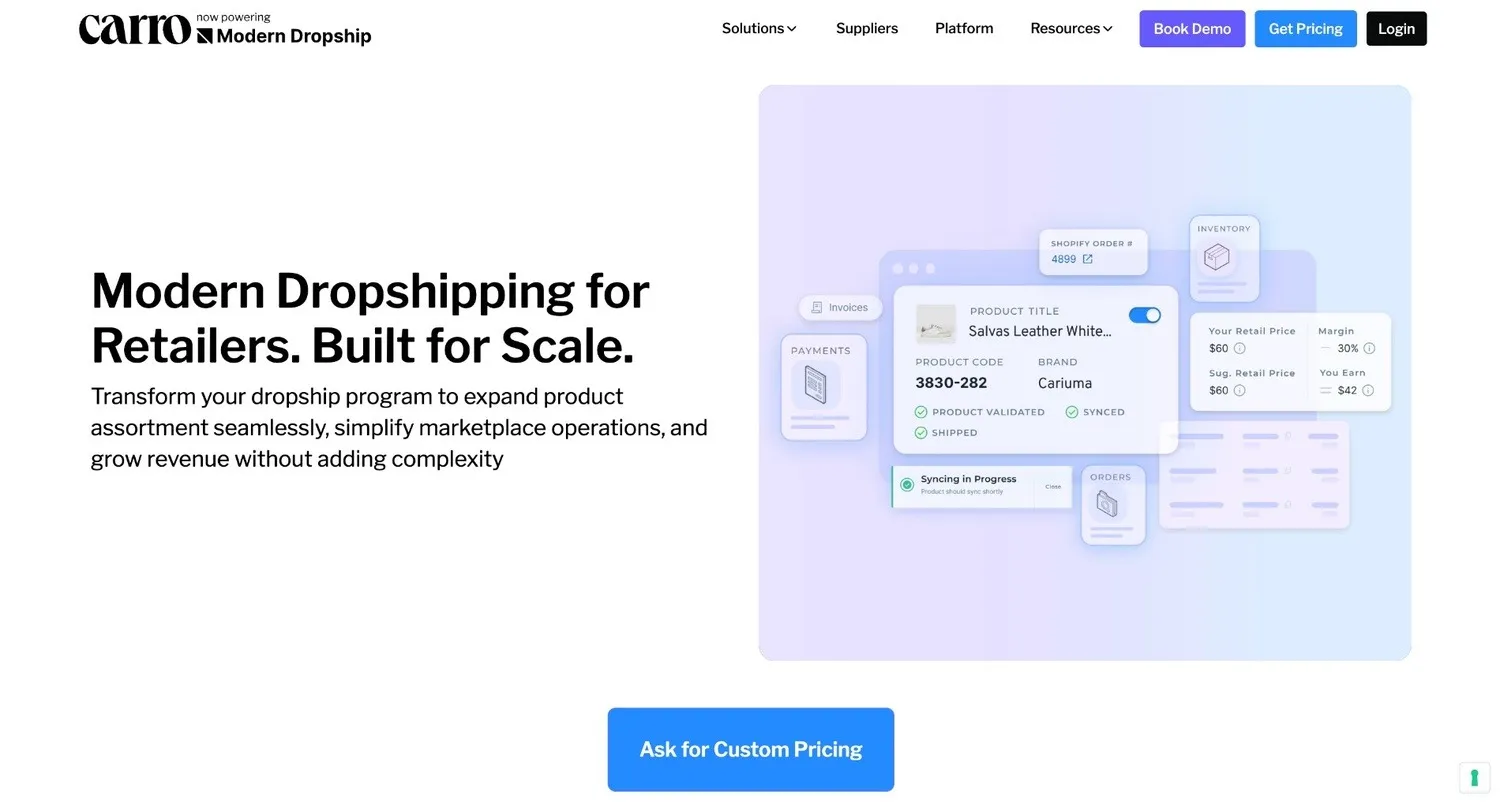
Carro is a dropship and marketplace infrastructure platform built for retailers looking to expand their product catalog without inventory risk or operational sprawl. Unlike Mirakl, which operates as a marketplace layer that sits on top of a separate ecommerce platform, Carro integrates directly into the storefronts retailers already run – Shopify, Magento, BigCommerce, and WooCommerce – plus EDI, API, SFTP, and CSV connections for enterprise partners.
The platform manages the full supplier lifecycle: onboarding, catalog ingestion, pricing rules, inventory syncing, order routing, fulfillment tracking, and automated payouts. Carro's account managers hand-match retailers with complementary brands from a network of 1.5M+ products, so what goes online is selected for fit rather than dumped from a generic catalog.
Carro now powers Modern Dropship, serving as the infrastructure behind distributed retail operations where inventory lives with brands and distributors but the customer experience stays centralized. Retailers using Carro have reported up to 3.5x revenue growth, up to 180% AOV growth, and up to 3x increase in catalog size.
Ideal For
- Established retailers modernizing legacy dropship programs and replacing manual supplier workflows
- Online and pure-play marketplace operators scaling their supplier networks without adding headcount
- Mid-market DTC brands seeking curated retailer partnerships aligned with their positioning and audience
- Ecommerce directors and heads of merchandising testing new categories without inventory exposure
- Brand suppliers looking to expand distribution through trusted retail partners without wholesale friction
Top Features
- Hand-matched supplier network: Account managers connect retailers with complementary brands based on category fit, price point, and audience alignment – not algorithmic matching from an unfocused catalog.
- Automated order routing and settlement: Orders for partner products route to the correct supplier automatically. Payouts process immediately through Stripe, with full reconciliation and reporting.
- Real-time inventory and pricing sync: Product data, stock levels, and pricing update in real time across connected storefronts, reducing oversell risk and manual catalog maintenance.
- Multi-platform integrations: Native connectors for Shopify, Magento, BigCommerce, and WooCommerce, plus EDI, SFTP, API, and CSV for enterprise and distributor partners.
- White-glove onboarding support: Carro's team handles technical integration and partner enablement. Many clients launch without needing internal developer resources.
Why We're the Best Mirakl Alternative
Mirakl charges enterprise rates, requires a separate ecommerce platform, and takes months to implement. Carro replaces that entire stack with a single infrastructure layer that plugs into the storefront you already run. Where Mirakl gives you tools to manage suppliers, Carro gives you both the tools and the suppliers – hand-matched by account managers from a curated network.
Pricing is usage-based (5% of sales on the Standard plan), so cost tracks the revenue the program creates rather than penalizing growth the way GMV-based pricing does. Most teams go live in weeks, not quarters.
Pros
- Usage-based pricing with no upfront infrastructure investment – cost rises only as revenue grows
- Go-live in weeks with pre-built integrations and structured onboarding workflows
- Curated supplier network of 1.5M+ products with human-led brand matching, not generic catalog dumps
- Full supplier lifecycle management from a single platform: onboarding, sync, routing, fulfillment, payouts
- Hands-on support team that handles technical integration so internal teams stay focused on growth
Cons
- Does not support digital goods, services, or subscription-based products
- Strongest fit is US-based retailers and brands – international coverage is growing but not as deep as Mirakl's global enterprise network
- Not designed for highly regulated B2B procurement workflows with contract pricing, approval hierarchies, or bulk ordering
Pricing
Carro's Standard Plan charges 5% of sales with unlimited transactions. It includes Shopify, Magento, BigCommerce, and WooCommerce integrations plus end-to-end dropship automation.
The Growth Plan adds autonomous merchandising, a hand-matched supplier network, priority support, automated order routing, real-time sync, and expanded catalog capabilities. Enterprise pricing is custom.
Suppliers pay nothing to join – they set a revenue split with retailer partners and receive their full cut immediately via Stripe. All plans include full platform access, automated payments, basic performance insights, and access to the 1.5M+ product network.
Final Verdict
Carro is the best overall alternative to Mirakl for retailers and marketplace operators that want to grow assortment and revenue without inventory exposure or enterprise-contract overhead.
It combines supplier discovery, onboarding, operations, and settlement in one platform – something no other Mirakl alternative on this list fully replicates. Teams that need heavy B2B procurement features (contract pricing, approval chains) or support for digital goods should look at Virto Commerce or purpose-built B2B tools instead.
2. Marketplacer
Overview
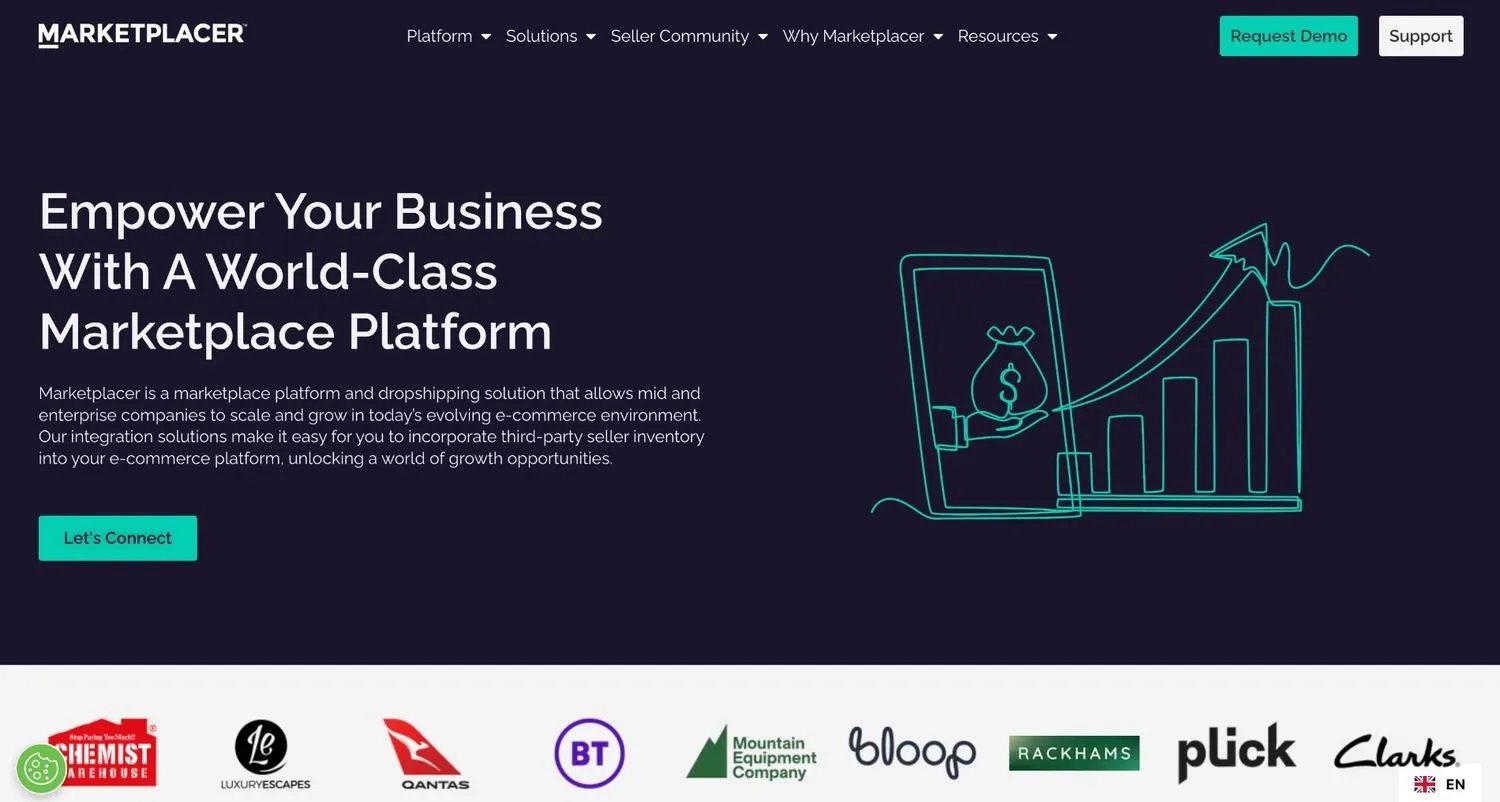
Marketplacer offers a powerful marketplace and dropshipping solution designed for mid-market and enterprise companies. It focuses on enabling businesses to add third-party seller inventory to their existing ecommerce platform.
The platform provides seller onboarding tools, catalog management, and pre-built connectors for major ecommerce systems like Shopify Plus, BigCommerce, Salesforce Commerce Cloud, and Adobe Commerce.
Founded in Australia, Marketplacer has built a reputation for deep ecommerce integrations and flexibility in supporting diverse marketplace models across retail, grocery, B2B, loyalty programs, and media verticals. The platform operates on a custom pricing model that includes implementation fees, ongoing subscriptions, and transaction-based components.
Ideal For
- Mid-market and enterprise retailers adding a marketplace layer to an existing ecommerce storefront
- Companies running multi-category operations across retail, grocery, B2B, or loyalty verticals
- Organizations that already have their own supplier relationships and need infrastructure to manage them
Top Features
- Seller onboarding and catalog management: Structured workflows to bring new vendors online and manage product data, pricing, and inventory across sellers.
- Pre-built ecommerce connectors: Integrates with Shopify Plus, Adobe Commerce, BigCommerce, Salesforce Commerce Cloud, and commercetools without requiring a full replatform.
- Commission and payment management: Handles revenue splits, payment processing, and shipment tracking across multi-vendor transactions.
Why It's a Strong Mirakl Alternative
Marketplacer allows you to launch a curated marketplace quickly, expanding your product range without needing to replatform or manage inventory. It is one of the strongest Mirakl competitors for organizations that already have supplier relationships and need a technical layer to manage them. Reviewers consistently rate it highly (4.9/5 on Capterra), praising the team's marketplace expertise and willingness to provide strategic guidance beyond software support.
Pros
- Deep integrations with major ecommerce platforms, reducing replatform risk
- Strong seller onboarding workflows and catalog management tools
- High customer satisfaction ratings and responsive support team
- Flexible architecture that supports multiple marketplace models
Cons
- Pricing is not public – every deal requires a custom sales process, making comparison difficult
- Can require technical expertise for implementation, especially for complex taxonomies
- Does not include a curated supplier network – you bring your own partners
Pricing
Marketplacer does not publish pricing. Contracts are custom and typically include a one-time implementation fee, an ongoing subscription, and transaction-based or GMV-based fees. Contact Marketplacer for a tailored quote.
Final Verdict
Marketplacer is a strong contender for established businesses that want to add a marketplace layer on top of their current ecommerce setup to test new categories or scale their offerings.
It is not the right choice for retailers that need help finding suppliers – Marketplacer manages your partners, but it does not source them for you. Teams seeking a curated network and faster time-to-value will find Carro a better match.
3. Logicbroker
Overview
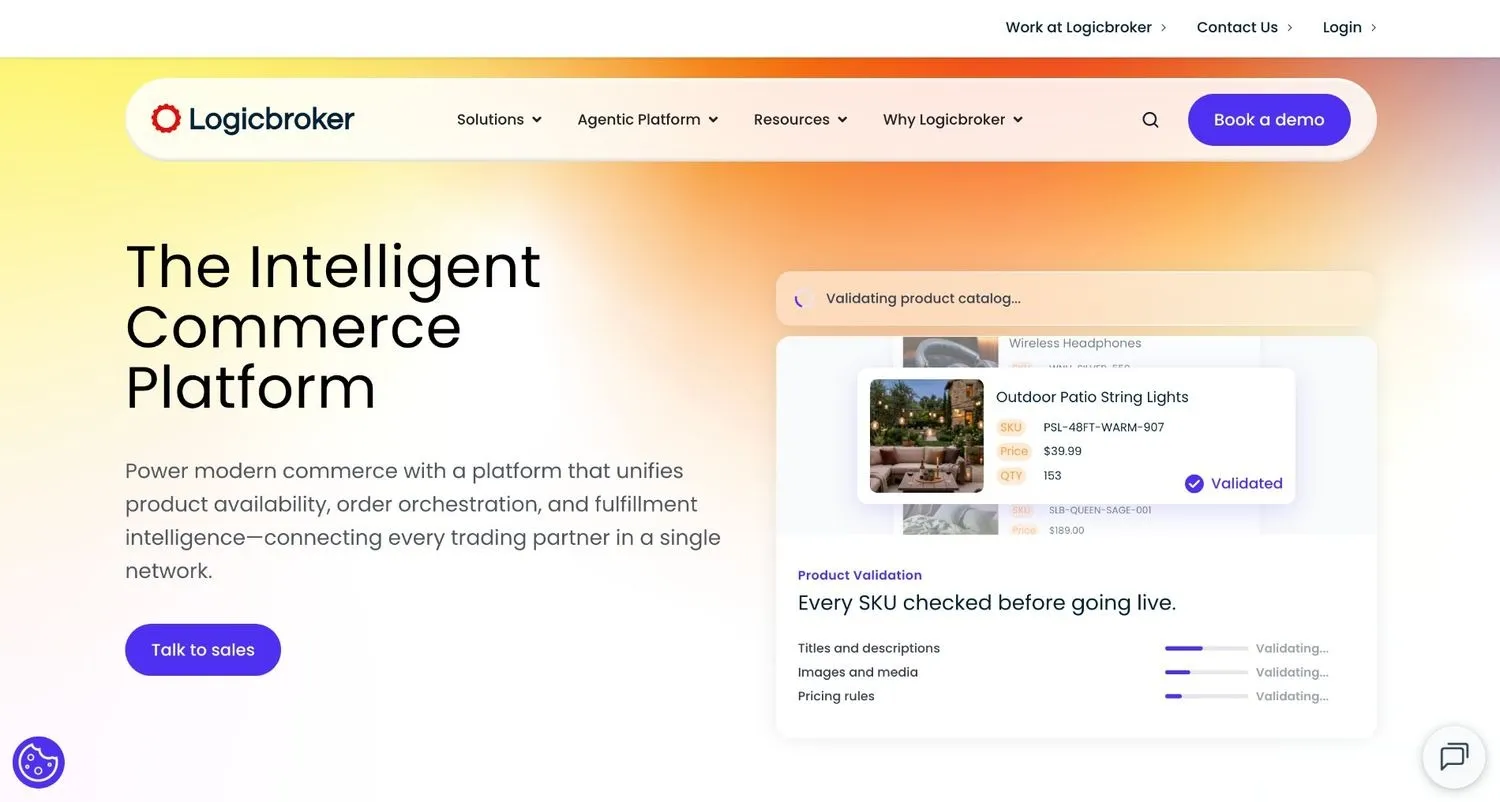
Logicbroker positions itself as an "Agentic Commerce Orchestration Engine," using AI to modernize multi-vendor commerce. The platform connects retailers, brands, and B2B organizations with a focus on frictionless connections and data-driven insights.
Its core offerings include AI-powered product discovery, adaptive integrations that connect to any system, real-time order tracking, and predictive exception alerts.
Trusted by enterprise names like Samsung, Walgreens, and Home Depot, Logicbroker powers over $10 billion in GMV annually. The platform supports EDI, API, XML, CSV, and JSON integrations through a single RESTful API endpoint, making it flexible across partner technical setups.
Ideal For
- Enterprise retailers managing large, distributed supplier networks across multiple fulfillment models
- Brands and distributors needing structured EDI connectivity with major retail partners
- B2B organizations with complex supply chain requirements and compliance needs
Top Features
- AI-powered product discovery and onboarding: On-demand supplier onboarding automates the majority of setup work, getting new vendors live in under an hour.
- Automated order routing and optimization: Evaluates each order against real inventory, SLAs, and cost to select the best fulfillment path, then monitors execution and adapts on exceptions.
- Multi-format integration support: Connects trading partners regardless of their technical setup – EDI, API, XML, CSV, JSON – through a single RESTful API endpoint.
Why It's a Strong Mirakl Alternative
Logicbroker excels at automating the entire dropship and marketplace process, from onboarding new vendors in days to providing deep visibility into supply chain performance.
Unlike Mirakl's GMV-based model, Logicbroker charges a predictable annual subscription with no transaction fees – no per-order charges, no percentage of revenue. This platform is built for enterprises seeking advanced automation, predictive analytics, and a high degree of control over their entire supply chain network.
Pros
- Predictable annual subscription pricing with zero transaction fees
- Enterprise-grade integrations: EDI, API, XML, CSV, JSON through one endpoint
- AI-driven onboarding that gets suppliers live in under an hour
- Trusted by major enterprises (Samsung, Walgreens, Home Depot) processing $10B+ GMV
Cons
- Enterprise-oriented pricing and sales process – not accessible for SMBs or early-stage retailers
- Vendor onboarding can be tedious for non-technical suppliers
- Some features lack thorough documentation, extending the learning curve
- Does not include a curated supplier network – you source your own partners
Pricing
Logicbroker charges a predictable annual subscription with no transaction fees. Third-party sources indicate pricing starts around $3,000/year, but most enterprise contracts are custom. Contact Logicbroker for a quote tailored to your integration scope and partner volume.
Final Verdict
Logicbroker is the right choice for enterprise retailers and brands managing complex, multi-vendor supply chains that need deep EDI connectivity, AI-driven orchestration, and predictable costs. It is not designed for mid-market retailers looking to quickly expand catalog with new supplier partnerships – those teams will find Carro's curated network and faster go-live a better fit.
4. Rithum
Overview
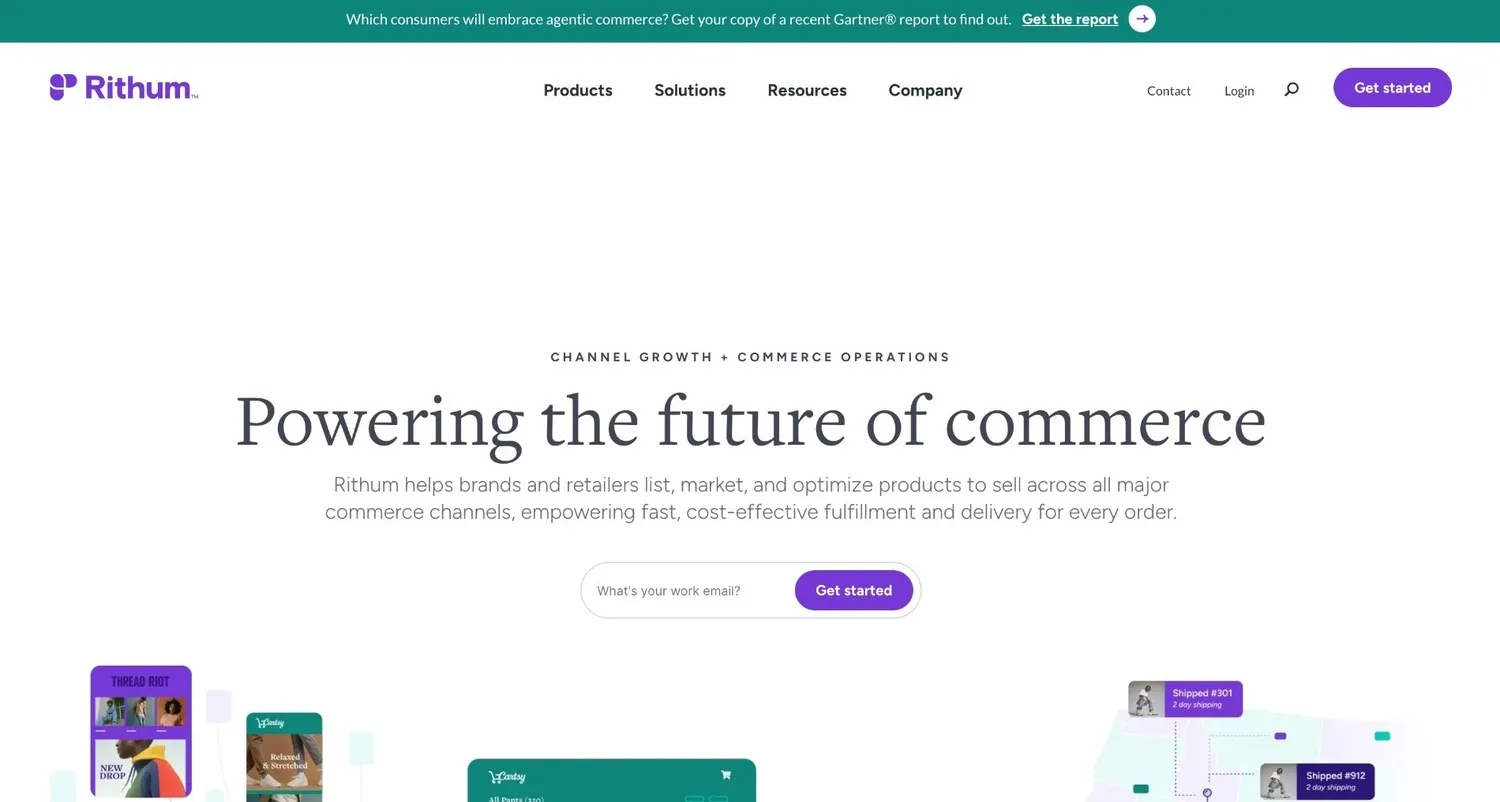
Rithum (formerly CommerceHub and ChannelAdvisor) is a massive commerce network that helps brands and retailers manage their entire ecommerce journey, from product listings to fulfillment. It allows brands to manage product content across over 400 marketplaces, centralize inventory, and manage orders. For retailers, it enables dropshipping and the creation of private marketplaces with select brand partners.
The company connects over 40,000 brands and retailers, processing $50 billion+ in GMV annually. Its key advantage is the sheer scale of its network and its ability to simplify operations across countless sales channels. It also offers retail media advertising tools for driving visibility across marketplace channels.
Ideal For
- Large brands selling across dozens or hundreds of marketplaces and retail sites
- Enterprise retailers building private marketplaces with curated brand partners
- Multi-channel operations teams managing listings, inventory, and fulfillment at high volume
Top Features
- Multi-channel listing management: Manage product content, pricing, and inventory across 420+ marketplaces from one dashboard, with automated repricing and feed mapping.
- Private marketplace infrastructure: Build curated marketplaces with select brand partners, including supplier discovery, onboarding, and fulfillment orchestration.
- Retail media advertising tools: Built-in tools for running advertising campaigns across marketplace channels to drive visibility and sales.
Why It's a Strong Mirakl Alternative
Rithum is best for large brands and retailers managing complex, multi-channel operations who need a single platform to unify listings, inventory, and fulfillment.
No other Mirakl alternative on this list connects to 420+ channels. For brands that need to syndicate product data and manage orders across dozens of marketplaces simultaneously, Rithum provides unmatched reach.
Pros
- Massive commerce network: 420+ channels, 40,000+ brands, $50B+ GMV annually
- Centralized dashboard for managing listings, inventory, orders, and advertising across channels
- Strong automation for product syndication, repricing, and feed optimization
- AI-driven supplier discovery for expanding assortment
Cons
- Pricing increased significantly after the CommerceHub merger – multiple users report 4–7x cost increases
- Rigid platform structure that requires adapting workflows to Rithum rather than the reverse
- Customer support quality has declined post-merger, according to user reviews
- May be overly complex for teams focused solely on marketplace or dropship operations
Pricing
Rithum does not publish pricing. Contracts are custom and typically include a monthly subscription plus transaction fees. User reviews consistently describe the platform as expensive, especially after the CommerceHub/ChannelAdvisor merger. Contact Rithum for a tailored quote.
Final Verdict
Rithum fits large brands and enterprise retailers managing complex, multi-channel operations across hundreds of marketplaces. It is overkill for teams focused on expanding assortment through a curated supplier network, and its post-merger pricing increases make it a poor fit for cost-conscious retailers. Teams that want a focused marketplace tool rather than a full commerce network should look elsewhere.
5. Rokt Catalog
Overview
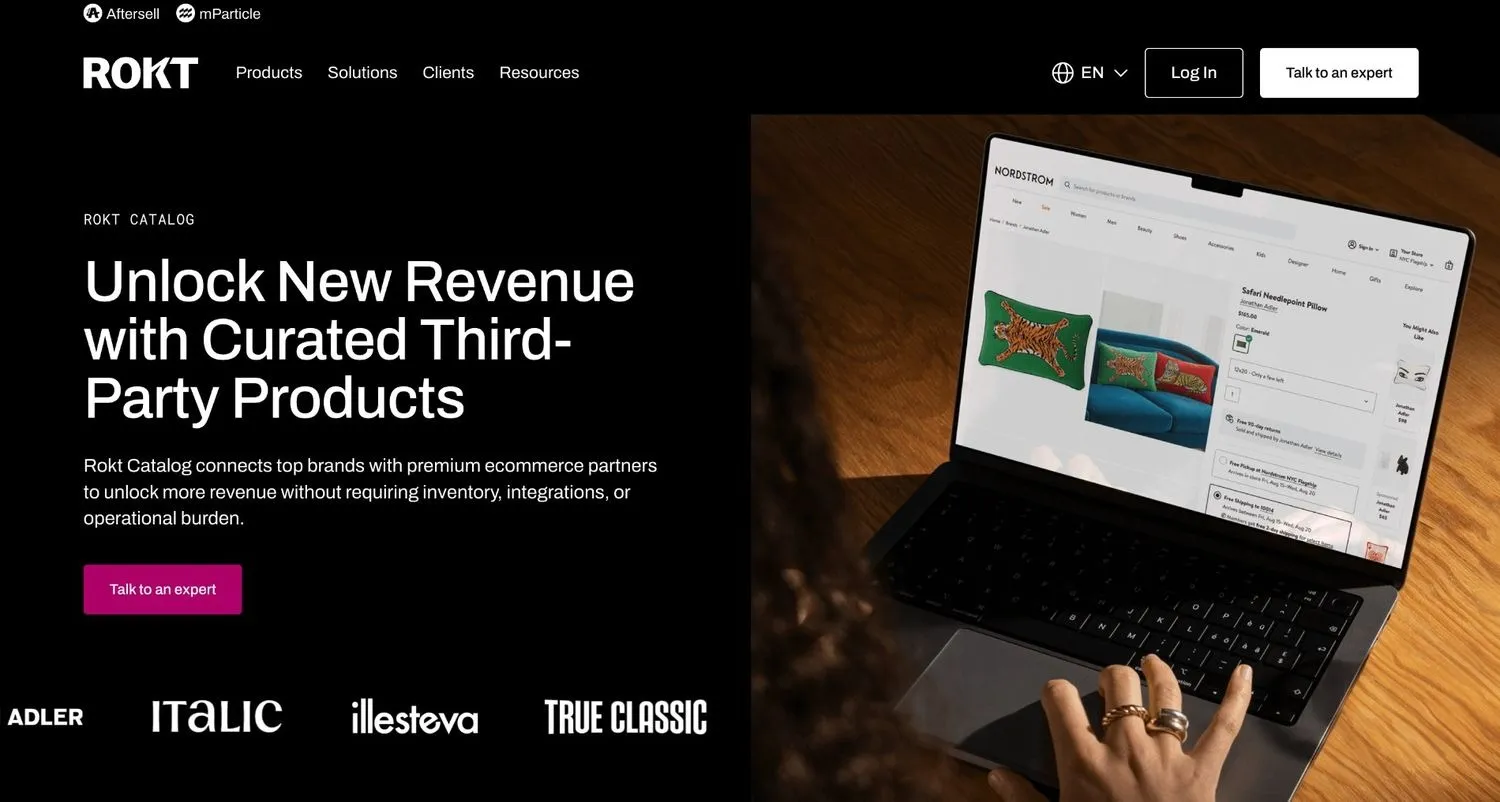
Rokt Catalog focuses on streamlining the onboarding of third-party products to be merchandised at key moments in the customer journey, particularly after the initial purchase. The platform uses AI to automate over 90% of product onboarding and data mapping, allowing sellers to go live in weeks instead of months. It offers a curated catalog of over 1.2 million products from premium brands.
Rokt Catalog's main selling point is speed. Fast onboarding and catalog activation drive SKU volume and sales velocity from day one.
Ideal For
- Retailers looking to generate incremental revenue from post-purchase pages (thank-you pages, confirmation flows)
- Ecommerce teams that want fast product onboarding without heavy technical lift
- Companies focused on transaction-moment monetization rather than full marketplace operations
Top Features
- AI-automated product onboarding: Automates over 90% of product data mapping and catalog activation, reducing setup time from months to weeks.
- Curated premium brand catalog: Access to 1.2M+ products from recognized brands, pre-vetted for quality.
- Transaction-moment merchandising: Surfaces relevant third-party products at high-intent moments in the customer journey, particularly after purchase.
Why It's a Strong Mirakl Alternative
Rokt Catalog is one of the strongest Mirakl alternatives for retailers that want speed above all else. Where Mirakl takes months to implement, Rokt's AI-driven onboarding gets products live in weeks. Its curated catalog eliminates the sourcing burden that comes with Mirakl's open-seller model. The trade-off is scope: Rokt Catalog is designed for transaction-moment merchandising, not full marketplace management.
Pros
- Fastest onboarding on this list – AI automates 90%+ of product data mapping
- Pre-curated catalog of 1.2M+ premium brand products
- Designed to generate incremental revenue from existing traffic without disrupting the core shopping experience
- Minimal technical lift required to activate
Cons
- Focused on post-purchase and transaction moments – not a full marketplace or dropship solution
- Limited control over supplier relationships compared to platforms like Carro or Logicbroker
- Pricing is not public (contact vendor)
- Not designed for catalog expansion as a core growth strategy
Pricing
Rokt Catalog pricing is not publicly disclosed. Contact the vendor for a custom quote based on transaction volume and product catalog scope.
Final Verdict
Rokt Catalog is an excellent solution for businesses that want to quickly unlock new revenue streams by merchandising relevant third-party products in post-purchase moments. It is not a replacement for Mirakl if you need full marketplace operations, supplier management, or catalog-level assortment expansion. Teams looking for comprehensive marketplace infrastructure should evaluate Carro or Logicbroker instead.
6. Virto Commerce
Overview
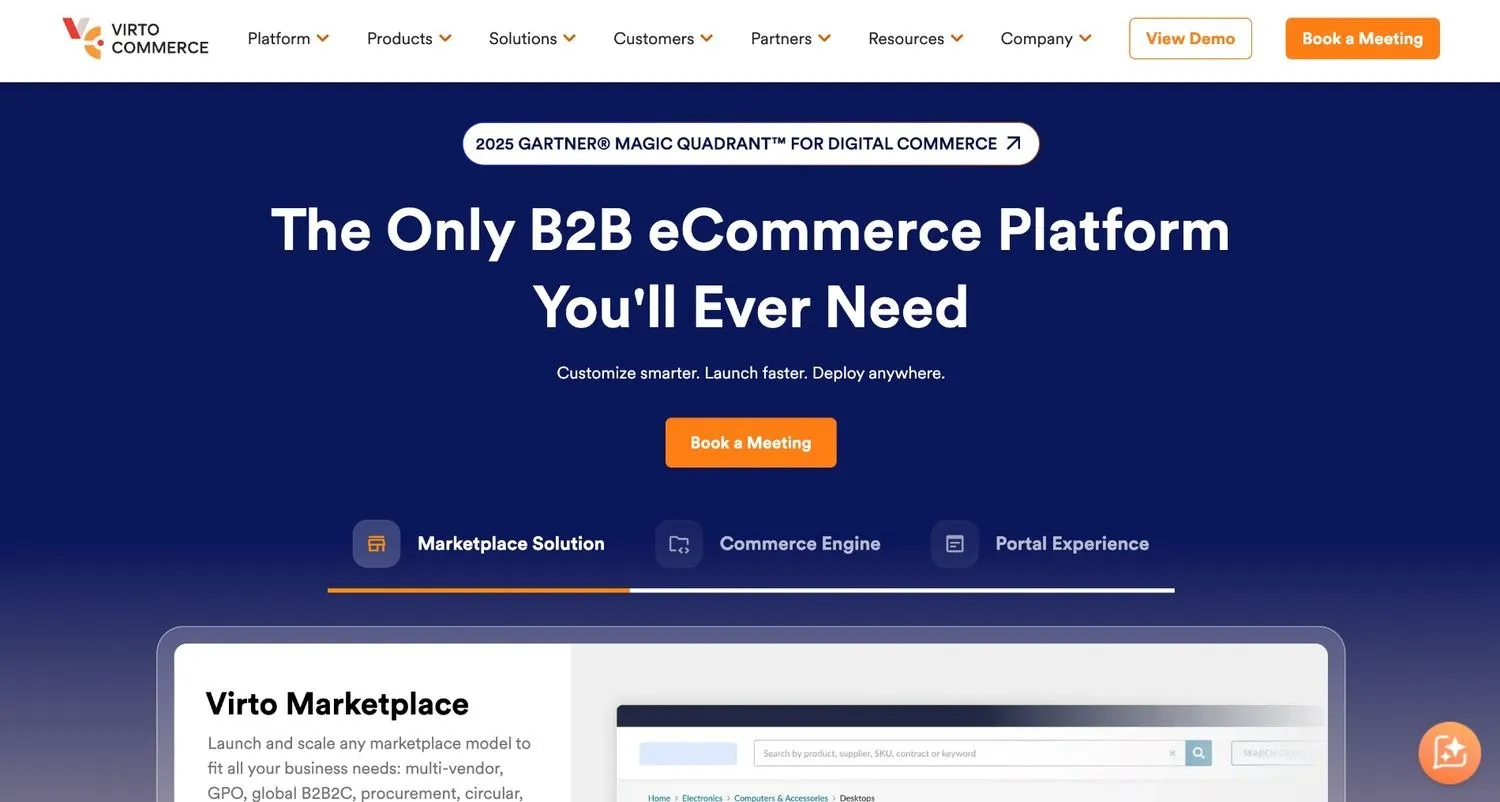
Virto Commerce is a composable ecommerce platform with strong B2B and marketplace capabilities. It is designed for medium-to-large enterprises that require a high degree of customization and scalability. Its API-first, headless architecture allows for unlimited integrations and flexibility, and it supports complex B2B functionalities like contract pricing, multi-tiered approvals, and bulk ordering.
Unlike Mirakl, Virto offers a fully integrated ecosystem that supports both complex ecommerce and marketplace operations without requiring a separate storefront. Trusted by companies like HEINEKEN, Bosch, and OMNIA Partners, Virto supports catalog management at a scale of 800M+ SKUs and offers flexible deployment options: cloud, private cloud, hybrid, or on-premises.
Ideal For
- B2B enterprises (manufacturers, distributors, group purchasing organizations) needing composable ecommerce with marketplace features
- Organizations requiring contract-based pricing, account hierarchies, and approval workflows
- Technical teams comfortable with .NET/C# development that want full code ownership and deployment flexibility
Top Features
- API-first headless architecture: 80+ packaged business capabilities that can be deployed, extended, or replaced independently as business needs evolve.
- B2B-first functionality: Contract pricing, bulk ordering, multi-tier account hierarchies, and approval workflows come built in.
- Flexible deployment: Cloud, private cloud, hybrid, or on-premises – choose the model that fits your compliance and infrastructure requirements.
Why It's a Strong Mirakl Alternative
Virto Commerce is one of the strongest Mirakl alternatives for B2B organizations. Unlike Mirakl, which requires a separate ecommerce storefront, Virto provides a fully integrated ecommerce + marketplace environment. This eliminates the dual-platform cost and complexity that drives many teams away from Mirakl. The Community Edition is open-source and free, making it accessible for technical teams that want to evaluate before committing.
Pros
- Fully integrated ecommerce and marketplace platform – no separate storefront required
- Deep B2B capabilities: contract pricing, approval chains, account hierarchies, bulk ordering
- Open-source Community Edition available for free
- Massive catalog scale (800M+ SKUs) and multi-region support
Cons
- Requires .NET and C# development expertise – not accessible to non-technical teams
- Higher initial setup cost and longer implementation timeline compared to SaaS alternatives
- Platform updates occasionally introduce breaking changes, per user reviews
Pricing
Virto Commerce offers two pricing models: a GMV-based model starting at 0.5% of GMV (with a 10K SKU base), or a volume-based model starting at $2 per order. Implementation costs vary by scope and complexity. The Community Edition is free and open-source. Contact Virto Commerce for enterprise pricing.
Final Verdict
Virto Commerce is a future-proof solution for large B2B or B2C enterprises needing a highly customizable and scalable platform for both direct sales and marketplace models. It is not a fit for retailers that need fast go-live, a curated supplier network, or operational simplicity – those teams will find Carro a better match.
7. Shopify

Overview
Shopify is the world's leading ecommerce platform, known for its user-friendly interface and extensive app ecosystem. While not a dedicated marketplace platform out of the box, it can be transformed into one with the right apps.
Shopify provides everything needed to run an online store, from storefront design to payment processing. Its App Store includes marketplace solutions like Carro that turn any Shopify store into a multi-vendor operation. It is affordable, easy to set up, and infinitely extensible through apps. This makes it an accessible starting point for businesses of all sizes.
Ideal For
- Small to mid-market merchants building their first online store or marketplace
- DTC brands that want a proven, user-friendly ecommerce foundation before adding marketplace capabilities
- Teams that prefer to assemble best-of-breed tools through an app ecosystem rather than buying a monolithic platform
Top Features
- Complete ecommerce infrastructure: Storefront builder, payment processing (Shopify Payments), shipping management, and POS for omnichannel retail.
- App ecosystem: 8,000+ apps covering everything from email marketing to marketplace management, including native Carro integration for dropship and supplier orchestration.
- Shopify Plus for enterprise: Advanced features for high-volume merchants including custom checkout, automation workflows, and dedicated support.
Why It's a Strong Mirakl Alternative
For small to mid-market businesses, using Shopify combined with a marketplace app like Carro is often a more practical and cost-effective approach than an enterprise solution like Mirakl. Instead of paying Mirakl's enterprise rates and layering it on top of a separate storefront, you get both the storefront and the marketplace capability in one stack – at a fraction of the cost.
This approach gives you full control over the customer experience while Carro handles supplier operations behind the scenes.
Pros
- Affordable entry point: plans start at $39/month with a 3-day free trial
- Massive app ecosystem with purpose-built marketplace tools like Carro
- User-friendly for non-technical teams – no development resources required to get started
- Shopify Plus scales to enterprise-level volume
Cons
- No native marketplace functionality – requires third-party apps for multi-vendor operations
- App dependency can add cost and integration complexity as operations scale
- Not designed for complex B2B workflows (contract pricing, approval chains, account hierarchies)
Pricing
Shopify Basic starts at $39/month. Shopify plans scale to $399/month, with Shopify Plus pricing starting at $2,000+/month for enterprise needs. Marketplace functionality via apps like Carro is priced separately.
Final Verdict
Shopify is not a direct Mirakl replacement on its own, but paired with Carro, it becomes one of the most practical and cost-effective alternatives for SMB and mid-market retailers. Teams that need enterprise-level marketplace infrastructure without the enterprise-level price tag should start here. Organizations with complex B2B requirements may outgrow this approach.
8. Adobe Commerce (Magento)

Overview
Adobe Commerce (formerly Magento) is a powerful, enterprise-grade ecommerce platform offering a comprehensive suite of tools for B2B and B2C businesses. The platform includes advanced product catalog management, marketing tools, analytics, and a marketplace extension for multi-vendor functionality.
Adobe Commerce is highly flexible and scalable, with strong community support and a wide range of features to handle complex ecommerce needs. Part of the Adobe Experience Cloud, it provides deep integration with Adobe's broader marketing and analytics tools for organizations already invested in that ecosystem.
Ideal For
- Large enterprises running complex B2B and B2C ecommerce operations
- Organizations already invested in the Adobe ecosystem (Analytics, Experience Manager, Target)
- Technical teams that want deep customization and control over every layer of their commerce stack
Top Features
- Advanced catalog management: Handles large, complex product catalogs with configurable attributes, tiered pricing, and multi-store management.
- Marketing and analytics suite: Built-in tools for segmentation, personalization, and performance reporting, integrated with Adobe's broader marketing cloud.
- Marketplace extension: Multi-vendor functionality through Adobe's marketplace module or third-party extensions.
Why It's a Strong Mirakl Alternative
Adobe Commerce is one of the strongest Mirakl alternatives for large enterprises that want everything – ecommerce, marketplace, analytics, and marketing – under one roof. Unlike Mirakl, which requires a separate storefront, Adobe Commerce is the storefront with marketplace capabilities layered on top. For organizations already using Adobe products, the ecosystem integration creates significant operational advantages.
Pros
- Comprehensive ecommerce suite with deep B2B and B2C capabilities
- Highly flexible through open-source foundations and global developer community
- Strong analytics and marketing tools as part of the Adobe ecosystem
- Multi-store management for running multiple brands or regions from one instance
Cons
- Expensive to implement and maintain – requires dedicated development teams
- Marketplace functionality is not native to the core platform – requires extensions
- Steep learning curve for non-technical teams
Pricing
Adobe Commerce pricing is custom and enterprise-oriented. Magento Open Source is free but requires self-hosting and development. Adobe Commerce Cloud pricing typically starts at $40,000+/year for mid-market and scales higher for enterprise. Contact Adobe for a tailored quote.
Final Verdict
Adobe Commerce is a suitable choice for large enterprises that require a robust, all-in-one platform to manage sophisticated ecommerce operations and a marketplace under one roof. It is not practical for small to mid-market retailers – the cost, complexity, and resource requirements make it inaccessible for teams that need fast time-to-value.
Why Carro Works Across Multiple Use Cases
Carro for Expanding Product Catalogs
Retailers that need broader product selection without inventory risk use Carro to add thousands of SKUs from trusted brands and distributors.
Carro's account managers hand-match complementary products aligned to each retailer's audience, category, and price point. Products go live in days, not months – and every order routes to the supplier automatically while the retailer keeps full control of the customer experience.
Retailers using Carro have reported up to 3x increase in catalog size and up to 180% growth in average order value. This growth happens without purchasing inventory, adding warehouse capacity, or increasing internal operations headcount.
Carro for Scaling Marketplace Operations
Online marketplace operators managing multiple suppliers use Carro to consolidate onboarding, catalog ingestion, order routing, fulfillment tracking, and financial settlement into one platform.
Instead of adding headcount as the supplier network grows, Carro's automation handles the operational load. Pre-built integrations for Shopify, Magento, BigCommerce, and WooCommerce – plus EDI, API, and SFTP for enterprise partners – mean new programs launch without custom development.
Marketplace operators working with Carro maintain full operational control: they choose which partners to work with, set fulfillment standards, control merchandising, and retain customer data. Customers experience a branded checkout with no indication of multi-party fulfillment.
Carro for Launching a New Marketplace
Pure-play marketplace operators launching from scratch use Carro to stand up infrastructure in weeks rather than months. The platform provides modular, plug-and-play architecture: payments, shipping, accounting, and partner management connect through pre-built integrations. Build only what you need today and expand capabilities as the marketplace grows.
Structured brand onboarding workflows get suppliers live through the integration methods that match their existing operations – no custom development required. Carro supports growth from early-stage launch through scale, helping expand assortment and increase transaction volume without introducing operational drag.
Carro for Brands Seeking New Sales Channels
Brands and suppliers use Carro to expand distribution through retailer partnerships without the friction of traditional wholesale. Carro connects brands with retailers whose customers match their positioning, category, and price point. Supplier payouts are immediate when products sell, eliminating cash-flow delays and reducing operational overhead.
Brands approve each retail partner individually, set pricing and margin structures, and retain full visibility into sales performance and channel activity. This means growing revenue through established retailer audiences without investing in ads, promotions, or inventory commitments.
2. End-to-End Supplier Lifecycle Management
Managing suppliers manually breaks down at scale. A strong alternative handles the full lifecycle: onboarding, catalog ingestion, order routing, fulfillment tracking, and financial settlement – from one platform, not five disconnected tools.
3. Fast Time to Market
Mirakl implementations take months. A genuine alternative should go live in weeks with pre-built integrations and structured onboarding workflows, so your team spends time selling, not configuring infrastructure.
4. Transparent and Scalable Pricing
GMV-based pricing penalizes growth. A good Mirakl alternative offers pricing that is transparent upfront and scales in proportion to the value it creates – usage-based, tiered, or flat-rate models that do not surprise you as transaction volume increases.
5. Integration With Your Existing Stack
No retailer wants to replatform. A strong Mirakl alternative integrates into the ecommerce systems you already run – Shopify, Magento, BigCommerce, WooCommerce – and supports enterprise connectivity through EDI, API, and SFTP without requiring custom development.
How to Choose the Right Mirakl Alternative for Your Needs
1. Define Your Core Need: Marketplace, Dropship, or Both
Are you building a multi-vendor marketplace, running a dropship program with existing partners, or doing both? Some platforms on this list (Logicbroker, Rithum) are built for multi-channel commerce orchestration. Others (Carro, Marketplacer) are purpose-built for marketplace and dropship operations. Match the tool to the job.
Getting this wrong means paying for capabilities you never use – or, worse, discovering gaps six months in. A retailer running a curated dropship program with 20 brand partners has different infrastructure needs than a marketplace operator onboarding hundreds of sellers across multiple categories. Start with the model, then pick the tool.
2. Assess Your Supplier Situation
Do you already have supplier relationships, or do you need help finding them? Platforms like Carro provide a curated supplier network with hand-matched introductions. Others like Logicbroker and Marketplacer assume you bring your own partners. This distinction changes your time-to-value by weeks or months.
If you are starting from scratch without existing supplier contracts, a platform with a built-in network removes the longest bottleneck in any marketplace launch: finding, vetting, and activating partners. If you already have 50+ suppliers on EDI connections, your priority shifts to orchestration and automation instead.
3. Evaluate Integration Requirements
Map your current tech stack: ecommerce platform, ERP, PIM, CRM, payment processor. Check whether the alternative supports your systems through native connectors, APIs, EDI, or SFTP. Avoid platforms that require custom development to connect to the tools you already use.
Integration scope is also where hidden costs appear. A platform that requires six weeks of custom API work to connect to your ERP adds tens of thousands in implementation fees before you process a single order. Prioritize platforms with pre-built connectors for your specific stack – and confirm compatibility before signing.
4. Understand Total Cost of Ownership
Compare pricing models carefully. GMV-based pricing (Mirakl, Virto Commerce) penalizes growth. Transaction-free subscriptions (Logicbroker) offer predictability but require upfront commitment. Usage-based pricing (Carro) ties cost to revenue generated. Factor in implementation fees, integration costs, and ongoing support charges.
Run a 12-month cost projection using your expected GMV and transaction volume. A platform that looks affordable at $10K/month in GMV can become your largest line item at $500K/month. Ask each vendor for a clear breakdown that includes platform fees, transaction fees, implementation costs, and any charges for additional integrations or support tiers.
5. Test Time to Value
Ask each vendor: how long until we go live with our first supplier? Answers range from "under a week" (Carro) to "three to six months" (Mirakl, Adobe Commerce). If speed matters (and it usually does) prioritize platforms with pre-built integrations and structured onboarding workflows.
Request a specific implementation timeline with milestones, not a vague "it depends." The best way to validate a vendor's go-live claim is to ask for references from customers with a similar tech stack and supplier volume. If they cannot provide one, the timeline they quoted is likely optimistic.
Everything You Need to Know About Mirakl Alternatives
| Category | Key Considerations |
|---|---|
| Top 3 Alternatives | Carro (best overall — usage-based pricing, curated supplier network, go-live in weeks); Logicbroker (best for enterprise EDI orchestration); Marketplacer (best for mid-market with existing suppliers) |
| Best Overall Option | Carro — combines supplier discovery, onboarding, operations, and settlement in one platform at a fraction of Mirakl's cost |
| Why Look for Mirakl Alternatives? | GMV-based pricing starts at ~$90K/year, requires a separate ecommerce storefront, lengthy implementation cycles, vendor lock-in through proprietary workflows |
| How to Choose | Define your core need (marketplace vs. dropship vs. both), assess whether you need a supplier network or just supplier management tools, compare total cost of ownership including implementation |
| Price Range | From 5% of sales (Carro Standard) to $90,000+/year (Mirakl enterprise). Most alternatives offer custom pricing. Shopify + Carro is the most affordable full-stack option. |
| Ease of Switching | Carro and Shopify offer the fastest migration path (weeks). Enterprise platforms like Logicbroker, Virto Commerce, and Adobe Commerce require longer implementation timelines (months). |
| Must-Have Features | Real-time inventory sync, automated order routing, supplier onboarding workflows, multi-platform integration support, transparent pricing |
| Mistakes You Shouldn't Make | Choosing based on feature count alone, underestimating implementation timeline and cost, selecting a platform without a supplier network when you need one, ignoring GMV-based pricing traps |
Ready to Move On from Mirakl? Try Carro
Carro is the only platform on this list that combines a hand-matched supplier network of 1.5M+ products, automated order routing, real-time inventory sync, and structured financial settlement, all from a single infrastructure layer above your existing storefront.
It is built for retailers modernizing dropship programs, marketplace operators scaling supplier networks, and DTC brands expanding distribution – teams that need to grow catalog and revenue without adding inventory, headcount, or enterprise-contract overhead.
Usage-based pricing starts at 5% of sales. Most teams go live in weeks, not months. No separate storefront required. No six-figure annual commitment.
Frequently asked questions
What is the best alternative to Mirakl?
Carro is a top alternative, especially for brands on Shopify. It stands out for its usage-based pricing, purpose-built marketplace infrastructure, and focus on inventory-free assortment growth, allowing you to quickly expand your product offerings through a hand-matched network of 1.5M+ trusted brand partners. Most teams go live in weeks, not months, with no separate ecommerce platform required.
Can I use Mirakl alternatives with Shopify?
Yes, absolutely. Platforms like Carro are built specifically to integrate seamlessly with Shopify, turning your store into a powerful marketplace or dropshipping hub. Other solutions like Marketplacer and Virto Commerce also offer robust Shopify integrations.
How to migrate from Mirakl to Carro?
Migrating from Mirakl to Carro is a straightforward process managed by Carro's expert team. Carro provides white-glove onboarding support that handles technical integration and partner enablement, so most teams launch without needing internal developer resources. Pre-built connectors for Shopify, Magento, BigCommerce, and WooCommerce, plus EDI, API, and SFTP support, mean your existing commerce stack stays in place.
What's the difference between Mirakl and Carro?
The key difference lies in their approach. Mirakl is a pure-play marketplace software that requires a separate ecommerce platform to function and charges GMV-based pricing starting at $699/month. Carro is a dropship and marketplace infrastructure platform that provides a unified solution for supplier orchestration and inventory-free catalog expansion directly within your existing storefront. Carro offers usage-based pricing starting at 5% of sales, includes a curated supplier network of 1.5M+ products with account-manager-led brand matching, and goes live in weeks rather than months, making it far more accessible and cost-effective to launch and scale.
What features should I look for in a Mirakl alternative?
The features to look for in a Mirakl alternative include real-time inventory and pricing sync, automated order routing to the correct supplier, structured supplier onboarding workflows, integration support for your existing ecommerce platform (Shopify, Magento, BigCommerce, WooCommerce), and transparent pricing that does not penalize growth. If you need help finding suppliers, look for a platform with a curated supplier network, most Mirakl alternatives require you to bring your own partners.
How long does it take to switch from Mirakl to another platform?
Switching from Mirakl to another platform takes anywhere from one week to six months depending on the alternative you choose. Carro's structured onboarding workflows and pre-built integrations get most teams live in weeks, often without internal developer resources. Enterprise platforms like Logicbroker, Virto Commerce, and Adobe Commerce require longer implementation timelines due to custom integration work and infrastructure setup.