Choose Bynder if
Choose Bynder if you need an enterprise DAM with brand portals and creative workflow for large teams.
Comparing Bynder and Canto for product data. Both organize the data for products you already carry. Carro adds new sellable products, with curated suppliers, real-time sync, and automated order routing, on usage-based pricing.
No replatforming. No custom development required to go live.


















Side by side
A clear look at how Bynder, Canto, and Carro handle growing assortment, order routing, outcomes, and pricing, so you can see where each one fits.
| Features |  |  | |
|---|---|---|---|
| Adds sellable productsBrings new brands and SKUs you can actually sell, not only records to manage | Yes:1.5M+ products | No:Manages existing data | No:Manages existing data |
| Curated brand networkHand-matched brands selected for category fit | Yes:1.5M+ products | No:Not a sourcing tool | No:Not a sourcing tool |
| Automated order routingOrders sent to the correct supplier the moment a partner product is paid for | No:Not an order system | No:Not an order system | Yes:Built in |
| Structured supplier settlementPayouts tied to each partner order | Yes:Built in | No:Not a payout layer | No:Not a payout layer |
| Digital asset management depthStoring, organizing, and sharing the brand and product assets you already have | Product media only | Yes:Enterprise DAM | Yes:DAM |
| Revenue outcomeTied to growing sales, not only to data quality | No:Supports data quality | No:Supports data quality | Yes:Up to 3.5x revenue |
| Pricing modelPay as the program grows, instead of fixed monthly plans billed a year upfront | Yes:From 5% of sales | No:Custom quote | No:Custom quote |
| Works alongside your data stackSits beside the tools you already use to enrich and distribute data | Yes:Complementary | Yes:Complementary | Yes:Complementary |
| Best forWhere each platform tends to be the stronger choice for a team today | Growing assortment and revenue | Enterprise DAM and brand portals | Organizing digital assets (DAM) |
The short answer
Each platform is the right call for a different team. Here is the honest version.
Choose Bynder if you need an enterprise DAM with brand portals and creative workflow for large teams.
Choose Canto if you need to store, organize, and share brand and product assets across teams.
Choose Carro if you want to add new sellable products and revenue, not only manage the data for products you already carry, on usage-based pricing.
Built for distributed retail
The differences that make Carro the modern way to grow assortment in a Bynder vs Canto vs Carro decision.
Curation
Unlike Bynder and Canto, which manage or distribute data for products you already carry, account managers hand-match new brands from a network of 1.5M+ products you can actually sell.

Speed
Where Bynder and Canto improve data quality, Carro launches new sellable assortment in weeks through pre-built connectors and structured onboarding.
Automation
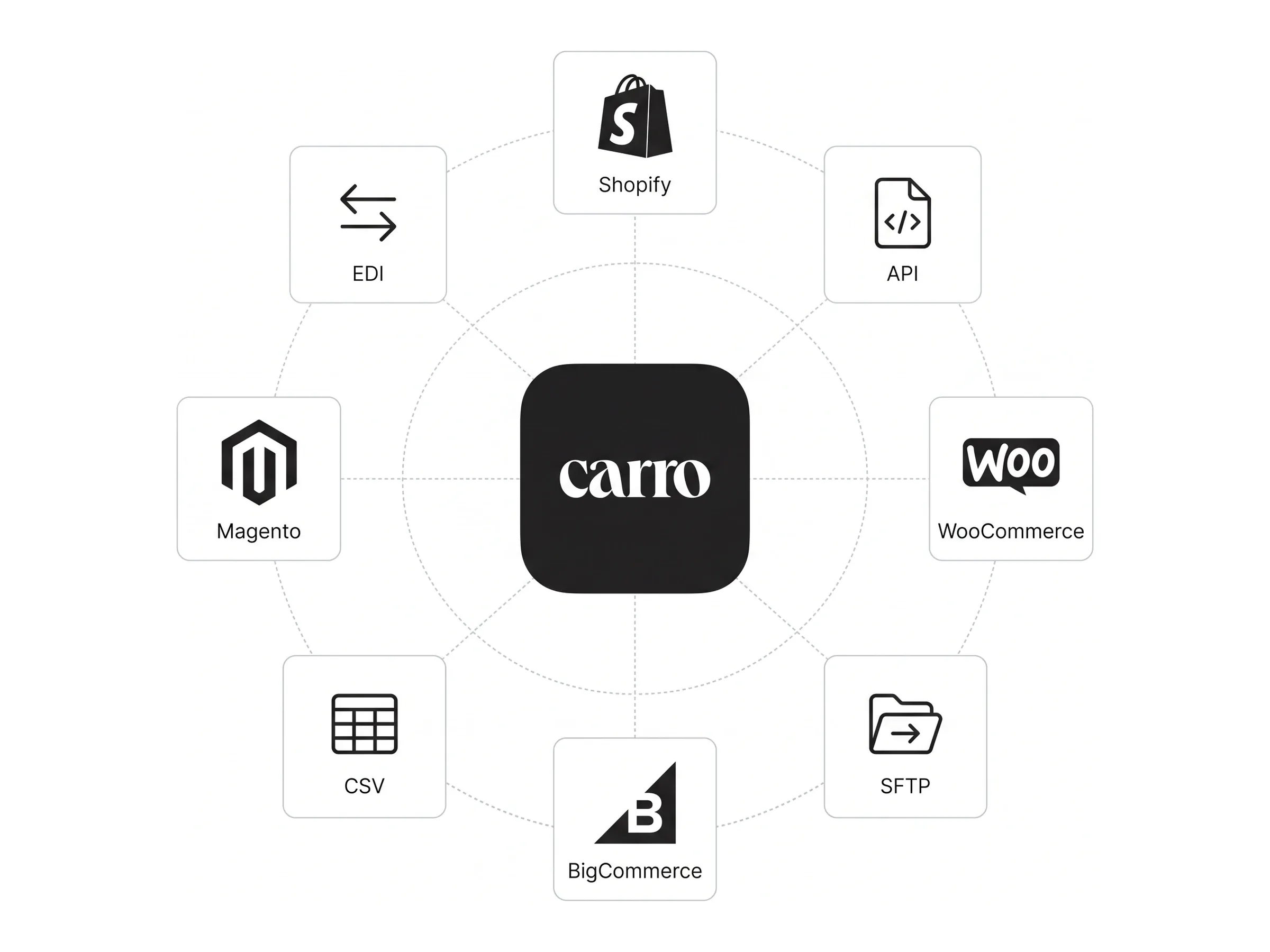
Catalog ingestion, stock sync, order routing, and supplier settlement run from a single layer above your storefront.
Economics
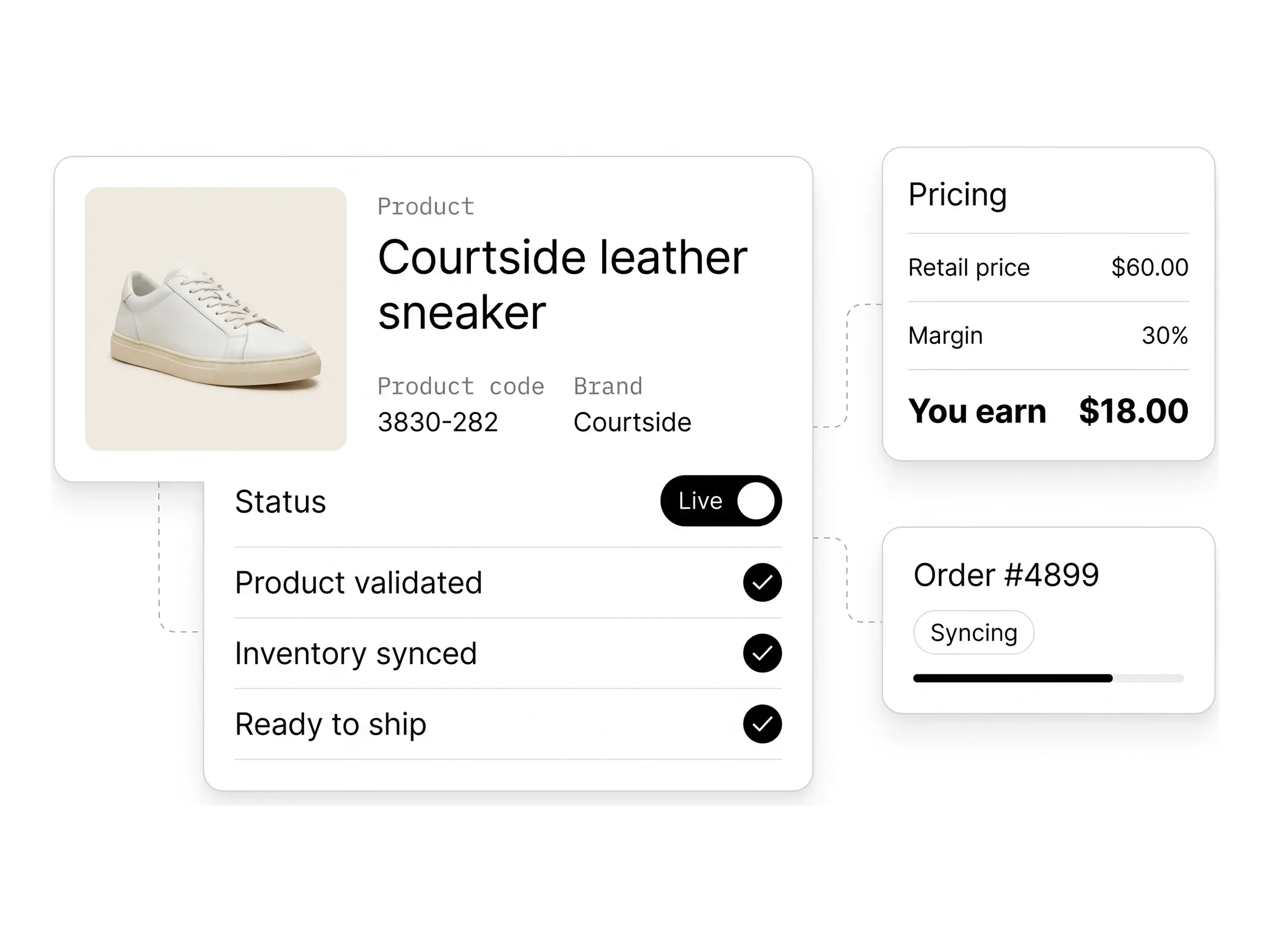
Start from 5% of sales with unlimited transactions, so cost tracks the new revenue Carro creates, while Bynder or Canto keep doing their data job.
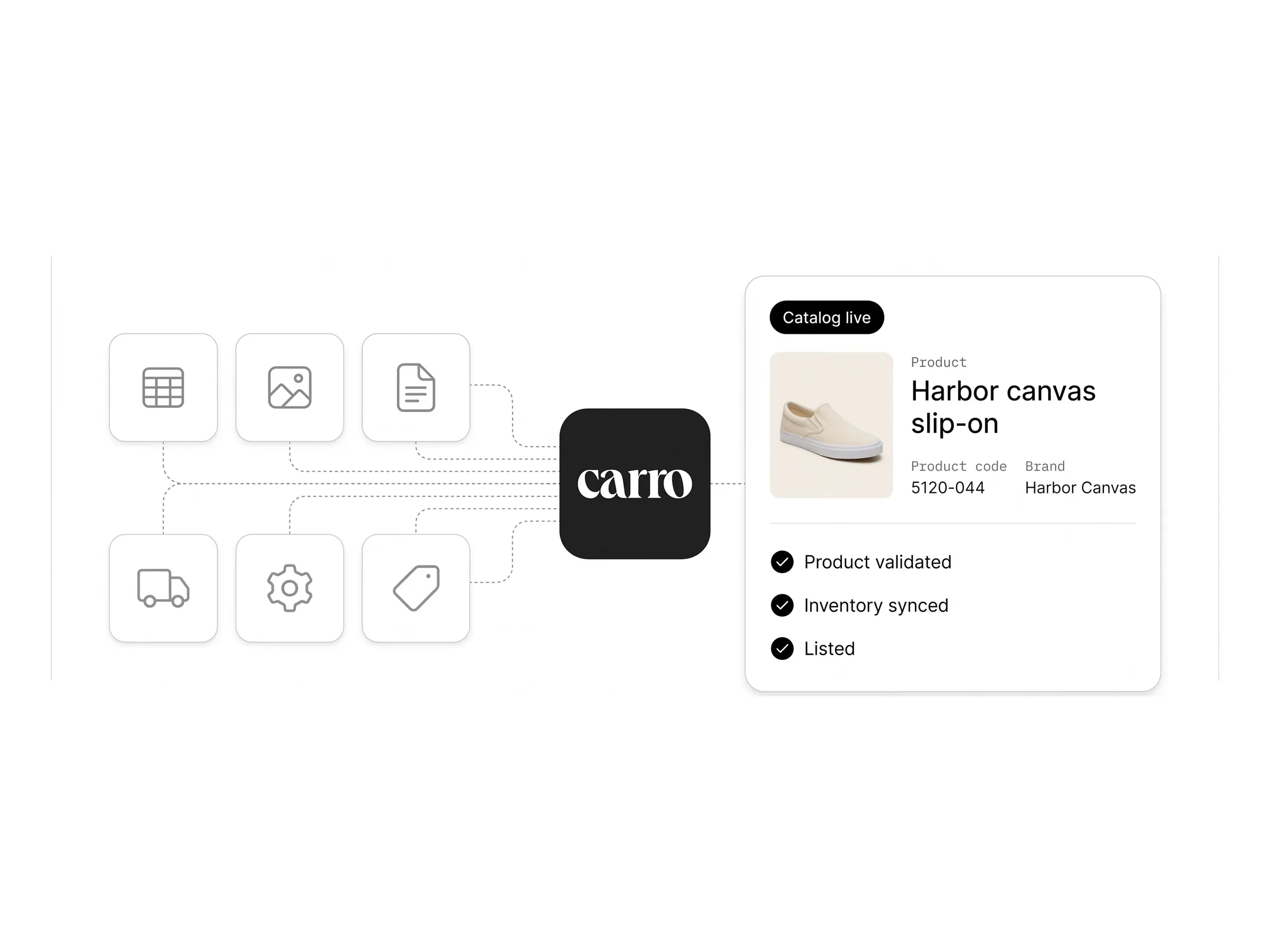
Bynder is enterprise digital asset management (DAM) and Canto is digital asset management (DAM); both organize information about products you already carry. Carro adds new sellable products, with curated suppliers, automated order routing, and structured settlement. The difference is managing data versus growing the catalog itself.
Yes, alongside them. Bynder and Canto manage or distribute product data, while Carro adds new products you can actually sell, with curated suppliers, automated routing, and structured settlement on usage-based pricing. Most teams keep Bynder or Canto for data and add Carro to grow assortment and revenue.
For retailers and marketplaces that want to grow sellable assortment and revenue, Carro is the best of the three. Bynder and Canto manage product data rather than add products, so Bynder suits enterprise dam and brand portals and Canto suits organizing digital assets (DAM). Carro adds a curated network of 1.5M+ products with automated routing on usage-based pricing.
Carro uses usage-based pricing from 5% of sales with unlimited transactions, so cost tracks the revenue the program creates. Bynder prices its enterprise DAM by custom quote, with no public tiers. Canto prices its DAM tiers by custom quote. For figures tied to your mix and volume, request custom pricing from Carro.
For growing what you can sell, Carro. Bynder and Canto improve or distribute the data for products you already have; they do not add assortment. Carro brings a curated network of 1.5M+ products live in weeks, with automated routing and settlement, so new products can go live quickly.
Keep Bynder or Canto for the data job it does best, and add Carro to grow assortment. Carro brings curated suppliers, automated order routing, and structured settlement, so you add new sellable products while your data stays clean in the tool you already use.
Yes. Carro is composable and connects through pre-built integrations and EDI, API, SFTP, and CSV, so it runs beside Bynder or Canto rather than replacing them. Keep them for data management, and use Carro to add curated suppliers, route orders, and settle payouts as assortment grows.
They scale different things. Bynder and Canto scale how product data is managed or distributed. Carro scales sellable assortment and revenue, with unlimited transactions and automated routing. Used together, your data stays clean while your catalog and sales grow.
Compare Carro against Bynder and Canto on your own stack, and see curated suppliers, real-time sync, and automated order routing running in weeks.