Choose Zoho Inventory if
Choose Zoho Inventory if you need to track and manage the stock you own, with order and warehouse features across a few locations.
Comparing Zoho Inventory and Sortly for inventory management. Both track the stock you own. Carro lets you grow sellable assortment without holding it, with curated suppliers, automated order routing, and usage-based pricing.
No replatforming. No custom development required to go live.


















Side by side
This Zoho Inventory vs Sortly comparison shows how Zoho Inventory, Sortly, and Carro handle managing owned stock, adding assortment, routing, and pricing, and doubles as a Zoho Inventory vs Sortly review. It answers Sortly vs Zoho Inventory and which is better: Zoho Inventory or Sortly? Here is where each one fits.
| Features |  |  | |
|---|---|---|---|
| Sell without holding stockAdd and sell products that ship from supplier partners | Yes:1.5M+ products | No:Manages existing data | No:Manages existing data |
| Curated brand networkHand-matched brands selected for category fit | Yes:1.5M+ products | No:Not a sourcing tool | No:Not a sourcing tool |
| Automated order routing to suppliersOrders sent to the correct supplier the moment a partner product is paid for | No:No, internal only | No:No, internal only | Yes:Built in |
| Inventory management depthTracking stock levels, locations, and reordering for goods you own | Yes:Built in | Yes:Yes, order and stock control | Yes:Yes, asset and item tracking |
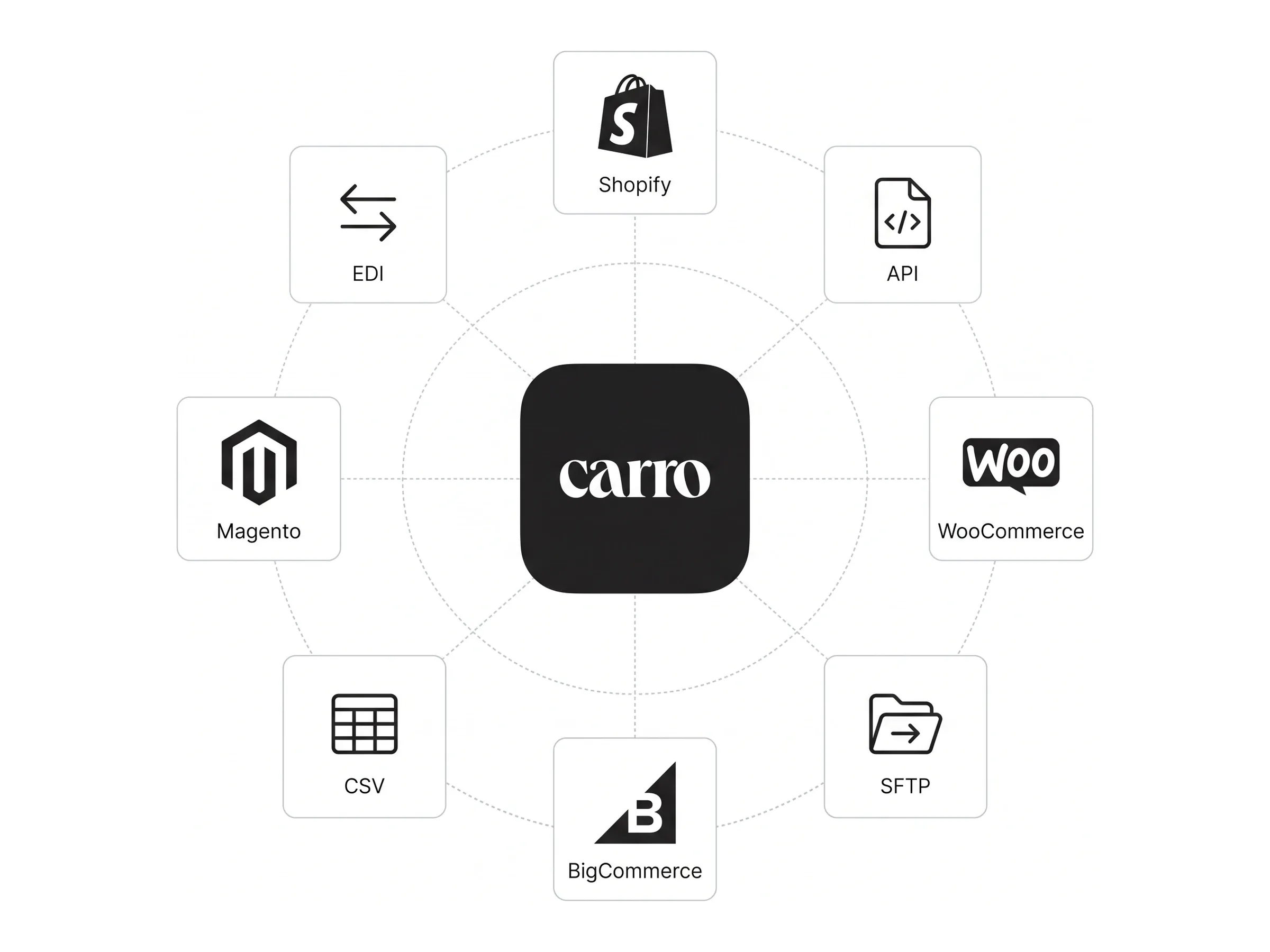
| Real-time sync with your storefrontConnects Shopify, Magento, BigCommerce, WooCommerce, EDI, API, SFTP, and CSV | Yes:Native | Yes:Yes, for owned stock | Yes:Partial, owned stock |
| Structured supplier settlementPayouts tied to each partner order | No:Not a payout layer | No:Not a payout layer | Yes:Up to 3.5x revenue |
| Pricing modelPay as the program grows, instead of fixed monthly plans billed a year upfront | Yes:From 5% of sales | No:$29 to $249/mo | No:Free to $299/mo |
| Works alongside your data stackSits beside the tools you already use to enrich and distribute data | Yes:Complementary | Yes:Complementary | Yes:Complementary |
| Best forWhere each platform tends to be the stronger choice for a team today | Growing assortment and revenue | Managing owned stock across channels | Visual stock and asset tracking |
The short answer
Each platform is the right call for a different team. Here is the honest version.
Choose Zoho Inventory if you need to track and manage the stock you own, with order and warehouse features across a few locations.
Choose Sortly if you want simple visual inventory and asset tracking with barcodes and photos for the items you own.
Choose Carro if you want to grow sellable assortment without buying and holding more stock, on usage-based pricing that tracks the revenue it creates.
Built for distributed retail
The differences that make Carro the modern way to grow assortment in a Zoho Inventory vs Sortly vs Carro decision.
Curation
Unlike Zoho Inventory and Sortly, which track the stock you already own, account managers hand-match new brands from a network of 1.5M+ products you can sell without holding.

Speed
Where Zoho Inventory and Sortly manage inventory, Carro adds sellable assortment live in weeks through pre-built connectors and structured onboarding.
Automation
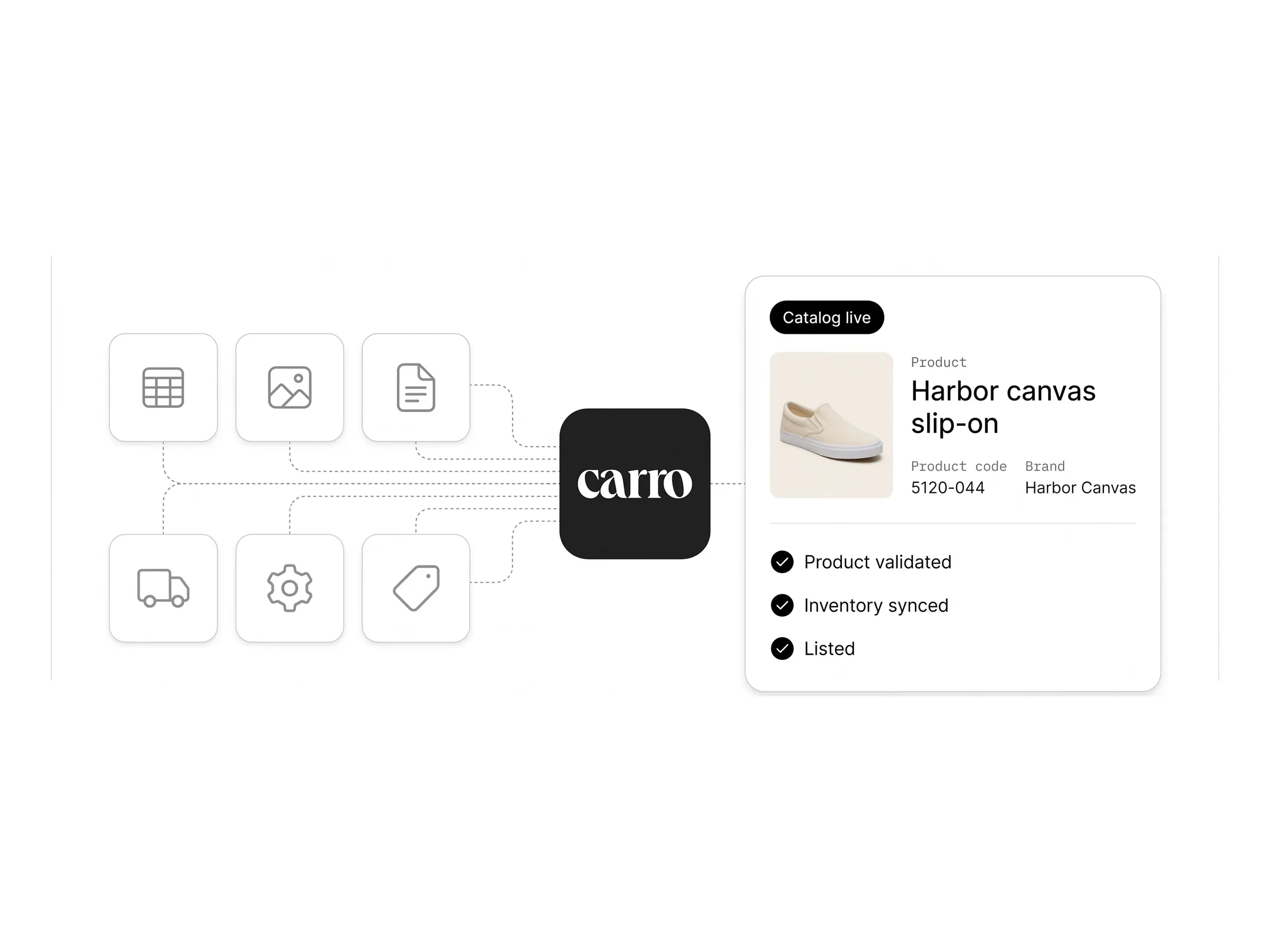
Catalog ingestion, stock sync, order routing, and supplier settlement run from a single layer above your storefront.
Economics
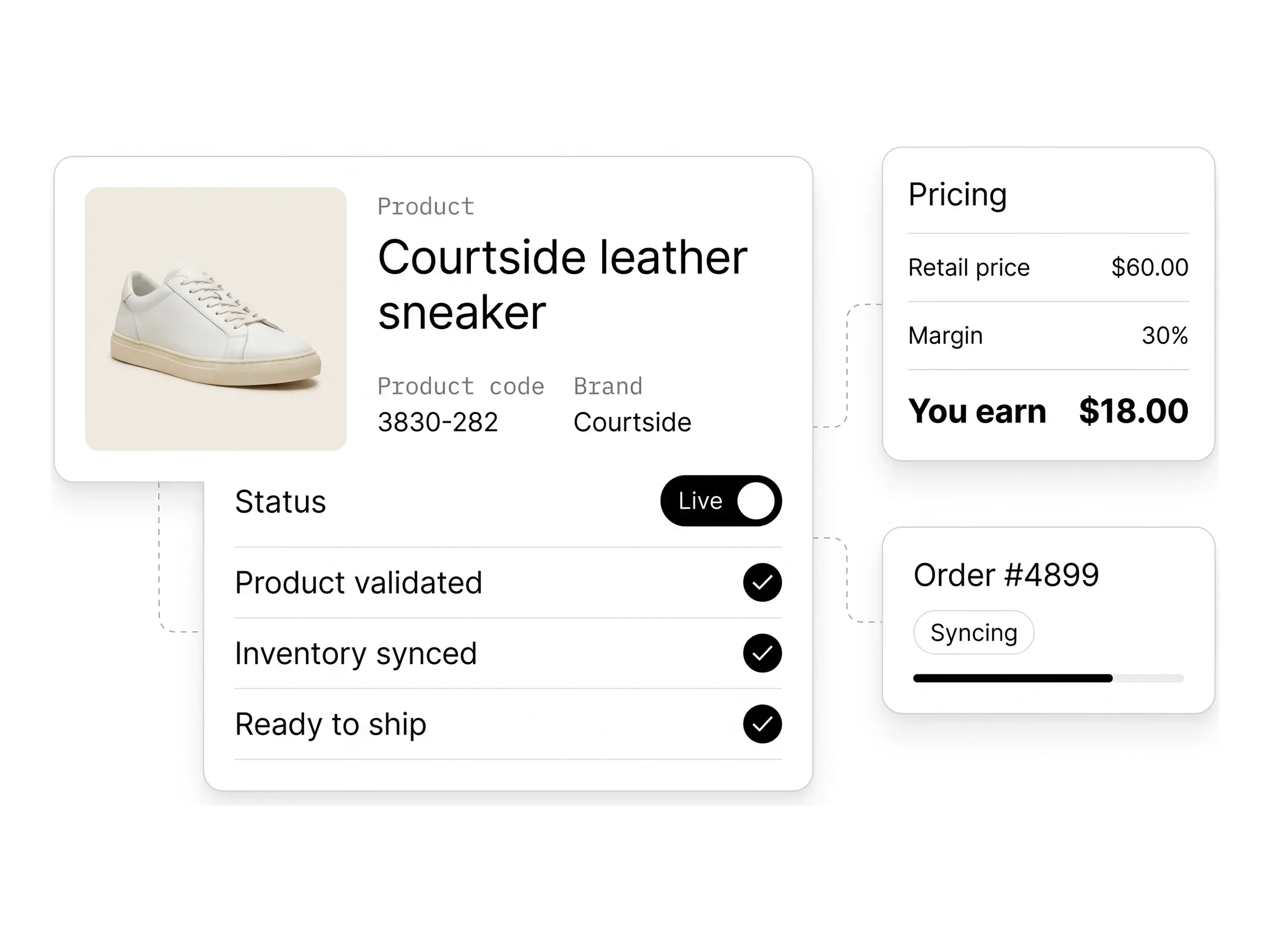
Start from 5% of sales with unlimited transactions, so cost tracks new revenue, while Zoho Inventory or Sortly keep managing the stock you own.
Zoho Inventory is inventory management for stock you own and Sortly is visual inventory and asset tracking app; both track the stock you own. Carro is a dropship and marketplace platform that adds new sellable products without holding inventory, with curated suppliers, automated routing, and structured settlement. The main difference is managing owned stock versus growing assortment you do not have to buy.
Yes, alongside them. Zoho Inventory and Sortly manage the inventory you own, while Carro lets you sell more without holding it, through curated suppliers, automated routing, and structured settlement. Many teams keep Zoho Inventory or Sortly for owned stock and add Carro to grow assortment on usage-based pricing.
For growing sellable assortment without holding stock, Carro is the best of the three. People search this as Zoho Inventory vs Sortly or Sortly vs Zoho Inventory, and ask which is better, Zoho Inventory or Sortly: both manage the inventory you own, so Zoho Inventory suits managing owned stock across channels and Sortly suits visual stock and asset tracking. Carro adds a curated network of 1.5M+ products with automated routing on usage-based pricing.
Carro uses usage-based pricing from 5% of sales with unlimited transactions, so cost tracks the revenue the program creates. Zoho Inventory sells tiers from $29 (Standard) to $249 (Enterprise) per organization per month billed annually, with monthly order caps and a free trial. Sortly offers a free plan plus Advanced ($49/mo), Ultra ($149/mo), and Premium ($299/mo), with item-count caps and a custom Enterprise tier. For figures tied to your mix and volume, request custom pricing from Carro.
For growing what you can sell, Carro. Zoho Inventory and Sortly track and reorder the stock you already own; they do not add assortment. Carro brings a curated network of 1.5M+ products live in weeks, with automated routing and settlement, so new products go live without buying inventory.
Keep Zoho Inventory or Sortly for managing the stock you own, and add Carro to grow assortment. Carro brings curated suppliers, automated order routing, and structured settlement, so you add new sellable products without holding more inventory.
They scale different things. Zoho Inventory and Sortly scale how you manage owned stock. Carro scales sellable assortment and revenue, with unlimited transactions and automated routing, so you can grow without buying and storing more inventory.
Compare Carro against Zoho Inventory and Sortly on your own stack, and see curated suppliers, real-time sync, and automated order routing running in weeks.