What is inventory management software?
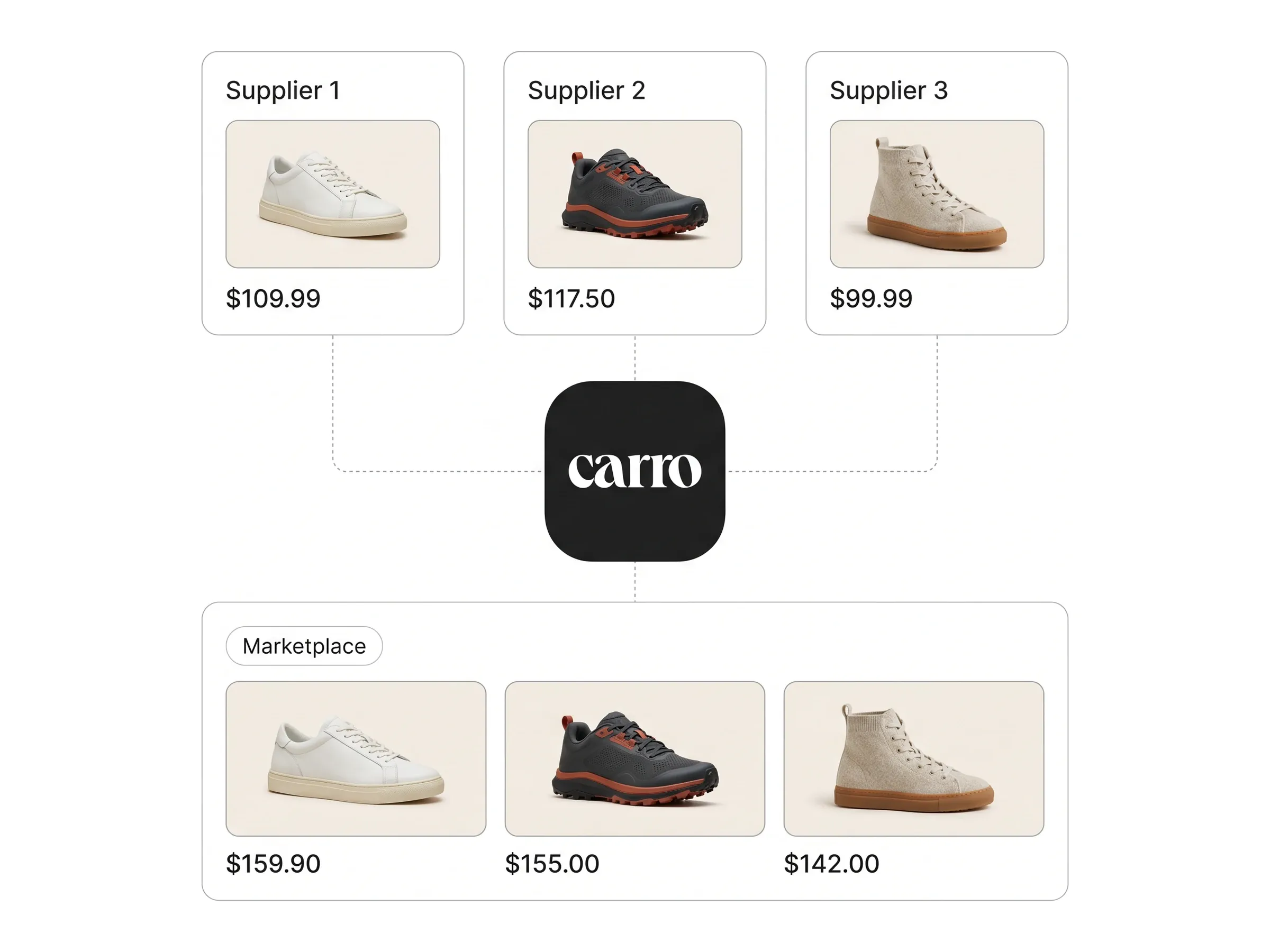
Inventory management software is the system retailers and marketplaces use to track stock levels, sync product data, route orders, and reconcile fulfillment across one or many supplier networks. For distributed retail models that don't hold their own inventory, it replaces manual CSVs, emails, and supplier portals with real-time data flow between brands, retailers, and storefronts - ensuring what shows up online matches what's actually available to ship.
What does Carro do for inventory management?
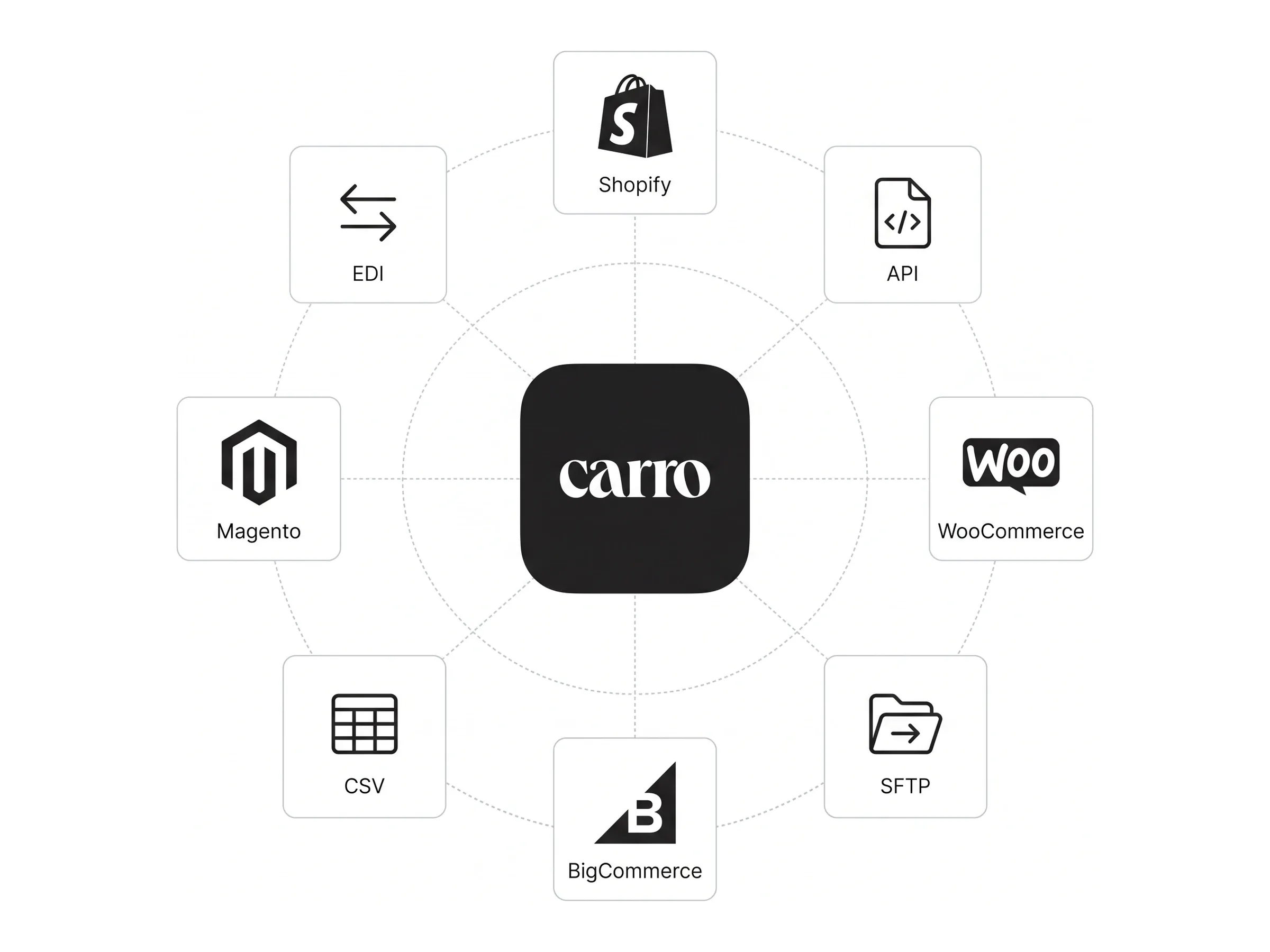
Carro provides inventory management infrastructure for retailers and marketplaces running dropship or extended-assortment models. The platform syncs product, pricing, and stock data in real time across Shopify, Magento, BigCommerce, WooCommerce, EDI, API, SFTP, and CSV connections. It automates order routing to the correct supplier, manages fulfillment tracking, and handles structured supplier payouts - giving teams one source of truth for inventory across a distributed supplier network.
Who is Carro best suited for?
Carro is best suited for retailers, online marketplaces, and brand suppliers running on Shopify or compatible commerce platforms. The platform fits established retailers modernizing dropship programs, online marketplaces scaling supplier networks without operational drag, pure-play marketplaces launching quickly, and DTC brands joining as supplier partners on retailer marketplaces.
How does Carro differ from similar inventory management alternatives?
Carro differs from generic dropship tools and legacy enterprise platforms by being purpose-built for marketplace-grade infrastructure with hand-matched supplier curation. Unlike traditional dropship platforms that connect retailers to generic supplier directories, Carro's account managers facilitate curated brand introductions. Unlike legacy enterprise marketplace platforms that require months of custom development, Carro deploys in weeks through pre-built connectors, with a composable architecture that fits existing tech stacks.
How do I get started with Carro?
Getting started with Carro begins with a custom pricing conversation or a product demo. The team walks through your current supplier mix, integration requirements, and assortment goals, then maps a launch plan using pre-built connectors for Shopify, Magento, BigCommerce, WooCommerce, EDI, API, SFTP, or CSV. New programs typically go live in weeks, with hands-on onboarding support that handles partner activation alongside your internal team.
How easy is it to switch to Carro?
Switching to Carro is designed to avoid the replatforming cost of legacy systems. The inventory management platform is composable by design - it fits alongside your existing payments, shipping, ERP, and accounting systems rather than replacing them. Pre-built integrations and structured supplier onboarding workflows mean migration happens in weeks instead of quarters, and many customers launch without needing internal developer resources thanks to hands-on implementation support.
What about quality concerns with dropship inventory?
Quality concerns with dropship inventory are addressed through curated partnerships, not generic supplier directories. Carro focuses on hand-matched introductions to trusted, established brands, and retailers control which partners join their network. Performance monitoring and SLA management track supplier fulfillment in real time, with the ability to set requirements partners must meet and remove underperforming suppliers - protecting customer experience as assortment grows.
How does inventory management software help reduce operational costs?
Inventory management software reduces operational costs by automating the workflows that scale with supplier count: catalog ingestion, real-time stock sync, order routing, and settlement. Replacing custom builds, multiple vendor fees, manual reconciliation, and inventory carrying costs with one connected platform lowers total cost of ownership while expanding assortment and AOV. The economics shift from headcount-heavy operations to elastic, infrastructure-driven growth.