Best PIM for Shopify in 2026 (Feature & Pricing Comparison)
Discover the best PIM for Shopify in the market. Compare top tools against Carro based on features & use cases to understand why we’re the ideal solution.

Key Takeaways (TL;DR)
- Best for Inventory-Free Catalog Expansion on Shopify: Carro is the strongest choice for Shopify merchants focused on catalog growth without inventory risk. We combine real-time product sync, automated order routing, and access to a curated network of 1,500,000+ products from vetted brand partners, all from within a Shopify-native workflow.
- Why Do You Need It: Shopify's native product management works for small catalogs, but it breaks down fast once you're managing hundreds of SKUs across multiple suppliers, channels, or storefronts. A dedicated PIM for Shopify centralizes your product data, keeps it consistent everywhere, and cuts the manual work that compounds as your catalog grows.
- Who It's For: Shopify merchants, Shopify Plus brands, DTC businesses, and marketplace operators who need either a centralized source of product truth, a faster way to expand their catalog, or both.
- How to Choose the Right One: Prioritize native Shopify integration depth (especially metafield support), whether the tool supports your catalog scale today and where you're going in 12 months, and whether it covers catalog management alone or also helps you grow the catalog itself.
- Expected Price: Carro offers a Standard Plan (5% of sales) and a Growth Plan with custom pricing. Across the broader market, the best PIM integrations for Shopify range from completely free (UnoPIM's open-source core and Shopify connector) and open-source editions to $199-$549/month for Shopify-native mid-market tools, up to $45,000+/year for enterprise platforms like Akeneo and Salsify.
Top PIM for Shopify in 2026 at a Glance
| Company | Best For | Key Features | Pricing |
|---|---|---|---|
| Carro | Shopify merchants expanding catalog without inventory risk | Real-time product sync, hand-matched supplier network, automated order routing, 1.5M+ product network | Standard: 5% of sales; Growth plan pricing is custom-tailored |
| Akeneo | Mid-market to enterprise Shopify Plus brands with large catalogs | AI-powered enrichment, channel-specific publishing, Shopify metafield sync, workflow automation | Growth package from $45,000/year; Shopify connector from $199/month |
| Plytix | Small to mid-sized Shopify brands needing affordable PIM | Product sheets, attribute scoring, channel publishing, Shopify App Store integration | From ~$549/month (€499/month in euros) |
| Salsify | Large enterprise Shopify Plus brands with retailer distribution networks | PXM, digital shelf analytics, content syndication, Shopify integration | Custom pricing available |
| inRiver | B2B and complex Shopify catalogs with multi-channel distribution | Product relationship management, Shopify App Store connector, feed engine | Custom pricing (Core, Professional, Enterprise, Foundation tiers) |
| Pimcore | Technically resourced Shopify teams wanting open-source flexibility | Open-source PIM + DAM + CMS, API-first, Shopify via third-party connector | Professional plan starts from $9,900/year; enterprise plan billed at $29,900/year; most expensive plan at $39,900/year |
| Catsy | Shopify retailers with heavy digital asset needs | PIM + DAM combined, multi-channel publishing, Shopify connector | Three custom pricing tiers; contact for pricing |
| UnoPIM | Shopify merchants needing a free, open-source PIM with native Shopify sync | Open-source PIM, free Shopify connector, AI content generation, metafield mapping, multi-store and multi-locale support | Open source; pricing starts at $50/month and goes up to $499/month |
| Sales Layer | Mid-market Shopify brands needing fast channel publishing | AI data quality, 200+ connectors including Shopify, completeness scoring | Custom pricing available |
| Apimio | Shopify SMBs and growing DTC brands | Native Shopify two-way sync, metafield support, 30-minute setup, multi-store management | From $199/month (basic plan); highest pricing tier at $999/month (enterprise plan) |
What Is a PIM for Shopify?
A PIM for Shopify software is a dedicated system that stores, organizes, and distributes all product data to your Shopify storefront and any other channels you sell through. Think of it as the single source of truth sitting behind your Shopify store: every product title, description, image, attribute, variant, pricing rule, and channel-specific content lives here first, then flows to Shopify automatically.
Shopify's native admin handles product data reasonably well at a small scale. Once a catalog grows beyond a few hundred SKUs, or once you're selling across multiple channels alongside Shopify: marketplaces, wholesale portals, social commerce, print catalogs – the native tools become a bottleneck. Product data goes out of sync between channels.
Teams end up maintaining multiple spreadsheets. Updates that should take minutes take hours. Error compound. A dedicated PIM for Shopify integration solves this by separating the data management layer from the storefront layer. You manage one master product record in the PIM; the PIM pushes the right version to Shopify (and every other channel) automatically.
Modern PIM tools for Shopify typically cover:
- Centralized attribute management for all product fields and variants
- Shopify-specific sync: metafields, MetaObjects, variant-level data
- Digital asset management (DAM) for product images and videos
- Multi-channel publishing with channel-specific content rules
- AI-assisted content enrichment and completeness scoring
- Workflow tools for team collaboration and approval processes
- Real-time or scheduled sync with Shopify storefronts
The most advanced tools go a step further. Carro, for instance, combines PIM-level product sync with catalog expansion: connecting Shopify merchants to a curated network of brand partners so they can grow their assortment without holding inventory. That turns a data management tool into a growth infrastructure layer.
According to RetailTouchPoints, 87% of shoppers say product content is very important when deciding to make a purchase, and retailers who invest in product data quality see measurable increases in conversion rates and reductions in returns. For Shopify merchants competing across multiple channels, getting product data right is not an operational nicety. It is a commercial priority.
Why Do You Need a PIM for Shopify?
Shopify is excellent at running a storefront, but is not built to be a product data warehouse. The moment your catalog complexity outpaces what Shopify's native admin handles comfortably, you start paying the cost in wasted time, data errors, and missed revenue.
Here’s why you need a PIM for Shopify and what it looks like, in practice:
Manual updates multiply across every channel: A price change or description update that takes 30 seconds in a PIM can take hours when done manually across Shopify, Amazon, a wholesale portal, and a B2B catalog. That time compounds across thousands of SKUs
Inconsistent product data damages conversion rates: Customers who see different prices, descriptions, or images across your Shopify store, your marketplace listings, and your social ads lose trust, and they do not come back. Studies show that product data inconsistency is one of the top reasons for abandoned purchases and elevated return rates.
Shopify's metafields are powerful but hard to manage at scale: Shopify currently supports 17 distinct metafield types, including complex reference types such as product_reference, variant_reference, and MetaObjects that power rich product detail pages. Managing this structured data across hundreds of SKUs without a PIM requires significant developer time for each update.
Supplier data arrives in inconsistent formats: Merchants sourcing from multiple suppliers receive product data in different spreadsheet formats, attribute structures, and naming conventions. Normalizing all of that manually before it reaches Shopify is one of the most common operational bottlenecks in growing Shopify businesses.
Catalog expansion without inventory is becoming standard: Retailers and marketplace operators are increasingly adding products from vetted brand partners without holding the inventory themselves. Managing those partner products, keeping their data accurate in your Shopify store, and routing their orders automatically requires infrastructure beyond Shopify's native tools. This is where a platform like Carro extends what a traditional PIM covers.
For Shopify Plus merchants specifically, the operational stakes are higher. Larger catalogs, multiple storefronts, international markets, and B2B channels each add data management complexity that compounds without a dedicated system.
Who Needs a PIM for Shopify?
Growing Shopify DTC Brands
DTC brands typically hit their first PIM pain point around 500 SKUs. Below that, Shopify's native admin and a few spreadsheets are manageable. Above it, maintaining consistency across the storefront, email marketing, social content, and wholesale portal becomes a real drag on team time. These brands need a PIM that integrates natively with Shopify, syncs metafields and digital assets without developer involvement, and is priced for growth-stage businesses - not enterprise contracts.
Shopify Plus Enterprise Brands
Shopify Plus merchants with thousands of SKUs, multiple storefronts, international markets, and complex product hierarchies need a PIM that handles data modeling depth, localization, workflow governance, and channel-specific publishing rules at scale.
These teams also need Shopify Plus-specific integration capabilities: multi-store sync, Shopify Markets support, and B2B catalog management. Akeneo, Salsify, and Contentserv are built for this level of complexity.
Shopify Marketplace Operators and Multi-Supplier Retailers
Retailers who curate products from multiple brand partners face a different PIM challenge: their catalog is dynamic, their supplier data arrives in inconsistent formats, and their product additions need to sync to Shopify in real time as partner inventory changes.
Traditional PIM tools manage the data you already have. Carro goes further, connecting Shopify merchants to a vetted network of 1,500,000+ products and automating the full supplier lifecycle from catalog ingestion to order routing. For Shopify merchants whose growth strategy includes partner-sourced products, this combined approach is what the best PIM integrations for Shopify should deliver.
Omnichannel Shopify Retailers
Shopify merchants selling across their own storefront, Amazon, Google Shopping, wholesale portals, and social commerce channels need their product data formatted differently for each destination.
A PIM centralizes the master record and publishes channel-appropriate versions automatically.Without that layer, every new channel adds a new manual data maintenance obligation. With it, adding a new channel is primarily a configuration task.
Shopify Merchants with Heavy Digital Asset Libraries
Fashion, homewares, food and beverage, and electronics brands often manage hundreds of images and videos per product. Keeping those assets organized, linked to the right products, and up to date across every Shopify storefront and channel requires a combined PIM and DAM approach.
Tools like Catsy focus specifically on this combined use case for Shopify merchants with rich media catalogs. UnoPIM also offers a separate DAM extension for merchants that want open-source asset management alongside free PIM functionality.
Best PIM for Shopify in 2026: In-Depth Review & Comparison
1. Carro
Overview
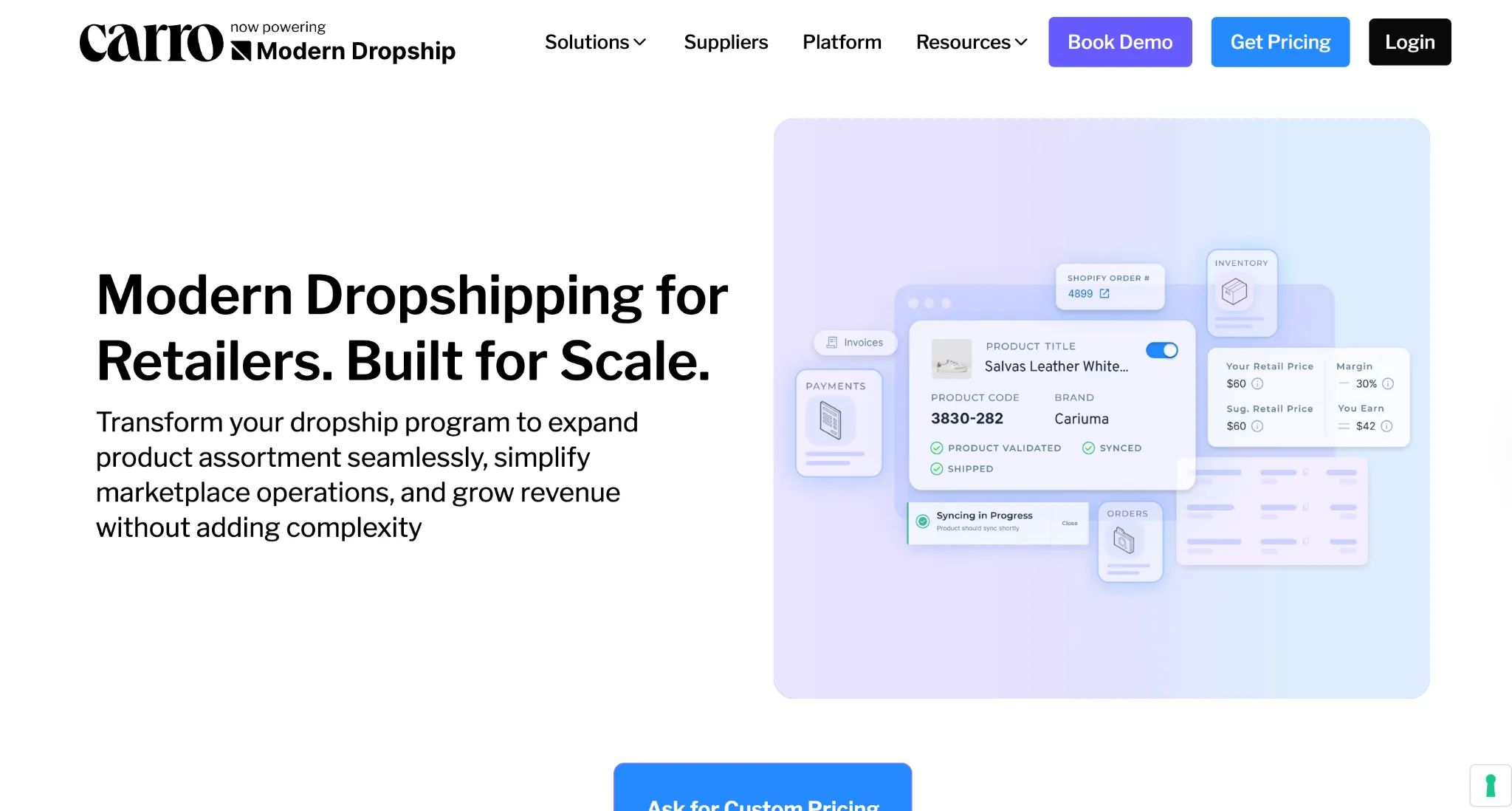
Carro (now powering Modern Dropship), is a dropship and marketplace management platform built specifically for Shopify merchants who want to grow their product catalog without taking on inventory risk.
We sit at the intersection of PIM functionality and distributed commerce infrastructure: real-time product sync to Shopify, automated order routing, and direct access to a curated network of 1,500,000+ products from vetted brand partners. Where traditional PIM tools help you manage the product data you already have, Carro helps you grow the catalog itself. Our hand-matched supplier network connects Shopify merchants with complementary brand partners.
Once connected, their product data syncs to your Shopify storefront automatically, orders route to the correct supplier for fulfillment, and payouts are automated. Your team never touches a warehouse, and your Shopify store stays current without manual updates.
We've delivered up to 3.5x revenue growth, up to 180% AOV growth, and up to 3x catalog size increases for Shopify merchants on our platform. Integration with Shopify is native and takes hours, not months.
Ideal For
- Shopify merchants and DTC brands looking to expand their product catalog without purchasing or holding inventory
- Shopify marketplace operators managing multiple supplier relationships and needing automated catalog sync and order routing
- Shopify Plus brands testing new product categories without balance sheet risk or warehousing overhead
- Brands (suppliers) looking to distribute products through curated Shopify retailer partners and reach new audiences
- Growing Shopify stores that need a combined inventory management solution and product catalog expansion layer in one.
Top Features
- Hand-Matched Supplier Network: Our account managers connect retailers with complementary brand partners from a network of 1,500,000+ products, ensuring curated catalog additions rather than a generic, unfocused product dump. This human-in-the-loop curation is what separates Carro from platforms that simply give you access to a supplier list.
- Automated Order Routing: When a customer orders a partner product, Carro automatically routes that order to the correct supplier for fulfillment - eliminating manual processing, reducing errors, and accelerating delivery timelines without requiring your team to touch the order.
- Real-Time Sync & Multi-Platform Integrations: Product information, pricing, and inventory levels sync automatically across your commerce stack. We support Shopify, WooCommerce, BigCommerce, and Magento natively, plus EDI and SFTP connections for suppliers that require them. That means your product data is always current - no stale listings, no overselling.
Why We Stand Out?
Most PIM tools for Shopify help you manage existing product data more cleanly. Carro does that and also expands what is in your catalog in the first place.
The centralized network model is our core differentiator. Instead of managing product data imports from individual suppliers one at a time, we normalize fragmented supplier data, sync it to your Shopify store in real time, and automate the entire commercial relationship from catalog ingestion to settlement.
We also stay connected to your growth strategy, not just your data pipeline. Our account managers work with Shopify merchants to identify which partner brands are the best fit for their audience, category, and price point. That strategic layer is what separates Carro from both generic dropship tools and traditional PIM software.
Pros
- Combines catalog management with actual catalog expansion through a vetted brand network
- Real-time inventory sync with automated order routing eliminates manual fulfillment workflows
- Supports Shopify, BigCommerce, WooCommerce, Magento, EDI, and SFTP out of the box
- Performance metrics show up to 3.5x revenue growth and 180% AOV growth for participating retailers
- No inventory risk; you can expand your assortment without balance sheet exposure
Cons
- Best suited for Shopify merchants focused on catalog expansion through partner brands; less suited as a standalone static PIM for merchants managing a large existing proprietary catalog
- Does not offer the attribute modeling depth or complex localization features that enterprise PIM platforms like Akeneo provide
- Product additions come through Carro's partner network: merchants needing hyper-specific niche suppliers outside the network may find coverage limited
Pricing
We offer two pricing plans: the ‘Standard’ plan, which costs 5% of sales and includes Shopify, Magento, BigCommerce, and WooCommerce integrations plus end-to-end dropship automation.
The ‘Growth’ plan, which has custom pricing and adds autonomous merchandising, a hand-matched supplier network, automated order routing, real-time sync, seamless catalog expansion, and priority support.
Note: All plans include unlimited transactions, full platform access, automated payments and billing, basic performance insights, and access to 1.5M+ products from top brands.
Final Verdict
Carro is the best PIM for Shopify merchants whose growth strategy includes expanding their product catalog beyond what they own. If your Shopify store needs to grow in breadth, adding new categories, testing new product lines, or operating as a marketplace for curated brand partners – Carro provides both the product data sync and the commercial infrastructure to do it without inventory risk.
2. Akeneo
Overview
Akeneo is one of the most established names in enterprise PIM, offering a cloud-based product data management platform used by mid-market to enterprise Shopify Plus merchants with large, complex catalogs.
Founded in 2013, Akeneo's core product is a centralized PIM covering attribute management, workflow automation, AI-powered content enrichment, and multi-channel publishing. Its Shopify integration is handled via a third-party connector – StrikeTru's Akeneo PIM Connector, available through the Shopify App Store.
Akeneo serves retailers, manufacturers, and brands managing thousands to hundreds of thousands of SKUs across Shopify storefronts, marketplaces, wholesale portals, and physical retail. A community edition is free and open-source for technically resourced teams.
Ideal For
- Shopify Plus merchants with large, complex catalogs requiring structured attribute management and governance
- Multi-brand retailers and manufacturers distributing product data across many channels alongside Shopify
- Teams that need multi-locale product content management for international Shopify Markets
- Enterprise organizations where multiple teams (marketing, operations, compliance) all contribute to product data
Top Features
- AI-Powered Content Enrichment: Akeneo's AI tools suggest and auto-generate attribute values, flag incomplete product records, and help teams maintain data completeness at scale – reducing the manual enrichment time required to keep a large Shopify catalog accurate.
- Channel-Specific Publishing: Define different product content rules for each destination channel. Your Shopify storefront gets optimized copy and images; your wholesale portal gets specification-heavy content; your marketplace listings get compliance-formatted data. One master record, multiple tailored outputs.
- Shopify Metafield Sync via StrikeTru Connector: The connector syncs standard metafields to Shopify across products, variants, and collections. It supports scheduling and on-demand sync and includes error reporting with detailed logs, covering most standard Shopify metafield types.
Why They Stand Out?
Akeneo is one of the stronger choices for Shopify Plus brands that have outgrown spreadsheet-based product management and need enterprise-grade data governance. Its combination of flexible data modeling, AI enrichment, and workflow automation addresses the operational complexity that large Shopify catalogs create at scale.
Pros
- Mature enterprise PIM with strong data modeling, governance, and workflow capabilities
- AI-powered enrichment tools reduce manual data entry time for large Shopify catalogs
- Multi-locale support for international Shopify Markets and cross-border retail
- Active partner ecosystem including the Shopify App Store connector via StrikeTru
- Community edition available free for self-hosted teams with developer resources
Cons
- Enterprise cloud plans start at approximately $45,000/year; the Shopify connector via StrikeTru adds $199–$299/month on top
- Implementation typically requires weeks to months and a systems integrator or technical team
- Sync is primarily one-directional (PIM to Shopify): data changes made in Shopify do not automatically flow back to Akeneo
- Not well-suited for Shopify SMBs or DTC brands without technical implementation resources.
Pricing
Akeneo's Growth package starts at $45,000/year. Advanced and Premium tiers are custom-priced and require direct engagement with the Akeneo sales team. The Shopify connector via StrikeTru starts at $199/month for up to 5,000 SKUs and $299/month for up to 50,000 SKUs, with enterprise pricing available on request. A community (open-source) edition is free for self-hosted deployments. A 14-day free trial is available for the connector.
Final Verdict
Akeneo is one of the best PIM for Shopify Plus brands with established large catalogs that need enterprise-grade data management, governance, and multi-channel publishing. It is less practical for smaller Shopify merchants, teams without implementation resources, or businesses whose primary need is catalog expansion rather than data governance
3. Plytix
Overview
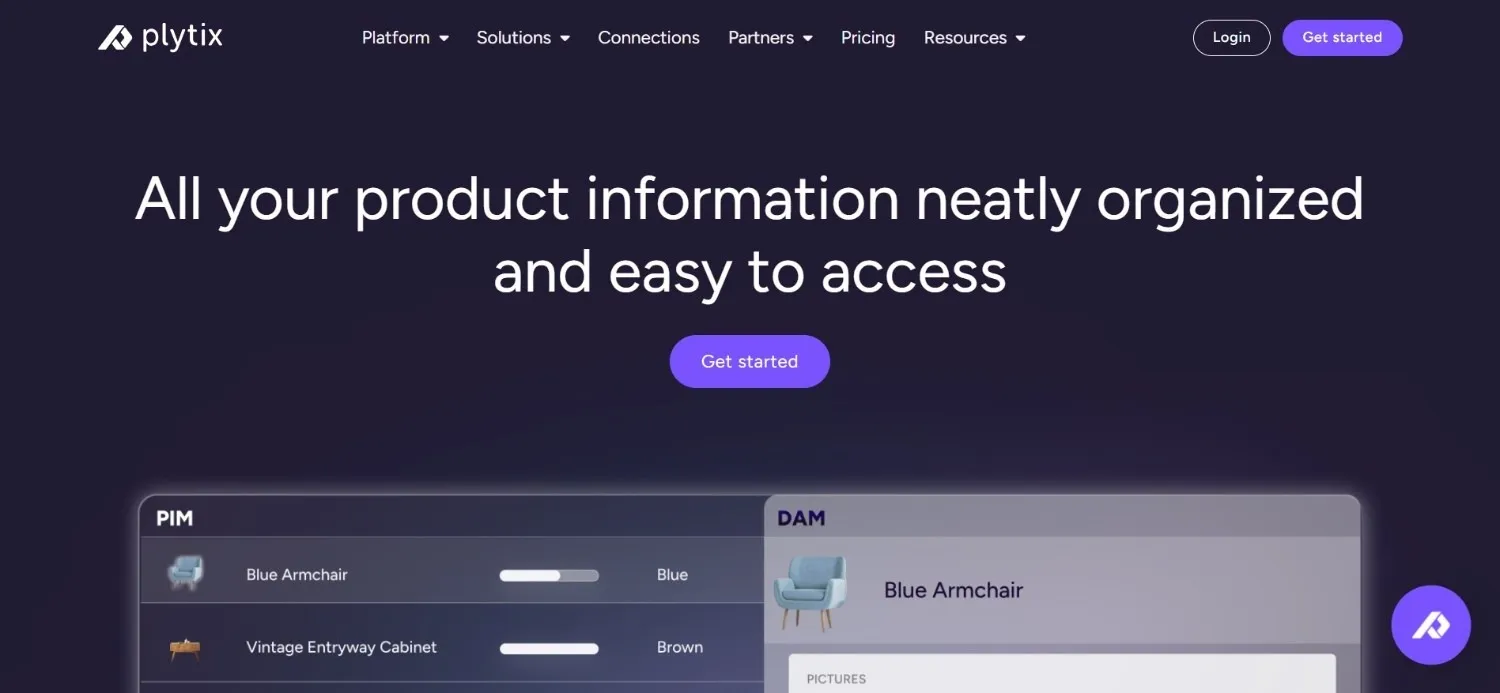
Plytix is a cloud-based PIM built for small to mid-sized Shopify brands and retailers who need a clean, accessible product data management tool without the complexity or cost of enterprise platforms. It focuses on ease of use: shareable product sheets, attribute-based organization, and straightforward channel publishing. Its Shopify integration is available through the Shopify App Store, offering direct product sync without developer involvement.
Plytix is designed for teams managing catalogs in the hundreds to low thousands of SKUs who want a structured PIM without committing to an enterprise contract or a multi-month implementation project.
Ideal For
- Small to mid-sized Shopify merchants managing catalogs of under 10,000 SKUs
- Shopify brands that also distribute product sheets to wholesale buyers or retail partners
- Teams transitioning from spreadsheet-based product management to a structured PIM for the first time
- Shopify businesses needing a straightforward PIM without a steep learning curve
Top Features
- Shopify App Store Integration: Direct integration via the Shopify App Store allows product data to sync from Plytix to your Shopify store without developer setup. Non-technical teams can manage the connection independently.
- Shareable Product Sheets: Generate and share branded product specification sheets with wholesale partners, retailers, or internal teams - reducing the back-and-forth that typically accompanies product data requests in multi-channel Shopify businesses.
- Data Completeness Scoring: Built-in completeness indicators show which products are missing attributes or content, helping teams prioritize enrichment work before pushing updates to their Shopify storefront.
Why They Stand Out?
Plytix is one of the more accessible entry points into structured best PIM for Shopify brands on the smaller side, scale-wise. Its user-friendly interface, Shopify App Store availability, and practical wholesale use case offer genuine day-to-day value without requiring an enterprise implementation budget.
Pros
- Among the most user-friendly PIMs for non-technical Shopify teams
- Shopify App Store integration requires no developer involvement to set up
- Shareable product sheets add practical value for Shopify merchants with B2B or wholesale components
- Affordable entry pricing compared to enterprise alternatives
- Quick setup with low implementation overhead
Cons
- Not designed for large or highly complex Shopify catalogs; performance and feature depth become limiting above approximately 10,000 SKUs
- Limited support for Shopify's advanced metafield types and MetaObjects
- Sync is primarily one-directional (Plytix to Shopify); bidirectional sync is not fully supported
- Less suitable for Shopify merchants needing enterprise governance, localization, or deep workflow features
Pricing
Plytix uses usage-based pricing built around SKU count, AI credits, and optional add-ons.
A free Standard plan covers up to 1,000 SKUs with no outputs, while the Pro plan starts at about €499/month in Europe (or $549/month in the US) for up to 50,000 SKUs, unlimited users, and advanced team management.
The Enterprise plan is custom-priced for unlimited SKUs, custom API calls, and multi-account management, and all plans are billed monthly with no long-term commitment required.
Final Verdict
Plytix is a practical starting point for small Shopify brands and retailers new to PIM. It handles core catalog management well and is genuinely easier to use than most alternatives for this market segment. It is likely to become a bottleneck as catalog complexity grows beyond the small-to-mid range.
4. Salsify
Overview
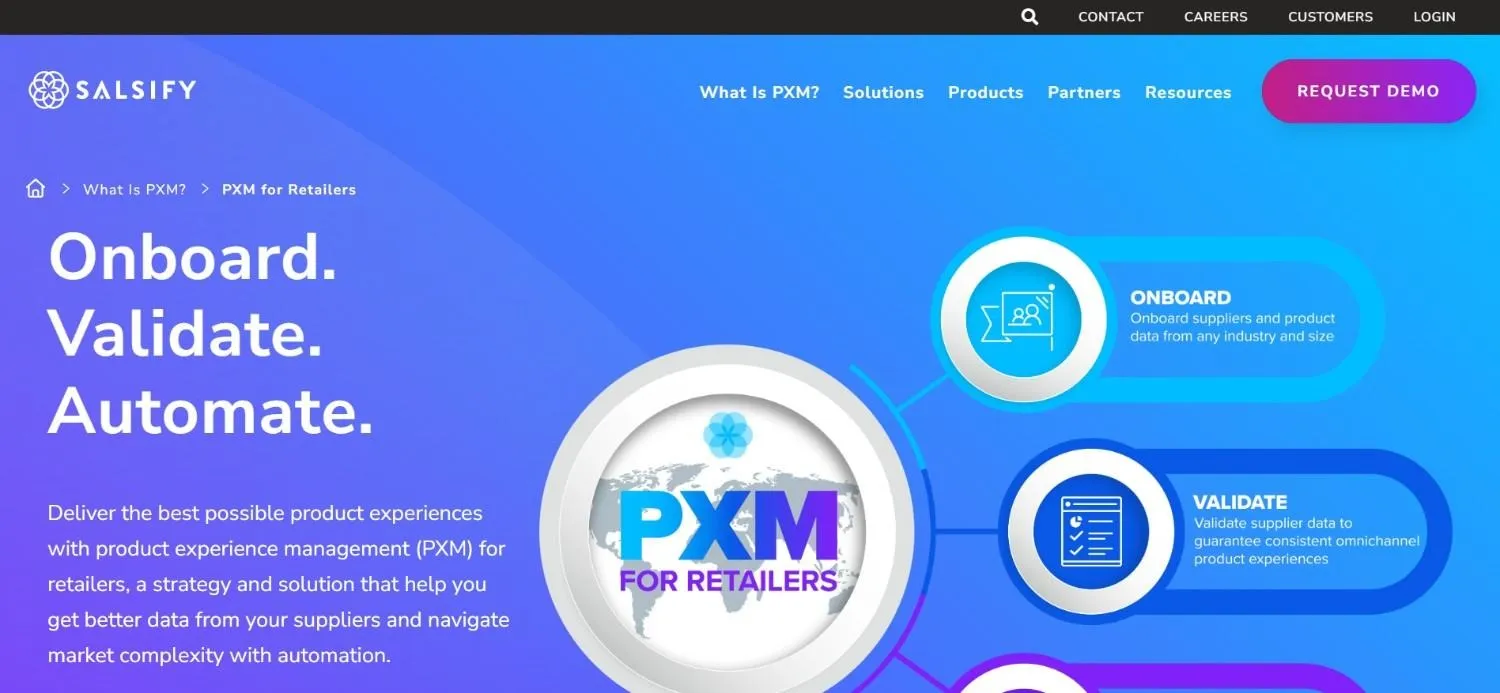
Salsify is an enterprise Product Experience Management (PXM) platform used by large Shopify Plus brands that need both a centralized PIM and advanced content syndication to retail distribution networks.
Its Shopify integration operates via API and partner connectors, allowing product content to flow from Salsify's centralized PIM to Shopify storefronts and partner retail channels simultaneously.
Salsify's differentiator is its combination of PIM capabilities with digital shelf analytics: real-time data on how product content is performing across each retail channel, including Shopify. This data-back approach helps large teams prioritize content improvements where they will have the most commercial impact.
Ideal For
- Fortune 500 brands and enterprise Shopify Plus merchants managing complex multi-retailer distribution
- Organizations that need real-time digital shelf analytics alongside Shopify PIM functionality
- Retail brands distributing products through large networks of brick-and-mortar and online partners alongside their Shopify storefront
- Teams that need both supplier collaboration and customer-facing content management in one platform
Top Features
- Digital Shelf Analytics: Real-time data on content performance across each channel including Shopify gives teams visibility into where product content gaps are costing conversion. This goes beyond what most PIM tools for Shopify provide.
- Product Content Network: Salsify maintains direct connections to major retailers, allowing product content to flow to partner retail systems alongside your Shopify storefront without separate integration projects for each partner.
- Supplier Collaboration Portal: Brands can collect inbound product content from suppliers through a structured portal, standardizing the data before it reaches Shopify.
Why They Stand Out?
Salsify is one of the stronger options for enterprise Shopify Plus brands whose product data challenge extends beyond the Shopify storefront into a complex network of retail distribution partners. The digital shelf analytics layer is a genuine differentiator not found in most Shopify-focused PIM tools.
Pros
- Digital shelf analytics provide real-time performance data alongside Shopify PIM management
- One of the largest pre-built retail distribution networks for content syndication
- Strong syndication capabilities with pre-built connectors to major marketplaces alongside Shopify
- Well-suited for enterprises with complex supplier-to-retailer content flows.
Cons
- Custom pricing with no public tiers: typically requires significant enterprise investment
- Complexity and onboarding time are substantial for smaller Shopify merchants
- Overkill for Shopify merchants with straightforward single-channel catalog management needs
- Less suited for Shopify merchants focused on assortment expansion rather than content distribution.
Pricing
Salsify does not publish standard pricing. Its plans are customized based on catalog size, number of channels, SKU count, and enterprise feature needs, so you should expect an enterprise-level investment and contact their sales team for a custom quote.
Final Verdict
Salsify is one of the best PIM for Shopify Plus-enabled brands managing multi-retailer content distribution. Its cost, complexity, and enterprise focus make it inaccessible for the majority of Shopify merchants whose primary challenge is catalog management rather than retail network syndication.
5. inRiver
Overview
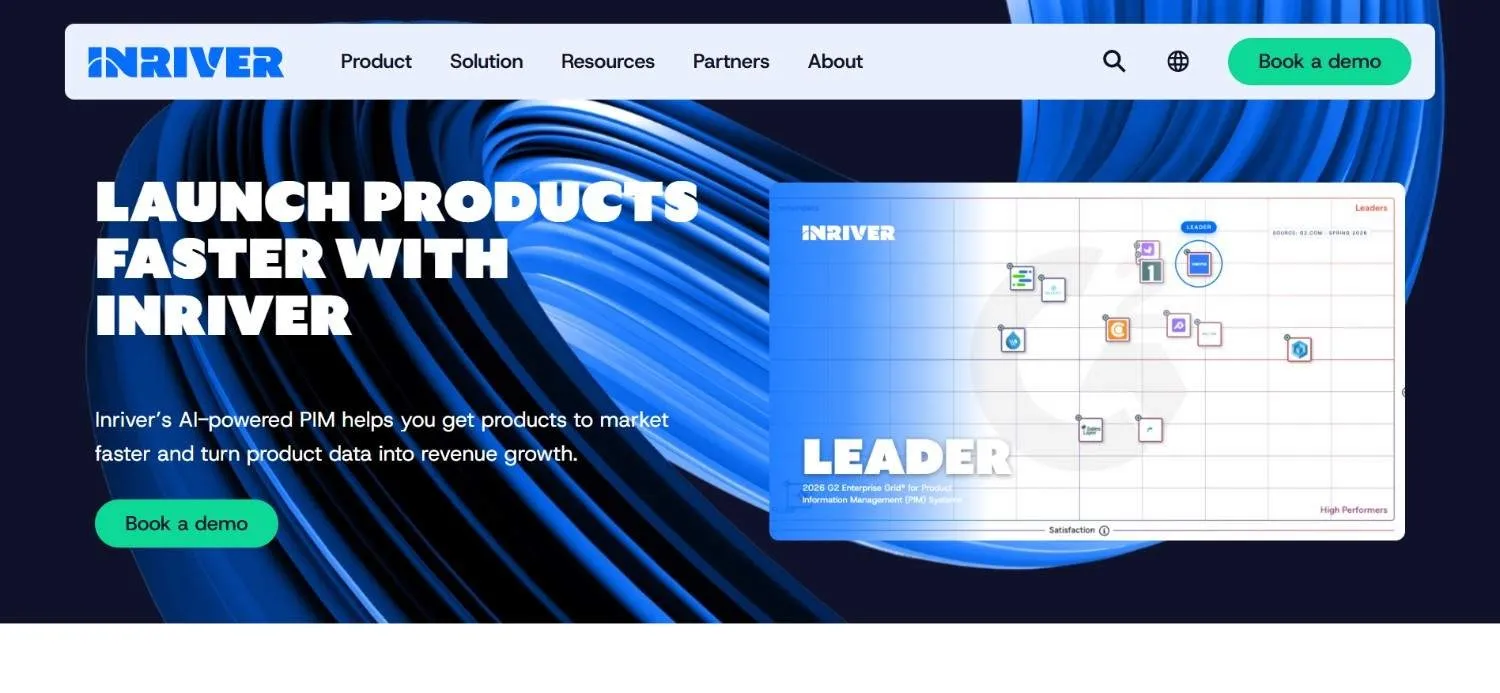
inRiver is a cloud-based PIM platform with a Shopify App Store connector, particularly well-suited for B2B Shopify stores and merchants with technically complex product catalogs - large numbers of variants, accessory relationships, compatibility matrices, and downstream distributor requirements.
Its feed engine handles multi-channel distribution including Shopify, and its reseller self-service portal allows downstream partners to access product content independently. inRiver positions itself around product relationship management: not just managing attributes, but managing how products relate to each other across accessories, spare parts, bundles, and compatible configurations.
Ideal For
- B2B Shopify merchants and manufacturers with technically complex product catalogs and relationship structures
- Shopify Plus merchants with large distributor or reseller networks that need self-service product content access
- Organizations where product compatibility, accessory relationships, and configuration data are core to the customer experience
- Shopify merchants also managing catalog distribution to wholesale and B2B portals
Top Features
- Product Relationship Management for Shopify: Models complex relationships between products: accessories, compatible items, spare parts, bundles – maintaining data integrity for technically complex Shopify catalogs where simple attribute management is insufficient.
- Feed Engine for Shopify Syndication: A dedicated feed engine formats and distributes product content to Shopify and external trading partners, with pre-built connectors to major retail destinations.
- Reseller Self-Service Portal: Downstream resellers or distributors can access, filter, and download product content independently through a self-service portal, reducing the internal team's workload while keeping partner content current.
Why They Stand Out?
inRiver is one of the stronger options for Shopify merchants in B2B, manufacturing, or technically complex product categories where the primary challenge is managing product relationships and configurations alongside a Shopify storefront, not just managing attributes.
Pros
- Strong product relationship management for technically complex Shopify catalogs
- Reseller portal adds genuine value for Shopify merchants with downstream partner networks
- Feed engine supports broad multi-channel distribution from Shopify alongside other platforms
- Shopify App Store connector available for direct integration.
Cons
- Enterprise pricing without public tiers: less accessible for mid-market Shopify merchants
- Interface and configuration complexity require experienced PIM administrators
- Less suited for DTC Shopify merchants with simpler catalogs where relationship management is not a primary need
- Limited AI enrichment capabilities compared to newer platforms.
Pricing
Inriver offers 4 tiers: Foundation, Core, Professional, and Enterprise. All tiers are custom-priced based on business size, catalog volume, and feature requirements. Teams can add modular "value scalers" to any tier for additional flexibility. Pricing must be requested through a direct demo with an Inriver representative.
Final Verdict
inRiver is a sound choice for B2B Shopify merchants and manufacturers where product relationship management, reseller portals, and complex catalog structure are core operational requirements. It is less suitable for DTC Shopify merchants or businesses without dedicated PIM administration resources.
6. Pimcore

Overview
Pimcore is an open-source PIM platform that combines product information management, master data management (MDM), digital asset management (DAM), and content management (CMS) in a single architecture.
Its Shopify integration is handled via a third-party connector (Webkul), making it less plug-and-play than native integrations but highly configurable for technically resourced Shopify teams. Pimcore's appeal for Shopify merchants is its flexibility and zero licensing cost on the self-hosted community edition. Teams with developer resources can build exactly the data model, workflows, and integration logic their Shopify store requires without per-SKU or per-user pricing constraints.
Ideal For
- Shopify merchants with strong in-house development teams who want full customization control
- Organizations that need PIM, DAM, and CMS capabilities in one platform without separate licensing
- Businesses with complex, highly specific data modeling requirements that off-the-shelf Shopify PIMs cannot address
- Enterprises looking to avoid per-seat or per-SKU pricing models at large catalog scale
Top Features
- Unified PIM + DAM + CMS for Shopify: Consolidates product data, digital assets, and content management into one architecture, eliminating the integration overhead of running separate tools for each function alongside your Shopify store.
- API-First Architecture: Every feature is accessible via REST and GraphQL APIs, making Pimcore a natural fit for headless Shopify architectures or complex custom integrations with existing commerce stacks.
- Flexible Data Modeling: Define completely custom data structures for your Shopify product catalog; useful for merchants with highly specialized product attributes or regulatory compliance fields that standard PIM templates cannot accommodate.
Why They Stand Out?
Pimcore is one of the best PIM software for Shopify teams that are technically-adept and need maximum data modeling flexibility and want to avoid per-SKU or per-user licensing costs. The free, community edition removes the licensing barrier for organizations willing to invest in developer resources.
Pros
- Open-source community edition is free and highly extensible
- Unified PIM + DAM + CMS removes the need for multiple tools alongside your Shopify store
- API-first architecture works well with headless and composable Shopify setups
- No SKU-based or seat-based licensing on the self-hosted version.
Cons
- Shopify integration is via a third-party connector (Webkul), not a native Shopify App Store integration; less plug-and-play than alternatives
- Requires significant development resources to configure, maintain, and customize for Shopify
- Cloud-managed plans start at approximately $9,900/year; implementation costs add considerably to the total
- Long time-to-value compared to SaaS alternatives with native Shopify connections.
Pricing
Pimcore offers a free Community Edition for non-commercial and non-production use. Its Professional Edition starts at $9,900/year, the Enterprise Edition at $29,900/year, and PaaS pricing starts at $39,900/year.
Final Verdict
Pimcore is one of the best PIM for Shopify teams that are technically strong and need deep customization at a lower licensing cost. For merchants without development resources or businesses that need fast, native Shopify integration, it is not the right fit.
7. Catsy
Overview
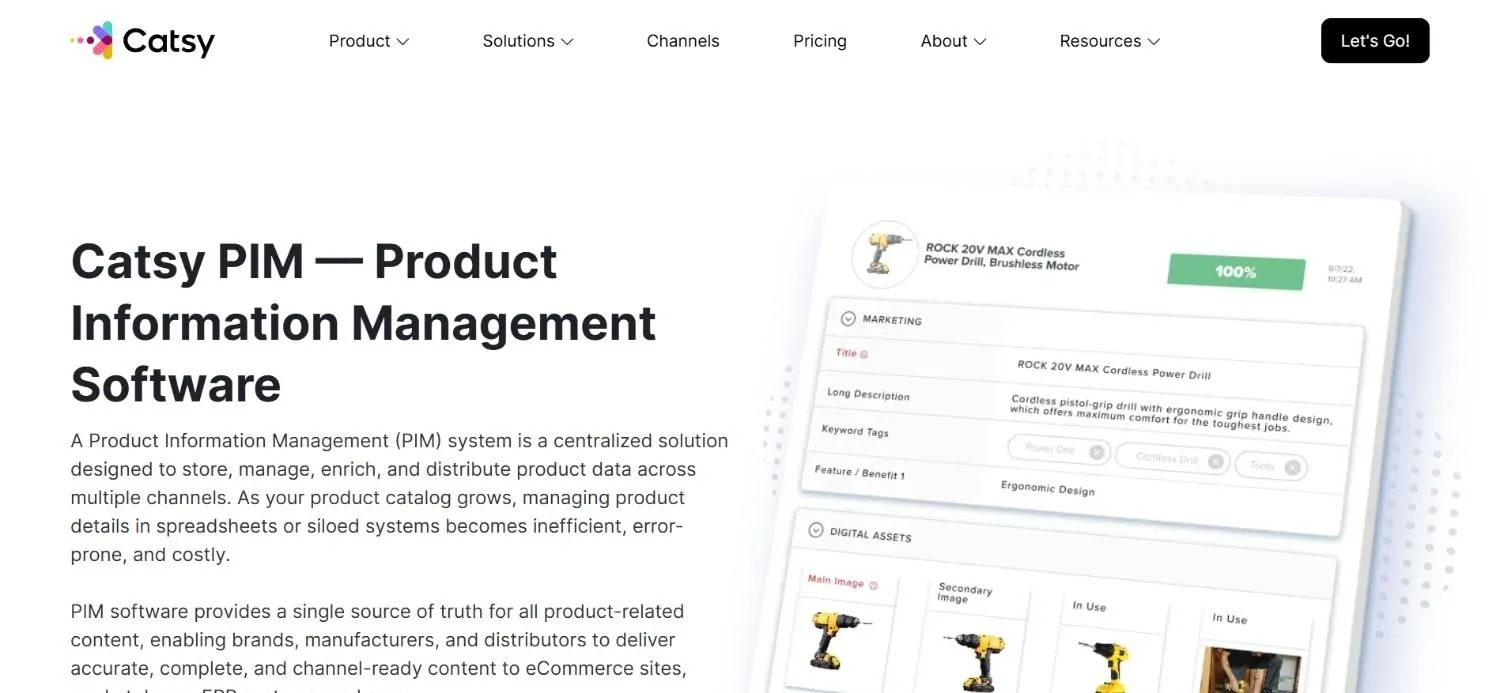
Catsy is a combined PIM and DAM platform designed for Shopify retailers that manage large volumes of product data alongside complex digital asset libraries. The company positions itself as a mid-market option for merchants who need both content management and asset management under one roof – avoiding the integration overhead of running separate PIM and DAM tools alongside Shopify.
Catsy's Shopify integration connects product data and digital assets directly to your Shopify storefront, with multi-channel publishing tools for distributing the same catalog to marketplaces and partner portals alongside Shopify.
Ideal For
- Shopify retailers with large image and video asset libraries tied to product catalogs
- Teams that need workflow collaboration for cross-functional product content management in Shopify
- Mid-market Shopify merchants managing products across multiple digital and physical channels
- Organizations that have historically run PIM and DAM as separate tools and want to consolidate
Top Features
- Integrated PIM + DAM for Shopify: Centralizes both product data and digital assets in one platform, linking images and videos directly to the relevant product records so teams always have the right assets alongside the right data when publishing to Shopify.
- Multi-Channel Publishing from Shopify: Built-in publishing tools format and distribute product content to Shopify, marketplaces, and partner portals from a single workflow - reducing duplication and ensuring channel-specific content requirements are met.
- Workflow and Collaboration Tools: Role-based access controls, approval workflows, and task assignment support multi-team coordination across large product content projects for Shopify merchants with cross-functional teams.
Why They Stand Out?
Catsy is one of the more practical options for Shopify retailers that specifically need a combined PIM and DAM without enterprise pricing. The integrated asset management capability is a genuine differentiator for teams that spend significant time managing and linking product imagery and video content for their Shopify store.
Pros
- Genuine PIM + DAM integration reduces overhead of managing two separate tools alongside Shopify
- Strong workflow and collaboration features for cross-functional Shopify content teams
- Good fit for Shopify merchants with rich-media product catalogs
- Multi-channel publishing covers most common retail channel requirements beyond Shopify
Cons
- Pricing is not publicly available: requires a demo request
- Not as well-suited for Shopify merchants whose primary need is catalog expansion or supplier management
- Smaller integration ecosystem than the largest enterprise PIM platforms
- Enterprise governance features are less developed than Akeneo or Salsify
Pricing
Catsy does not publish standard pricing, and plans are customized based on catalog size and team needs. It usually offers three tiers: a basic plan for small teams with one Shopify store, a mid-tier for larger teams managing multiple stores and marketplaces, and an enterprise plan with custom onboarding, managed delivery, and curated pricing.
Teams need to contact Catsy for a custom quote.
Final Verdict
Catsy is a sound choice for mid-market Shopify retailers needing a unified PIM and DAM with strong collaboration features. It is less suitable for Shopify merchants that need enterprise-grade data governance or businesses focused primarily on catalog expansion and supplier orchestration.
8. UnoPim
Overview
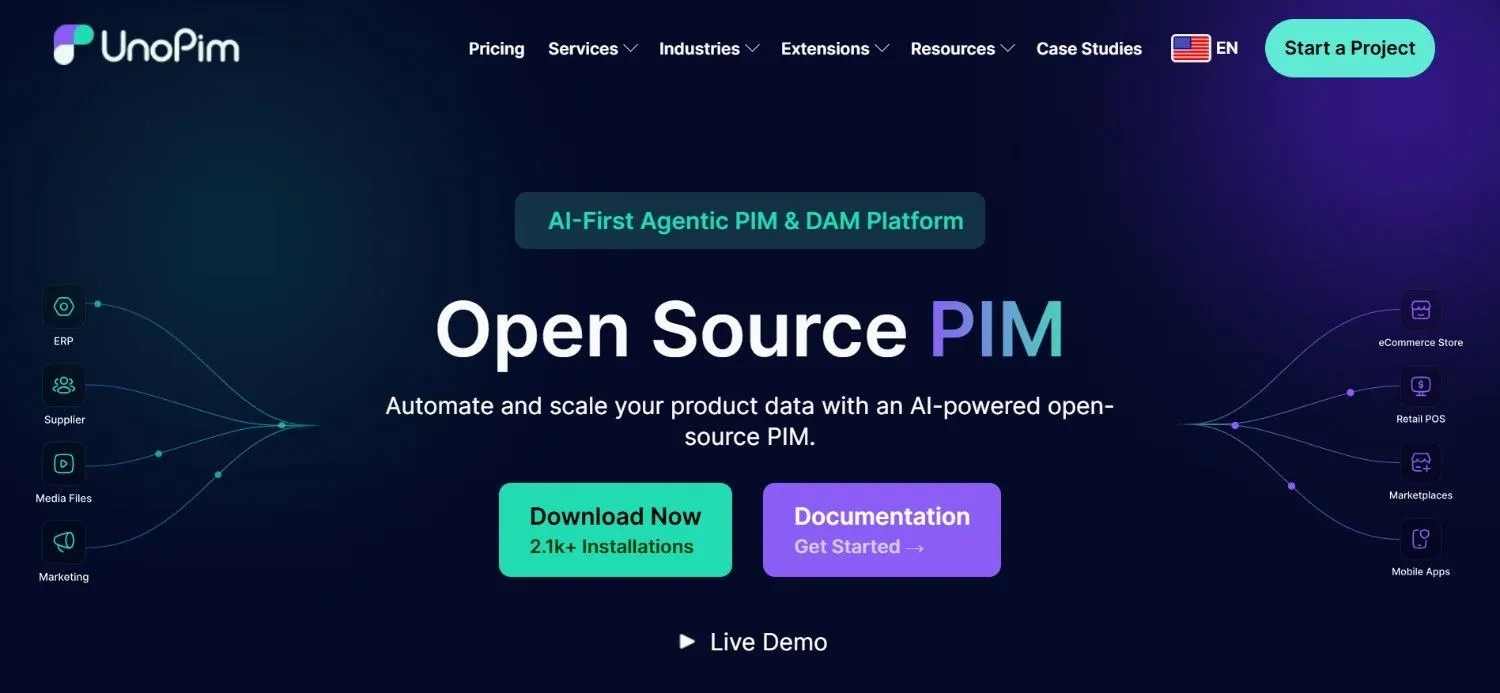
UnoPim is a free, open-source Product Information Management system built on the Laravel framework by Webkul, a company with a long track record of building flexible ecommerce tools. It is designed to help businesses of all sizes centralize product data and distribute it across sales channels, with a dedicated Shopify connector that exports product catalogs from UnoPIM directly to Shopify stores.
UnoPIM's core appeal for Shopify merchants is its accessibility: the PIM itself is free to use, and the Shopify connector is available at no cost through the UnoPIM extensions library. Teams with developer resources can self-host, customize the codebase, and extend the connector to fit their exact requirements. For smaller Shopify merchants and growing DTC brands that need structured product management without a licensing budget, UnoPIM is one of the most cost-effective entry points available.
Beyond the free tier, UnoPIM offers paid support plans, additional extensions (including a DAM module), and custom integration assistance through Webkul's services team.
Ideal For
- Budget-conscious Shopify merchants who need structured PIM without a monthly licensing fee
- Shopify SMBs and growing DTC brands self-hosting their tech stack and wanting full data ownership
- Technically resourced teams comfortable with open-source Laravel-based tools who want to customize their PIM-to-Shopify workflow
- Merchants managing multi-store or multi-locale Shopify setups who need free metafield mapping and locale support
- Shopify brands that want AI-powered product content generation without enterprise pricing
Top Features
- Free Native Shopify Connector: UnoPIM's Shopify connector exports product catalogs directly to Shopify stores at no cost. It supports simple and variant products, categories (exported as Shopify Collections), images, SEO data, prices, quantities, and metafield definitions, covering the core data types Shopify merchants need to manage.
- Shopify Metafield Mapping: The connector maps UnoPIM attributes to Shopify metafields, supporting single-line text, multi-line text, integers, JSON, color, rating, and URL types. Teams can export metafield definitions directly to Shopify, keeping custom attribute structures in sync without manual configuration in the Shopify admin.
- AI-Powered Content Generation: UnoPIM includes built-in AI content generation (Magic AI) that automatically produces product titles, descriptions, and SEO-optimized copy using large language model technology. For Shopify merchants managing large catalogs, this reduces the time and cost of content enrichment significantly.
- Multi-Store and Multi-Locale Support: The connector supports exporting product data to multiple Shopify stores simultaneously, with locale mapping that transfers product information in the correct language for each market. This makes UnoPIM a practical option for Shopify merchants running international storefronts without enterprise PIM budgets.
- Open-Source Customization: The full UnoPIM codebase and Shopify connector are open-source and available on GitHub. Teams can modify the connector to add fields, adjust sync logic, or integrate with other systems – without being constrained by vendor-controlled feature roadmaps.
Why They Stand Out?
UnoPIM is one of the very few PIM options for Shopify that is genuinely free to use at the core product level. While every other tool on this list charges a monthly fee from day one, UnoPIM lets Shopify merchants get structured product management and Shopify sync running without any upfront licensing cost.
The combination of free core access, AI content generation, metafield mapping, and multi-store support makes it a strong contender for cost-conscious Shopify merchants and growing brands that have developer resources but not enterprise software budgets. For Shopify teams already comfortable with open-source tools (Pimcore, WooCommerce, PrestaShop), UnoPIM fits naturally into that operating model.
Pros
- Free to use: the core PIM and Shopify connector both have no licensing cost
- Shopify metafield mapping and metafield definition export are built into the connector
- Multi-store export lets merchants sync product data to several Shopify storefronts simultaneously
- AI-powered content generation reduces manual product description writing at scale
- Open-source codebase is fully customizable to fit specific Shopify catalog and integration requirements
- Multi-locale support for international Shopify markets with language-level product data export
Cons
- Self-hosted deployment requires server setup, maintenance, and developer resources - there is no managed SaaS option
- Sync is primarily one-directional (UnoPIM to Shopify): data changes made in Shopify do not automatically flow back to UnoPIM
- The connector works with Shopify API version 2025-01 only; merchants on highly customized Shopify setups may need to verify compatibility
- No bidirectional sync, real-time push, or native Shopify App Store listing; the connector is installed via Composer, which requires developer involvement
- Community and support resources are less mature than commercial alternatives; paid support is available through Webkul but is not included in the free tier
Pricing
UnoPim Cloud Hosting has four plans: Starter at $50/month, Pro at $160/month, Enterprise at $499/month, and a Premium custom plan. The plans scale by SKU count, channels, locales, storage, and support level, with the Premium tier offering unlimited scale and custom infrastructure.
There's also a self-hosted option if you want to run UnoPim on your own infrastructure instead.
Final Verdict
UnoPIM is amongst the best PIM for Shopify merchants who want open-source PIM with genuine Shopify metafield support and multi-store capability. Its zero licensing cost makes it particularly practical for budget-conscious DTC brands, growing Shopify stores, and technically resourced teams that want full control over their data and codebase.
It is less suitable for non-technical teams that need a managed SaaS deployment or merchants that require bidirectional sync and real-time Shopify updates.
9. Sales Layer
Overview
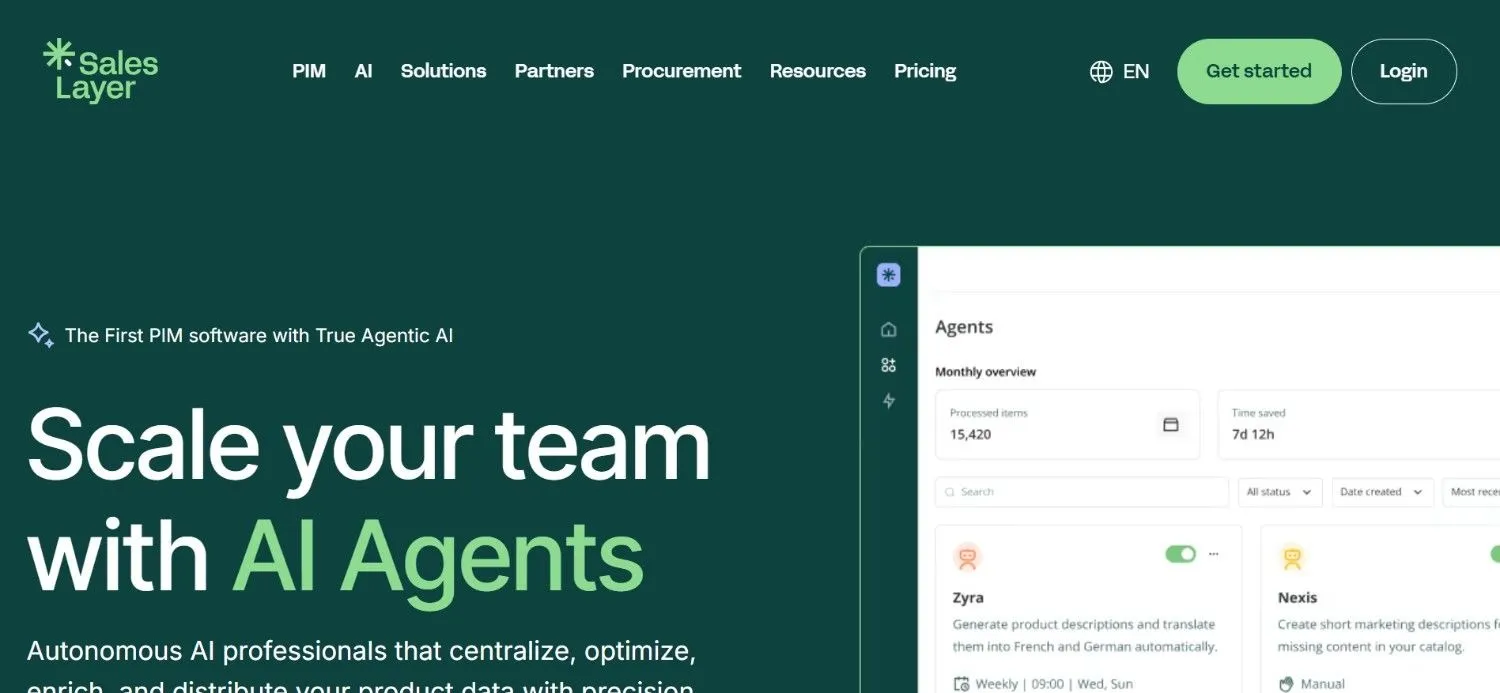
Sales Layer is a cloud-based PIM with a large library of pre-built channel connectors – including a native Shopify integration, and AI-assisted data quality management. It is designed to help mid-market Shopify merchants maintain accurate, complete product data across a broad range of sales channels without requiring developer involvement for each new channel connection.
Sales Layer's AI tools automatically score content quality across all products, flag incomplete attributes, and generate content suggestions, reducing the ongoing maintenance burden for Shopify merchants managing rapidly evolving catalogs.
Ideal For
- Mid-market Shopify merchants managing catalogs across multiple channels who need broad connector coverage
- Shopify brands with rapid new product launch cadences that need fast time-to-publish
- Teams that want AI-assisted data quality without building their own quality workflows
- Merchants who need to connect Shopify to a broad range of marketplaces and wholesale channels simultaneously
Top Features
- Native Shopify Integration with 200+ Channel Connectors: Direct Shopify connection alongside pre-built connectors to 200+ other sales channels, allowing mid-market merchants to maintain consistent product data across their full channel stack from one platform.
- AI-Assisted Data Quality: Automatic content quality scoring and enrichment suggestions flag incomplete Shopify product records before publishing, reducing the data errors that cost Shopify merchants conversion rate and customer trust.
- Centralized Catalog Management: All Shopify product data, variants, pricing, and assets live in one structured catalog, with publishing rules that automatically format data for each connected channel's specific requirements.
Why They Stand Out?
Sales Layer is one of the more practical options for mid-market Shopify merchants that need fast, broad channel coverage combined with data quality tooling. The combination of AI-assisted data management and a large connector library meaningfully reduces the manual overhead involved in maintaining a clean, multi-channel Shopify catalog.
Pros
- 200+ pre-built channel connectors reduce integration work beyond Shopify
- AI-assisted quality scoring reduces manual product data maintenance time
- Clean, accessible interface suitable for non-technical Shopify teams
- Good fit for merchants with rapid new product launch cadences
Cons
- Pricing is not publicly listed: requires a demo and custom quote
- Less flexible for deeply custom data modeling requirements
- Enterprise-level governance and workflow features are less developed than Akeneo or Salsify
- No native supplier onboarding or catalog expansion capabilities
Pricing
Sales Layer uses quote-based pricing with Scale, Premium, Enterprise, and Enterprise Plus plans. Pricing depends on users, SKUs, and features, and it also offers a free 30-day trial with monthly or annual billing.
Final Verdict
Sales Layer offers one of the best PIM integrations for Shopify merchants who want AI-assisted data quality management and broad channel coverage without enterprise-level complexity. It is less suitable for merchants that need deep customization or businesses focused on catalog expansion through supplier partnerships.
10. Apimio
Overview
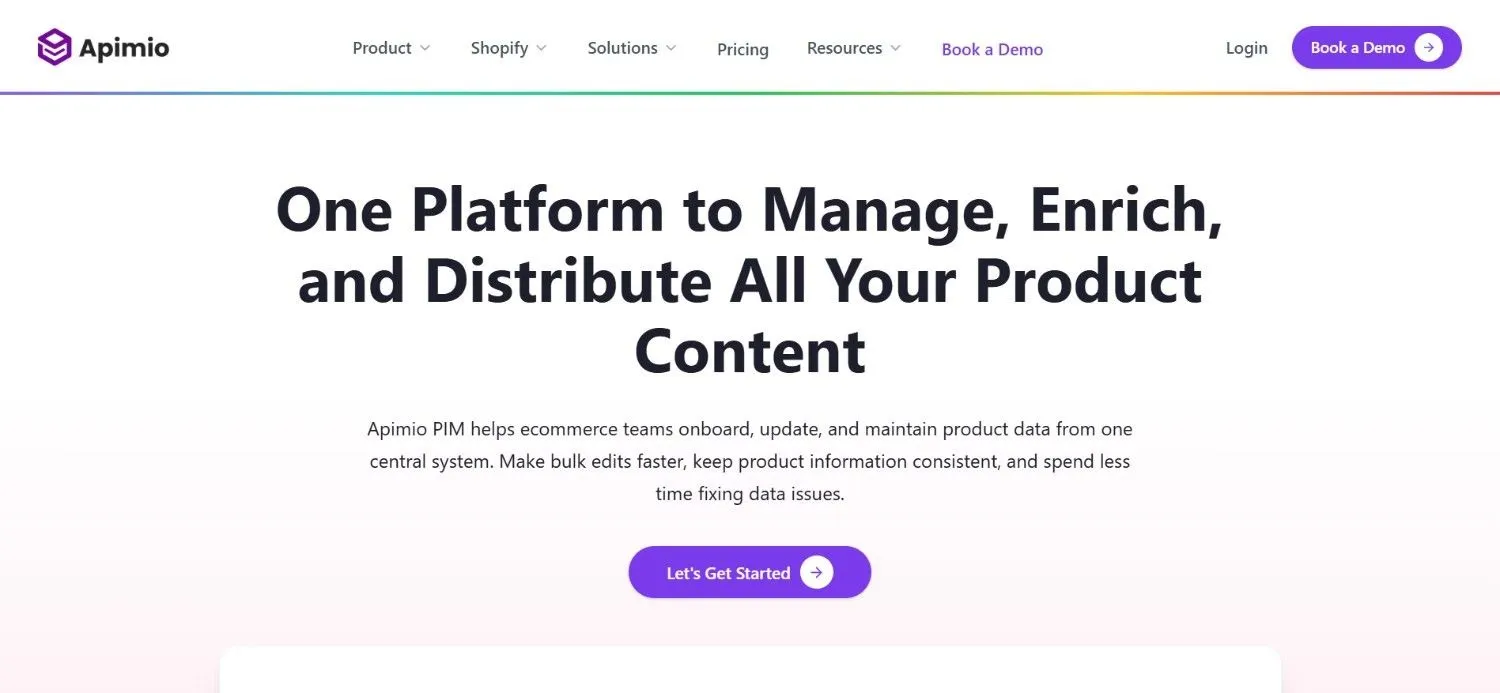
Apimio is a Shopify-native PIM designed specifically for SMBs and growing DTC brands on Shopify. It offers true two-way sync with Shopify (including full metafield support), a 30-minute self-service setup, and multi-store management – all without requiring a developer or a systems integrator.
Apimio positions itself as the practical alternative to enterprise PIM platforms for Shopify merchants who need structured product management without enterprise complexity or cost.According to Apimio's own benchmarks, most merchants are up and running with full Shopify sync in under 30 minutes; a meaningful differentiator against platforms that require weeks of implementation.
Ideal For
- Shopify SMBs and DTC brands with catalogs in the 100-5,000 SKU range
- Shopify merchants transitioning from spreadsheets to their first structured PIM
- Multi-store Shopify operators needing centralized product management across several storefronts
- Teams that need Shopify metafield management without developer involvement
Top Features
- True Two-Way Shopify Sync: Unlike most PIMs that push data one-way from PIM to Shopify on a schedule, Apimio supports bidirectional sync – changes made in Shopify flow back to Apimio automatically. This keeps both systems in sync without manual reconciliation.
- Full Shopify Metafield Support: Apimio manages all standard Shopify metafield types, including multi-store and Shopify Markets support, enabling richer product detail pages without developer involvement.
- 30-Minute Self-Service Setup: Apimio is designed for non-technical teams. No consultants, no implementation fees, no integration projects. The onboarding flow takes under 30 minutes from sign-up to first Shopify sync.
Why They Stand Out?
Apimio is one of the best PIM integrations for Shopify merchants in the SMB and growth-stage DTC space since it combines genuine Shopify integration depth (bidirectional sync, full metafield support) with accessible pricing and self-service setup. For merchants who want the capabilities of enterprise PIM without the enterprise price or timeline, Apimio is a strong contender.
Pros
- True bidirectional Shopify sync keeps both PIM and storefront in alignment automatically
- Full metafield support including all standard Shopify types
- 30-minute self-service setup with no consultants or implementation fees
- Affordable entry pricing from $199/month makes it accessible for growing Shopify brands
- Shopify Markets and B2B catalog support built in
Cons
- Catalog depth and advanced governance features are more limited than enterprise platforms
- Less suited for Shopify merchants with very large catalogs (50,000+ SKUs) or complex organizational requirements
- Smaller integration ecosystem beyond Shopify compared to enterprise platforms
- No supplier network or catalog expansion capabilities
Pricing
Apimio’s pricing starts at $199/month for the Basic plan, with a 14-day free trial and no hidden fees. The Advanced plan is $399/month, and the Enterprise plan starts at $999/month, with pricing scaling by stores, SKUs, storage, and features.
It also offers annual billing discounts and lets you upgrade or downgrade anytime.
Final Verdict
Apimio is a strong practical choice for Shopify SMBs and DTC brands that need genuine two-way sync, full metafield support, and a fast setup without enterprise complexity. It is less suited for Shopify Plus enterprises with large catalogs or coomplex multi-team governance requirements.
How to Choose the Best PIM for Shopify?
Here’s how you can pick the best PIM for Shopify brands, both basic and advanced:
1. Assess Your Shopify Integration Depth Requirements
Not all PIM tools integrate with Shopify equally. The minimum you need is reliable one-way sync for standard product fields. What you may actually need: especially as your catalog grows - is support for Shopify's metafield system (17 distinct types including MetaObjects), bidirectional sync so changes in Shopify flow back to your PIM automatically, and real-time updates rather than scheduled batch syncs.
Map your Shopify data model first. If you rely on metafields for rich product detail pages, cross-linked accessories, or structured custom content types via MetaObjects, confirm that any PIM you evaluate covers those specific types before committing.
2. Match the Tool to Your Catalog Scale Today and in 18 Months
A PIM that is right for a 500-SKU Shopify catalog may not be right for a 10,000-SKU catalog. And a PIM built for 10,000 SKUs may be overkill for a merchant at 500.
Be realistic about where your Shopify catalog is heading in the next 12-18 months. If you are planning rapid assortment expansion through partner brands, that changes the calculus significantly. Carro is built for that trajectory; traditional PIMs manage existing data more cleanly but do not help you grow the catalog itself.
3. Decide Whether You Need PIM Only or PIM Plus Catalog Expansion
This is the distinction most Shopify PIM comparison guides miss. Traditional PIM tools - Akeneo, Plytix, Salsify, inRiver – manage the product data you already have. They do not help you add new products to your Shopify store from external brand partners.
For Shopify merchants whose growth strategy includes expanding assortment through vetted brand partnerships; adding new categories, testing new product lines, or operating a curated marketplace model on Shopify – a platform like Carro addresses both product data management and catalog expansion in one integration.
That is worth evaluating separately from pure-play PIM tools.
4. Calculate Total Cost of Ownership
The license fee is only part of the cost. Enterprise PIM platforms like Akeneo and Salsify typically require professional services or a systems integrator for implementation, often adding $20,000-$100,000+ to year-one costs.
Shopify-native tools like Apimio and Carro have much lower implementation overhead and can be operational within hours.For each platform you evaluate, calculate: license + connector cost + implementation time + ongoing maintenance.
The platforms that look expensive on the licensing page often look cheaper than enterprise alternatives when total first-year cost is considered.
5. Check Shopify App Store vs. API Integration
Shopify App Store integrations are generally easier to install, configure, and maintain for non-technical teams. API integrations provide more customization but require developer resources.
Connector-based integrations; like Pimcore via Webkul, or Akeneo via StrikeTru - sit in between: they use an App Store front-end but require configuration that goes beyond a one-click install. Open-source options like UnoPIM are installed via Composer and require developer setup, but carry no licensing cost.
Know your team's technical capacity before evaluating PIM options. If you do not have an in-house developer, prioritize tools with native Shopify App Store integrations and self-service onboarding. If you have developer resources and a tight budget, UnoPIM's free open-source model is worth evaluating before committing to a paid SaaS alternative.
Everything You Need to Know About PIM for Shopify
| Company | Pros | Cons | Ease of Use | Shopify Integration | Support | Affordability |
|---|---|---|---|---|---|---|
| Carro | Catalog expansion + PIM sync, no inventory risk, real-time Shopify sync | Best for growth-focused retailers; limited for large static catalogs | ★★★★☆ | ★★★★☆ | ★★★★☆ | ★★★★☆ |
| Akeneo | Enterprise governance, AI enrichment, strong ecosystem | High cost, long implementation, one-way sync | ★★★☆☆ | ★★★★☆ | ★★★★☆ | ★★★☆☆ |
| Plytix | User-friendly, affordable, App Store integration | Limited scale, basic metafield support | ★★★★☆ | ★★★★☆ | ★★★★☆ | ★★★★☆ |
| Salsify | Digital shelf analytics, retail distribution network | Enterprise pricing, overkill for most Shopify merchants | ★★☆☆☆ | ★★★★☆ | ★★★★☆ | ★★☆☆☆ |
| inRiver | Product relationship management, reseller portal, App Store connector | Enterprise complexity, less suited for simple DTC catalogs | ★★★☆☆ | ★★★★☆ | ★★★★☆ | ★★★★☆ |
| Pimcore | Flexible, open-source, unified PIM + DAM + CMS | Third-party Shopify connector, requires developers | ★★★☆☆ | ★★★☆☆ | ★★★★☆ | ★★★★☆ |
| Catsy | Unified PIM + DAM, strong collaboration features | No public pricing, smaller integration ecosystem | ★★★★☆ | ★★★★☆ | ★★★★☆ | ★★★★☆ |
| UnoPIM | Free open-source, metafield mapping, AI content gen, multi-store | Self-hosted only, one-way sync, developer setup required | ★★★★☆ | ★★★★☆ | ★★★★☆ | ★★★★★ |
| Sales Layer | 200+ connectors, AI quality scoring, clean UI | No public pricing, limited deep customization | ★★★★☆ | ★★★★☆ | ★★★★☆ | ★★★★☆ |
| Apimio | True bidirectional Shopify sync, metafields, 30-min setup | Less suited for 50K+ SKU catalogs, smaller ecosystem | ★★★★☆ | ★★★★☆ | ★★★★☆ | ★★★★★ |
Grow Your Shopify Catalog with Carro
If you are a US-based Shopify merchant looking for the best PIM for Shopify that goes beyond managing the catalog you already have and helps you build the one you actually want, Carro is built for that.
We combine real-time Shopify product sync, automated order routing, and a curated network of 1,500,000+ products from vetted brand partners in a single platform. Our merchants have seen up to 3.5x revenue growth and 180% AOV growth – not just from cleaner product data, but from a more elastic Shopify catalog that grows without inventory risk.
One of our customers, VYSN, built a scalable brand network on Carro, expanding their product assortment across multiple Shopify-connected platforms from a single centralized place, without adding operational friction. No warehouse overhead. No manual fulfillment workflows. No stale Shopify listings. Your catalog grows; the operational complexity does not.
Carro is purpose-built for US-based Shopify merchants – with no long-term contracts, per-transaction fees, or minimum order requirements. Book a demo with Carro and see how the platform works for your specific Shopify store and catalog goals.
FAQs About PIM for Shopify
What is the best PIM for Shopify in 2026?
Carro is the strongest choice for US-based Shopify merchants focused on expanding their catalog through vetted brand partnerships without inventory risk, with merchants reporting up to 3.5x revenue growth.
What should I consider when choosing the right PIM for Shopify?
To choose the best PIM for Shopify, focus on three critical factors: the depth of native Shopify integration (especially metafield/MetaObject support), whether the tool scales for your 18-month catalog growth target, and if your strategy involves managing existing products or expanding your catalog via supplier partnerships.
How does Carro differ from similar PIM alternatives for Shopify?
While most PIMs (like Akeneo or Plytix) are data management tools for existing data, Carro is a growth infrastructure platform that helps you grow your catalog. It connects Shopify merchants to a hand-matched network of 1,500,000+ vetted brand partners and automates the full supplier lifecycle (ingestion, order routing, fulfillment, payouts) without requiring inventory investment.
How do I get started with Carro for my Shopify store?
To get started with Carro you can book a demo with our team, who will walk through your current Shopify catalog setup, your channel requirements, and your growth targets to identify which plan fits your operation. From there, onboarding connects your Shopify store natively and your account manager identifies the first set of brand partners to add to your catalog. Most merchants have new products live in their Shopify store within days of onboarding.
How easy is it to switch to Carro from my current Shopify setup?
Switching to Carro is straightforward for Shopify merchants. Our native Shopify integration connects without platform migration. Most merchants are operational within hours of onboarding, not weeks. Our account management team handles the partner matching and product onboarding process, so your internal team does not need to manage the relationship-building side of catalog expansion.
Does a PIM replace Shopify's native product management?
A PIM for Shopify does not replace native product management; it sits above the Shopify admin as the single source of product data truth. Data automatically syncs to Shopify, allowing your team to manage information centrally and ensure product consistency across all channels without manual duplication.