Best Product Sourcing Platforms in 2026 (Top-Rated Tools Reviewed)
Discover the best product sourcing platforms in 2026. Compare Carro, Thomasnet and SaleHoo to add products from vetted suppliers. Discover more.
Of the best product sourcing platforms in 2026, Carro is the top pick for retailers and marketplaces that want to add products from vetted brands and let those brands ship the orders. Carro's Merchant Services holds the authorization to represent brand and distributor inventory, so one commercial relationship covers the brands you add from its network, and you can test each one on real demand with no purchase order.
For most of retail history, sourcing meant buying stock, with a minimum order placed months ahead and a warehouse to hold it until it sold. Every new supplier also added a separate agreement and price list for someone to manage. For a retailer or marketplace adding assortment, the faster route now runs through vetted brands that already hold the stock and ship each order themselves.
This comparison is based on verified G2 and Capterra reviews and a detailed analysis of each tool, carried out in September 2026.
Key Takeaways (TL;DR)
- Why Do You Need It: Every supplier you add the traditional way brings its own supply agreement and a purchase order for stock you hold before you know it will sell. A product sourcing platform shortens that path, and the strongest ones let you list products from vetted suppliers who ship each order.
- Who It's For: Retailers and marketplaces adding assortment without more inventory, along with ecommerce teams testing new brands and categories. Several tools below also serve resellers and industrial buyers searching for suppliers.
- The Best Overall Product Sourcing Platform: Carro. It gives retailers and marketplaces a network of 1,500,000 products from established brands to test with no purchase order, then runs supplier onboarding, catalog sync, order routing and settlement in one workflow.
- What Sets Carro Apart: Carro's Merchant Services holds the authorization to represent brand and distributor inventory, so one commercial relationship with Carro replaces a separate supply agreement with every brand you add.
- How to Choose the Right One: Check whether brands are vetted and covered by one commercial relationship, whether you can test them with no purchase order, and how quickly each new supplier is onboarded and kept in sync. Those factors separate a supplier list from a sourcing channel you can sell from.
Top Product Sourcing Platforms in 2026 at a Glance
| Company | Best For | Key Features | Pros | Cons |
|---|---|---|---|---|
| Carro | Retailers and marketplaces adding vetted brands without buying stock | Merchant Services, supplier onboarding, catalog sync, order routing, settlement on shipment | One relationship covers many brands; test with no purchase order; orders and payouts in one workflow | USD settlement in Stripe-approved countries; hand-matched network on Growth plan; less suited to the cheapest generic goods |
| Thomasnet | Industrial buyers finding North American manufacturers and distributors | Supplier search by category and location, supplier profiles, RFQs, shortlists | Broad industrial directory; fast RFQ responses; certification details | Some listings miscategorized or dated; no ecommerce order flow; purchasing handled offline |
| SaleHoo | New online sellers researching wholesale and dropship suppliers | Vetted supplier directory, market research lab, dropship automation, training | Pre-vetted suppliers; demand research; responsive support | Cluttered interface; MOQs and shipping times to check; few US supplier filters |
| Spocket | Small stores wanting US and EU dropship suppliers | Supplier catalog, product import, samples, order sync | Faster shipping from US and EU suppliers; wide catalog; simple Shopify import | Billing and refund complaints; slow support; thin margins on some products |
| Syncee | Stores wanting dropship and wholesale suppliers in one marketplace | Supplier marketplace, automatic upload, daily stock sync, feed import | Suppliers from many locations; stock alerts; handles complex CSV feeds | Many items ship from China; billing complaints; high prices on some items |
| CJdropshipping | Dropshippers wanting sourcing and fulfillment from one agent | Sourcing requests, warehousing, fulfillment, custom packaging | Large catalog; free sourcing requests; works with many store types | Shipping can be slow; manual multi-store listing; mixed service reviews |
| Rokt Catalog | Shopify and WooCommerce retailers adding curated third-party brands | Curated brand network, fast store connection, partner reconciliation | Fast setup; curated brands; proactive support | Smaller partner pool; payouts not fully automatic; brand integration limits |
| Pietra | Creators and emerging brands launching their own products | Manufacturer marketplace, sampling, 3PL fulfillment, ecommerce tools | Approved vendors; sourcing and fulfillment together; hands-on team | Peak-season fulfillment delays; stacked fees; small review base |
| Inventory Source | Resellers automating distributor dropship feeds | Supplier directory, product upload, inventory sync, order routing | Large distributor network; low-maintenance sync; bulk pricing rules | Support complaints; pricing bugs reported; outages reported |
| AutoDS | Solo dropshippers automating marketplace-sourced stores | One-click import, price and stock monitoring, automated fulfillment, product research | Time saved on monitoring; multi-store dashboard; research tools | Billing complaints; frequent bugs; monitoring gaps for some suppliers |
What Are Product Sourcing Platforms?
Product sourcing platforms are software tools and marketplaces that help a business find suppliers and turn their products into something it can sell. Some stop at a supplier's contact details, while others carry the product into your store and route each order and its payment to the supplier.
The category is broad because sourcing itself is broad. Buyers reach suppliers through several kinds of product sourcing tools, each built for a different buyer and a different kind of purchase.
Global B2B marketplaces such as Alibaba.com and Global Sources are among the top b2b platforms for buying direct from manufacturers, usually in volume and with lead times measured in weeks. Wholesale marketplaces such as Faire connect independent retailers with brands that sell in smaller wholesale quantities.
Industrial supplier directories such as Thomasnet help procurement teams find manufacturers and distributors by category and certification. General supplier directories such as SaleHoo list vetted wholesale and dropship suppliers for online sellers to contact, and Pietra pairs a manufacturer marketplace with fulfillment for founders making their own products.
Dropship sourcing apps sit closer to the store. Spocket, Syncee, CJdropshipping, Inventory Source and AutoDS import supplier products into Shopify or another storefront and pass orders back for fulfillment, mostly for independent sellers. That group gets a fuller review in our dropship software comparison.
Product sourcing tools built as curated brand networks, such as Carro and Rokt Catalog, work at the retailer end. Established brands approve each retailer, and the network carries product data, stock levels, orders and payments between them. Buyers comparing the best product sourcing platforms usually need one of these types far more than the others, so naming the type first narrows the shortlist fast.
Why Do You Need Product Sourcing Platforms?
Assortment is where retailers and marketplaces compete, and a product added the traditional way starts with a purchase order. That ties up cash in stock before a single customer has shown interest.
The purchase order is only the first commitment. Someone has to forecast the category and find warehouse room for the stock, and whatever does not sell keeps its cost on your books until it clears.
Each new supplier also brings its own paperwork. A separate supply agreement, a new price list, a different way of sending orders and another invoice format all land on the same team.
A signed partner agreement is not a sellable product. Connections, product data, partner prices, billing details and shipping setup still have to be coordinated before the first order, and many suppliers have no technical staff to help.
Dropship sourcing changes the order of operations. The supplier holds the stock and ships each order once a customer buys it. You choose what to list and set the price. Through a curated network, the brands are vetted before you see them, and one commercial relationship can cover many of them.
In practice, you can test a brand on real customer demand and drop it if it does not sell, with nothing left in a warehouse. If you run a Shopify store, our guide on how to sell on Shopify without inventory walks through the setup.
The best product sourcing platforms carry a product past the supplier list to a shipped, paid order, with stock and prices kept current along the way. For retailers and marketplaces, that follow-through decides how fast a new brand earns its first sale.
Best Product Sourcing Platforms: In-Depth Review & Comparison
We judged each tool on how suppliers are vetted and how many agreements stand behind each new one. We also looked at whether you can test products without buying stock, how quickly a supplier is onboarded and kept in sync, and what happens to orders and payments after a product is listed.
Ratings and review themes reflect verified user reviews as of September 2026. Where a vendor's review listing uses a different product name, we note it in that entry.
1. Carro
Overview
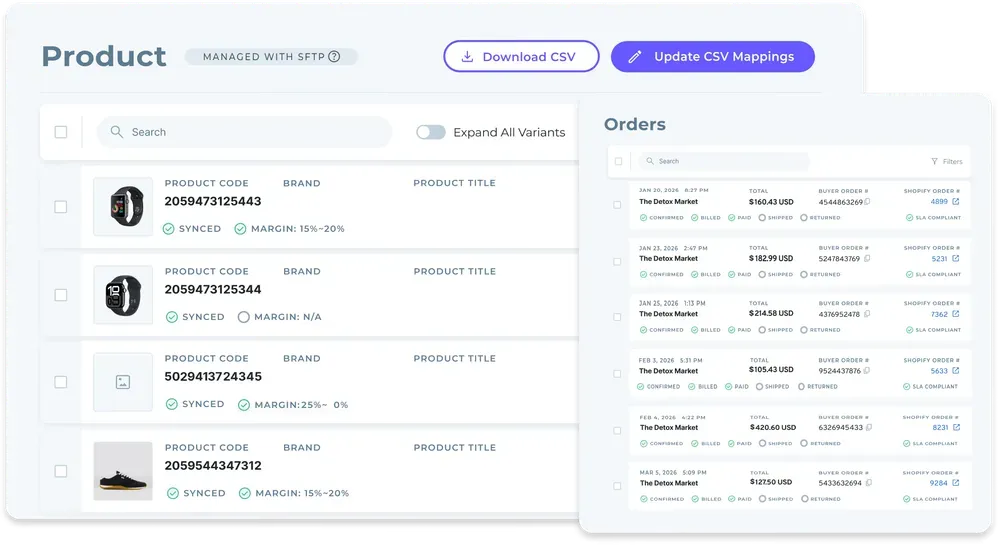
Carro is a dropship platform, used as a product sourcing platform by retailers and marketplaces that want vetted brands and distributors in their catalog. They add products without buying stock, from brands that approve each retailer first. Carro runs the supplier operations between them, from onboarding and catalog sync to order routing and payouts.
For sourcing, the part that matters most is Merchant Services. Carro holds the authorization to represent products from brands and distributors in agreed selling channels, so a retailer establishes one commercial relationship with Carro for that inventory. Teams start from audience and category criteria, review the brands that fit, confirm channel rights and terms, and mark the ones to test with no purchase order.
The rest of the workflow runs in four more modules: Supplier Onboarding, Catalog & Inventory, Order Execution and Payment Settlement. Retailers can pick from a network of 1,500,000 products from established brands or connect the partners they already work with.
Customers range from curated marketplaces to enterprise retailers, including PacSun, eBay, NBCUniversal and Huckberry.
Ideal For
- Retailers filling assortment gaps with vetted brands they do not want to buy stock from up front
- Marketplace operators adding sellers and products without adding headcount
- Ecommerce directors and heads of merchandising testing new brands and categories on real demand
- Brands and distributors that want more retail partners from one catalog, approving each one
Top Features
- Merchant Services: one commercial relationship with Carro covers the brand and distributor inventory it represents, so adding a brand no longer means negotiating a new supply agreement.
- Hand-matched introductions. On the Growth plan, Account Managers connect you with complementary brands by category and audience fit.
- Supplier onboarding in days. Each supplier moves through a visible sequence of account details, connection, product data, partner price list, test order and go-live, and the test order checks fulfillment, tracking and invoicing before anything is sold.
- Orders that split by supplier: one customer order becomes separate supplier orders, each routed into the system that supplier already uses, with stalled orders and SKU mapping errors flagged in an exceptions view.
- When an order ships, the shipment triggers the supplier invoice and the charge to the retailer, so suppliers can be paid the day it ships.
Why We Stand Out
Carro covers the full path from a brand you have never worked with to a paid supplier invoice. Its dropship automation software runs onboarding, catalog sync, order routing and settlement the same way for every supplier, so the tenth brand takes the same steps as the first.
It also fits the store you already run. Carro connects to Shopify, Magento 2, WooCommerce and BigCommerce, plus EDI, API, SFTP and CSV, and works beside your existing payments, shipping, ERP and accounting systems with no replatform or custom build. Suppliers without technical teams get hands-on setup help from the Carro team.
The same catalog is ready for agentic commerce. Carro keeps stock, prices and product data current across every supplier, on the cadence each connection supports, so an order placed by an AI shopping agent routes to the supplier that holds the stock and settles per order. Carro reports that its retailers see up to 3x catalog size and up to 3.5x revenue growth.
Pros
- One commercial relationship covers the brands and distributors Carro represents
- Brands and categories can be tested on real demand with no purchase order
- Suppliers onboard in days, including suppliers without a technical team
- Orders split by supplier and route into each supplier's own system
- Supplier invoices follow shipment, with fees, commissions, shipping costs and returns tied to each order
Cons
- The network centers on vetted, established brands, so sellers hunting the cheapest generic overseas products will find consumer dropship tools a closer fit
- The hand-matched supplier network and priority support sit on the Growth plan
- Settlement runs in USD through a connected payment account in Stripe-approved countries
Customer Reviews
Carro holds 4.4 out of 5 across 123 G2 reviews and 4.8 out of 5 across 16 Capterra reviews, with Capterra reviewers scoring it 4.8 for ease of use, 4.8 for value for money and 4.6 for customer service.
Reviewers praise the Shopify integration and quick setup, with orders from retail partners landing in the brand's own store and shipping like any other order. Many also describe hands-on onboarding help from real people and new retail channels they could not open alone.
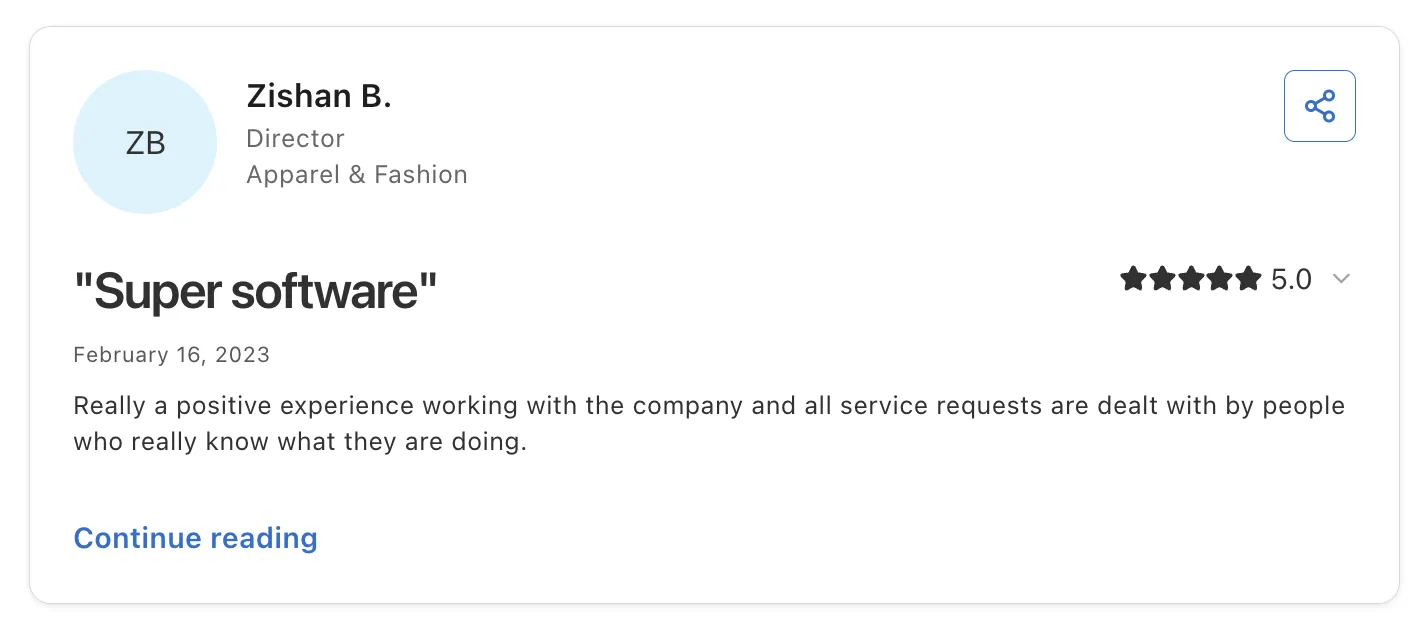
Reviewers also highlight the support behind each new partnership. One director says service requests are handled by people who know what they are doing, and brands credit the team with introductions to retailers.
Final Verdict
For retailers and marketplaces that want to source from vetted brands and sell those products without buying the stock, Carro is the strongest option on this list. One relationship covers the brands it represents, and each order stays connected to its shipment and supplier payment in one workflow.
Customer results back this up: The Gents Store added more than 2,500 products through Carro, and Super73 added helmets, lights and other accessories from the network to become a one-stop shop for its riders.
2. Thomasnet
Overview
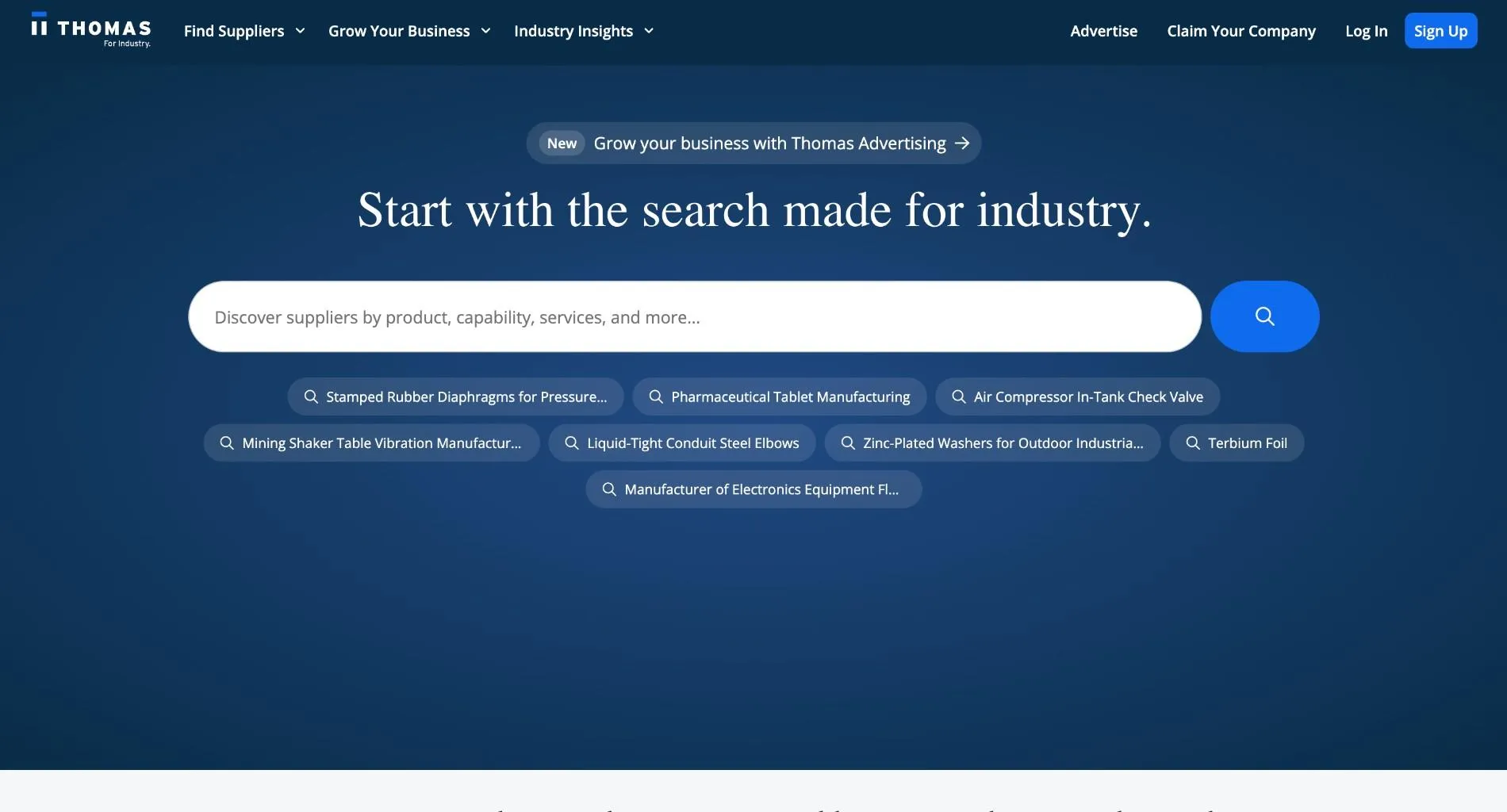
Thomasnet is an industrial sourcing and supplier selection service for North American buyers. By its own count, it holds information on more than 500,000 North American suppliers and more than 6 million products, from machined parts to plumbing supplies.
Procurement teams and engineers use it to find manufacturers and distributors and send them requests for quote. Buyers handling plumbing product sourcing in 2026, for example, can search by category and location, then shortlist suppliers with the certifications a project requires.
The purchase itself happens outside Thomasnet. Price and delivery terms are agreed with each supplier directly.
Ideal For
- Procurement teams sourcing industrial parts and MRO supplies in North America
- Engineers looking for custom manufacturers by capability or certification
- Purchasing managers building a shortlist of local suppliers before sending RFQs
Top Features
- Supplier search by category and location, so buyers can find qualified local suppliers in minutes.
- Supplier profiles. Company details, industries served, certifications and contact information sit on one page, which cuts the research behind each shortlist.
- Requests for quote sent through the directory to the suppliers you select.
- Compare and shortlist tools that save research history for later projects.
Why They Stand Out
Thomasnet is one of the strongest options for finding North American industrial suppliers. Its directory covers categories that consumer sourcing apps leave out, from custom machining to industrial MRO supplies.
Reviewers describe it as a trusted first stop for vendor research, with intuitive navigation and enough company detail to decide who gets an RFQ.
Pros
- Broad directory of North American manufacturers and distributors
- Search by industry, location and certification
- Fast RFQ turnaround from qualified suppliers
- Shortlists and saved research for repeat projects
Cons
- Some companies are miscategorized or irrelevant to the search
- Supplier data and contact details are not always current
- No product listing, order routing or payment handling for ecommerce
- Shortlist saving and Excel export occasionally fail, and there is no mobile app
Customer Reviews
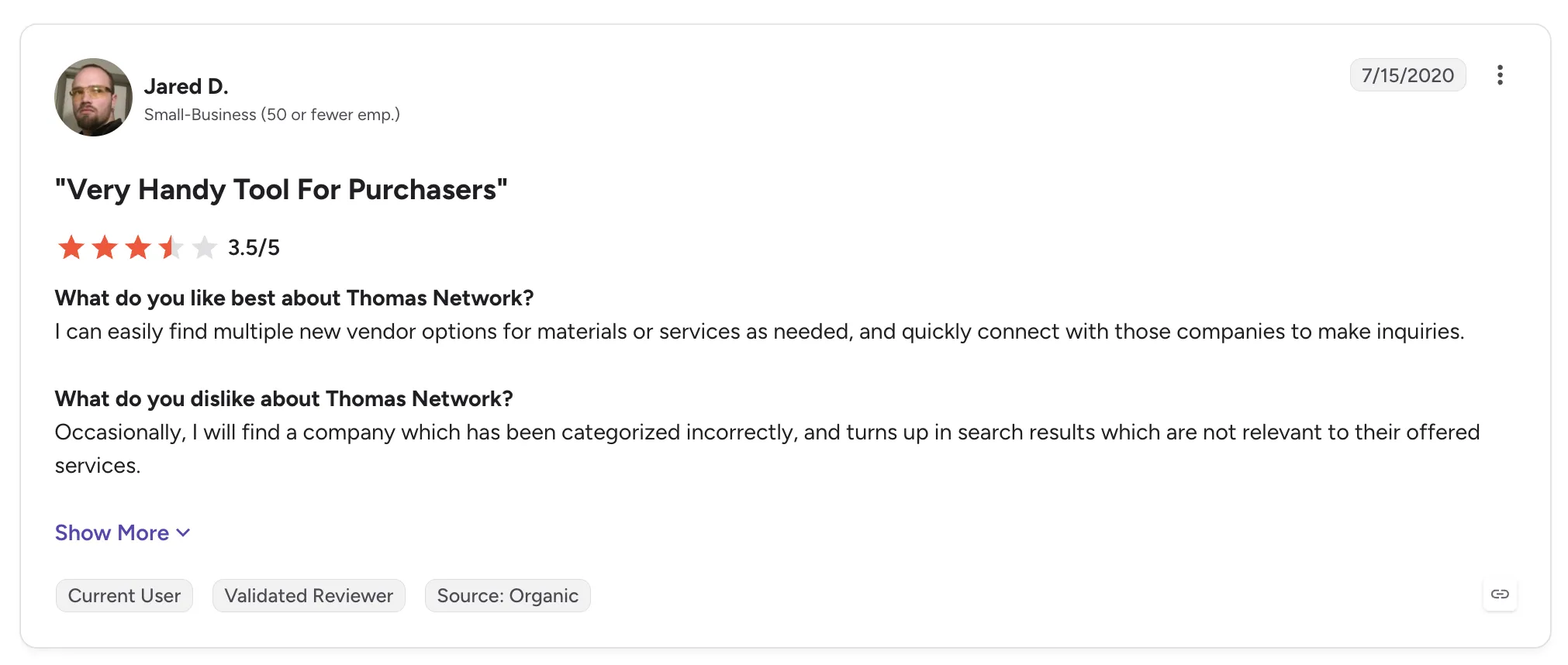
Thomasnet, listed as Thomas Network, holds 4.2 out of 5 across 11 G2 reviews. That is a small sample, and nearly all reviews date from 2020.
Reviewers praise how fast they can find qualified suppliers, including local ones, with industries and certifications on each profile. One describes receiving six quotes within two days of sending an RFQ.
Criticism focuses on data quality. Reviewers mention miscategorized companies and contact details that are outdated or too general. A few also hit problems saving shortlists or exporting to Excel.
Final Verdict
Thomasnet suits industrial buyers who need a manufacturer or distributor and plan to negotiate price and lead time themselves.
After the RFQ, your team negotiates price and lead time and places the order outside Thomasnet. Retailers and marketplaces adding consumer products to an online store need a tool that lists the product and routes each order to the supplier, which sits outside what Thomasnet does.
3. SaleHoo
Overview
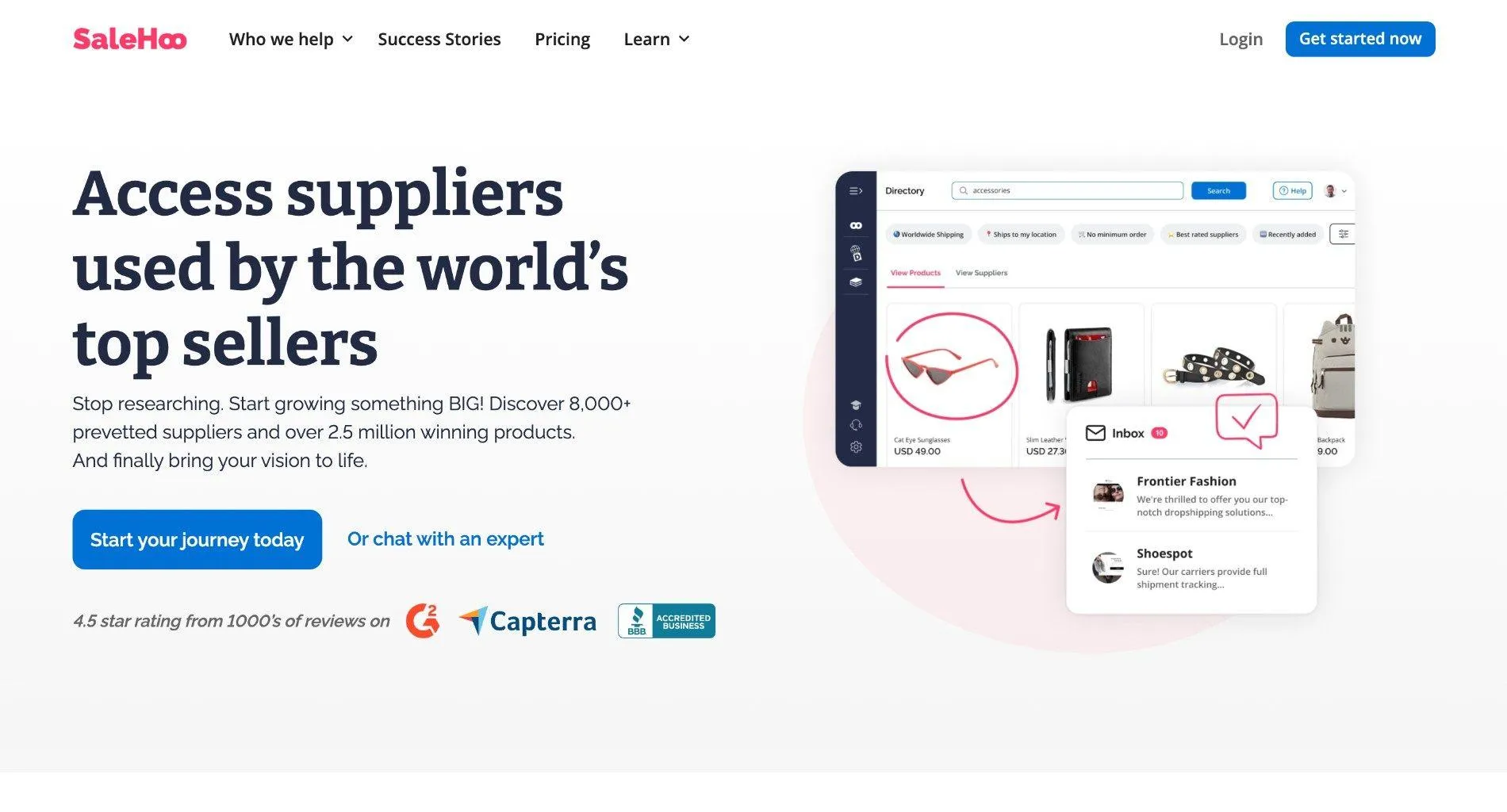
SaleHoo is a supplier directory and research tool for online sellers. It lists vetted wholesale and dropship suppliers and adds market research on product demand, with training for sellers building their first store.
SaleHoo also offers dropship automation and integrations with Shopify and Amazon. Its core is the directory, which gives sellers a first pass of supplier vetting before they contact anyone.
Ideal For
- First-time online sellers choosing a niche and a supplier
- Small Shopify and Amazon sellers looking for wholesale or dropship partners
- Resellers who want pre-vetted supplier contacts to cut research time
Top Features
- Pre-vetted supplier directory of wholesale and dropship suppliers, which saves hours of background checks.
- Market research lab: trend and demand data for picking products with real sales potential.
- Dropship automation for importing products into a Shopify store.
- Training and support. Beginner guides backed by a support team reviewers rate highly.
Why They Stand Out
SaleHoo is one of the smartest choices for new sellers who want a vetted starting list of suppliers. Reviewers describe the directory as a first pass done for them, with trust scores that remove some of the guesswork.
Its research tools add demand data to that list. A seller can check whether a product has buyers before placing a first order.
Pros
- Pre-vetted wholesale and dropship suppliers
- Product demand and niche research built in
- Responsive support and beginner training
- Shopify and Amazon integrations
Cons
- The interface feels cluttered to some reviewers
- Minimum order quantities and shipping times still need checking supplier by supplier
- Limited filters for region and lead time, and few US-based suppliers
- Order routing and supplier payments run outside the directory
Customer Reviews
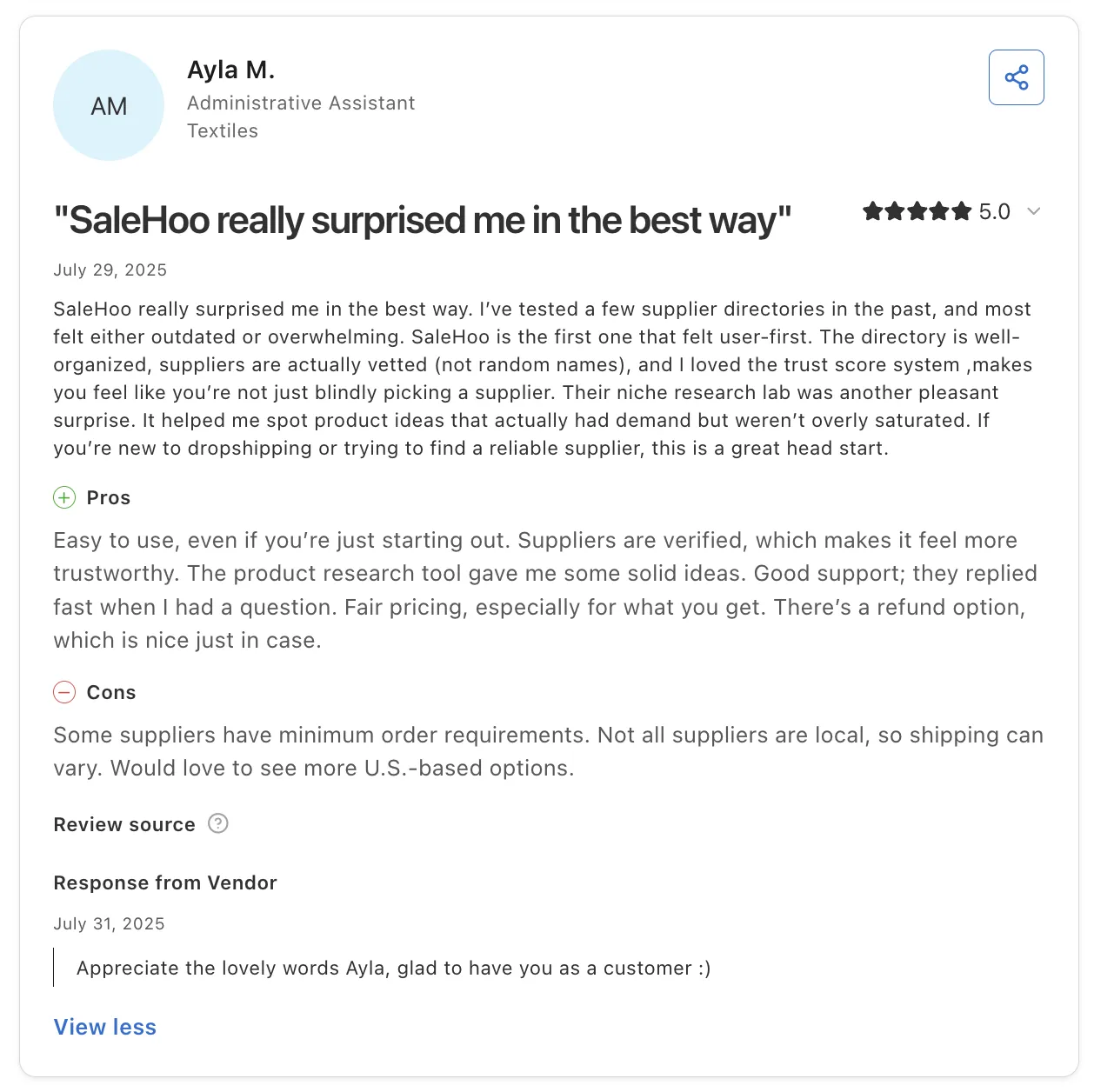
SaleHoo holds 4.5 out of 5 across 46 G2 reviews and 4.7 out of 5 across 7 Capterra reviews, a small sample on the second site.
Reviewers praise the pre-vetted directory for saving hours of supplier research, along with the market research lab and responsive support. Several describe it as beginner-friendly.
Criticism centers on a cluttered interface and little onboarding guidance. Reviewers also note that minimum order quantities and shipping times still need their own checks, and that US-based suppliers are hard to find.
Final Verdict
SaleHoo fits new sellers who want a checked list of suppliers and demand data before they pick a niche. Its support gets consistent praise from beginners.
The directory ends at the introduction, so negotiations and order handling remain your job. Retailers and marketplaces that need suppliers connected to their catalog and orders will outgrow it quickly.
4. Spocket
Overview
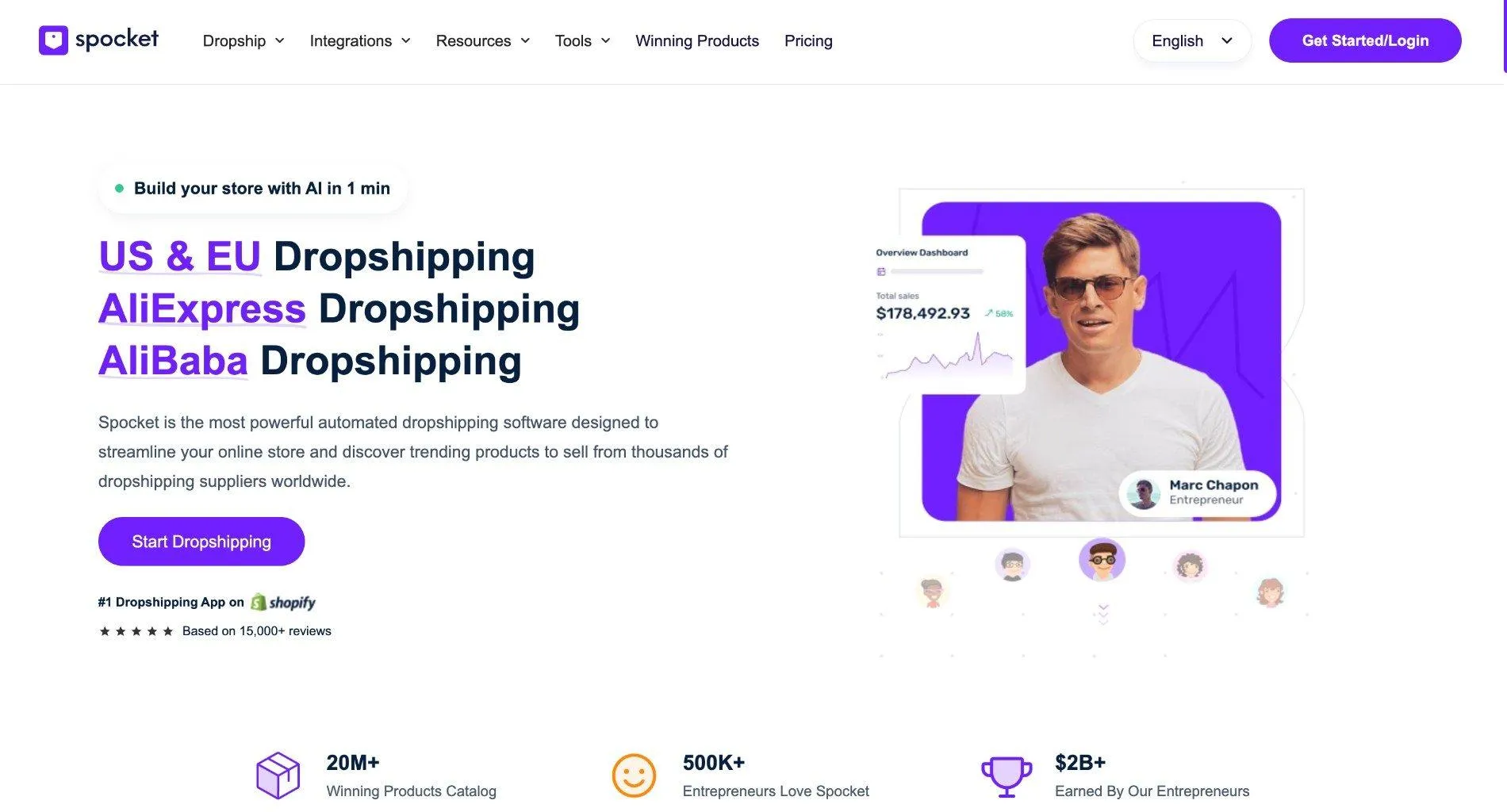
Spocket is a dropship sourcing app that connects online stores with suppliers, with a focus on sellers who want US and EU inventory. Sellers import products from its catalog into their store, and the supplier ships each order.
It connects with Shopify, WooCommerce, Wix, Squarespace, BigCommerce and Ecwid. Shipping times appear while you browse, and sellers can order samples to check quality before listing.
Ideal For
- Shopify sellers who want shorter delivery times from US and EU suppliers
- Small stores testing products across many categories
- Sellers who want to order samples before listing a product
Top Features
- US and EU supplier catalog with shipping times shown while browsing, so delivery promises are easier to set.
- Product import into supported storefronts in a few clicks.
- Sample orders, useful for checking quality and shipping speed first-hand.
- Order sync: customer orders pass to the supplier for fulfillment.
Why They Stand Out
Spocket is one of the strongest options for small stores that want dropship suppliers closer to US and EU customers. Reviewers credit it with faster shipping and a catalog that spans almost every category.
The Shopify import is simple. Sample orders let a seller check a product before customers see it.
Pros
- Suppliers based in the US and EU with faster shipping
- Broad catalog across categories
- Simple import for Shopify and other storefronts
- Sample orders before listing
Cons
- Many reviewers report charges after trials and refused refunds
- Support described as slow or unresponsive
- Product costs leave thin margins on some items
- The best products sit behind higher plans, and some items still ship from China
Customer Reviews
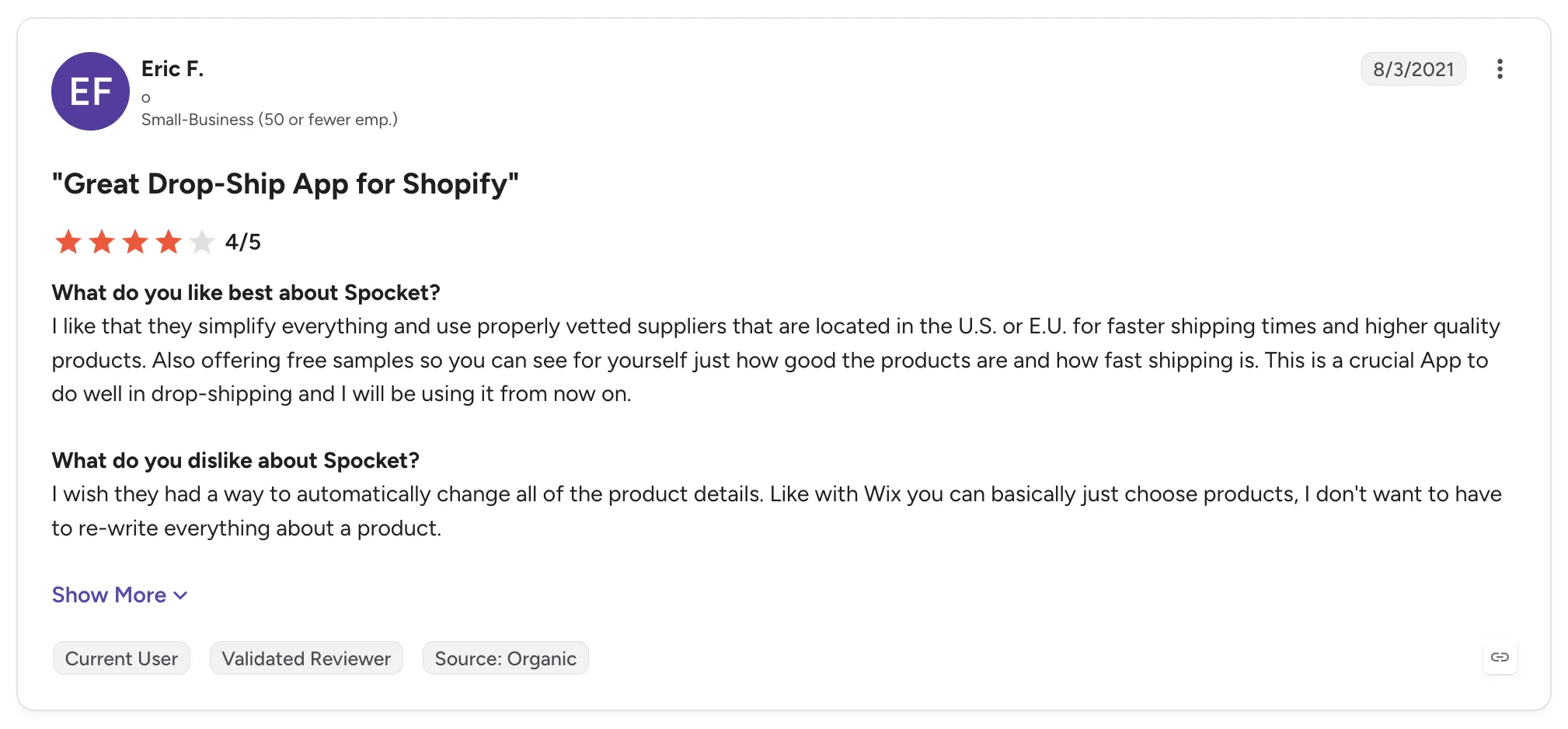
Spocket holds 4.2 out of 5 across 71 G2 reviews and 2.6 out of 5 across 41 Capterra reviews. The two sites disagree sharply, and the most recent reviews on both skew negative.
Reviewers praise vetted US and EU suppliers with faster shipping and a simple product import for Shopify stores. A broad catalog and free samples to check quality also come up.
Every visible review from 2024 to 2026 on both sites sits at one star or lower. Reviewers describe charges after trials without notice, refused refunds, slow or scripted support and product prices that leave little margin after shipping.
Final Verdict
Spocket fits small Shopify and Wix stores that want dropship products shipped from the US or EU and can live with some manual product editing.
Recent reviews raise billing and support concerns worth checking before a trial. Retailers and marketplaces sourcing established brands under agreed terms will find its supplier model a loose fit.
5. Syncee
Overview
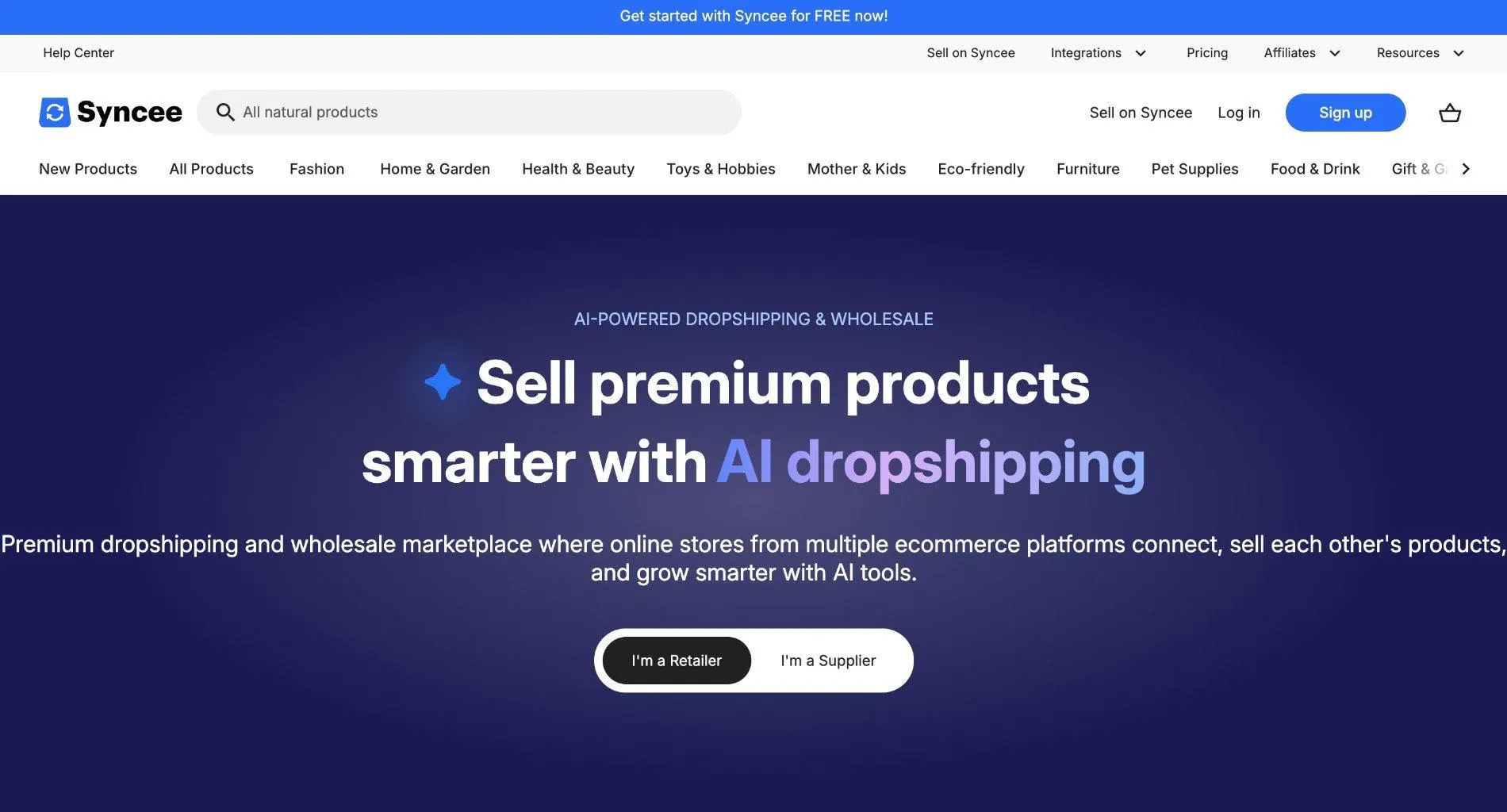
Syncee is a dropshipping and wholesale marketplace where online stores connect to sell each other's products. Retailers sell supplier products in their own stores while the suppliers handle fulfillment and shipping.
It works with Shopify, WooCommerce, Wix and several other storefronts, and it supports both dropship and wholesale orders. Suppliers use the same marketplace to find retailers in their own country or abroad.
Ideal For
- Small retailers looking for dropship suppliers from several regions
- Stores that want both dropship and wholesale ordering in one catalog
- Shopify merchants importing complex supplier CSV feeds
Top Features
- Supplier marketplace with vetted suppliers from different locations.
- Automatic product upload that pushes selected products into your store.
- Daily sync with stock alerts, so out-of-stock items and quantity changes reach your store without manual checks.
- Data feed import for suppliers that send products as CSV files.
Why They Stand Out
Syncee is one of the smartest choices for small stores that want both dropship and wholesale suppliers in one place. Reviewers highlight the range of suppliers from different countries and the automatic uploads.
Its feed tools also handle supplier data that arrives as complex CSV files. That saves a Shopify merchant from reformatting spreadsheets by hand.
Pros
- Dropship and wholesale sourcing in one marketplace
- Automatic product upload with daily sync
- Stock and quantity alerts
- Handles complex supplier CSV feeds
Cons
- Product prices run high on some items
- Hard to find products that do not ship from China
- Reports of billing and cancellation problems after trials
- One reviewer notes no 24/7 support and thin documentation
Customer Reviews
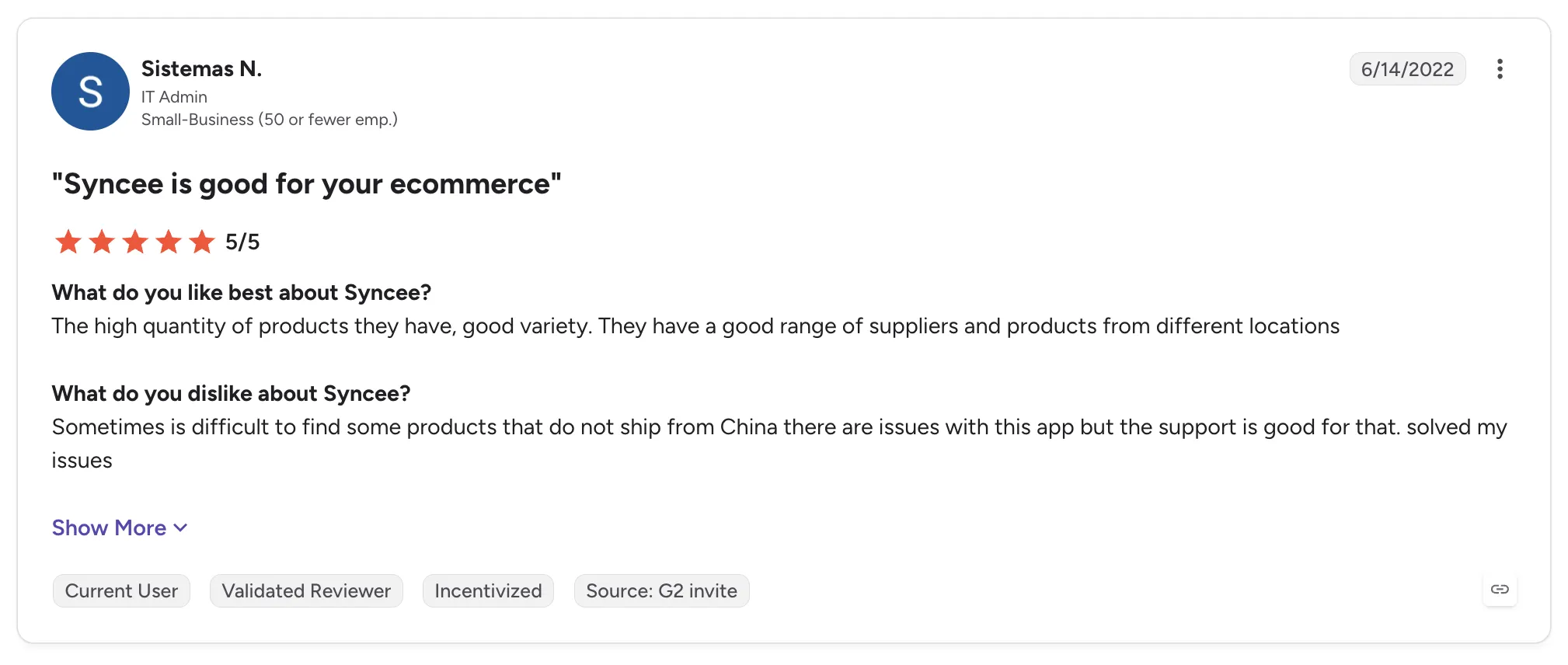
Syncee holds 5.0 out of 5 across 4 G2 reviews and 2.0 out of 5 across 3 Capterra reviews. Both are small samples, and they point in opposite directions.
Reviewers praise the wide range of vetted suppliers and automatic uploads with daily stock updates. Support gets good marks too, and one reviewer describes Syncee handling complex CSV feeds into Shopify.
Criticism focuses on products that ship from China and prices on the high side. The low ratings describe trial billing problems and refused refunds, and one reviewer reports an account deleted without warning.
Final Verdict
Syncee suits small stores that want a mixed dropship and wholesale catalog with automatic uploads and stock alerts.
Reviewers find China-shipped items hard to avoid, and the low ratings describe trial billing problems. Retailers that need established brands and an agreed relationship behind each product should look at a curated network.
6. CJdropshipping
Overview
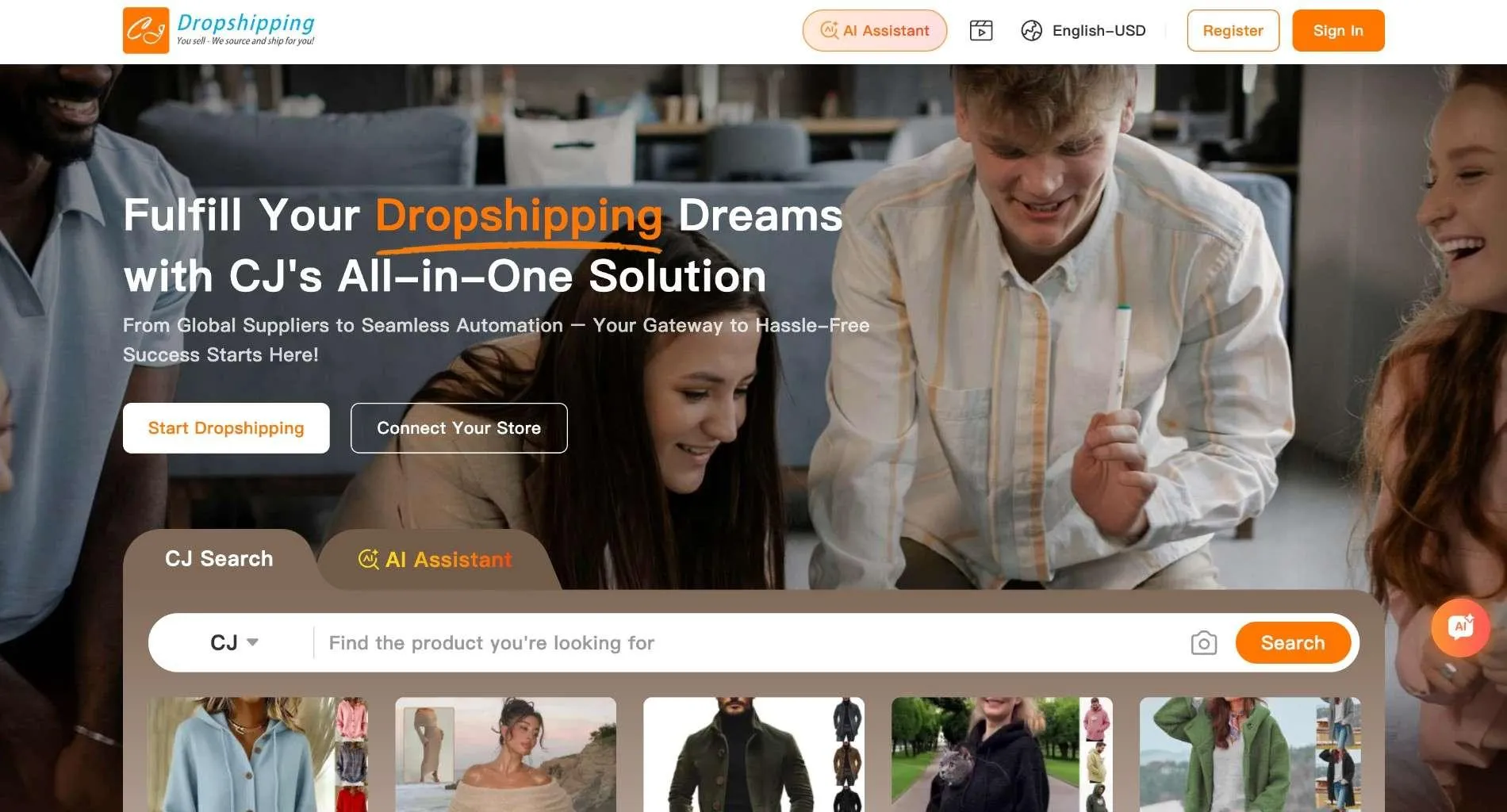
CJdropshipping is a dropshipping supplier and fulfillment service that pairs product sourcing with order fulfillment and global shipping. Sellers connect their store and list CJ products, or send a sourcing request for an item CJ does not carry yet. CJ then fulfills each order from its own warehouses.
It works with Shopify, WooCommerce, eBay and other sales channels, which suits sellers running several stores.
Ideal For
- Dropshippers who want sourcing and fulfillment from one agent
- Sellers running several stores across Shopify, WooCommerce, eBay and other channels
- Beginners testing products without contacting factories directly
Top Features
- Free product sourcing requests: CJ looks for the items you want to sell and adds them to your catalog.
- Warehousing and fulfillment in one service, so a single partner packs and ships.
- Multi-store connections for Shopify, WooCommerce, eBay and more.
- Custom packaging and print on demand for sellers building a basic brand look.
Why They Stand Out
CJdropshipping is one of the strongest options for sellers who want one agent to find products and ship them. Reviewers describe quick, easy sourcing from a large catalog.
Because CJ acts as both supplier and fulfillment partner, a seller deals with one company for most orders. That appeals to beginners and to sellers juggling several stores.
Pros
- Large catalog with quick product sourcing
- Sourcing and fulfillment from one company
- Connects to many store types
- Custom packaging and print on demand options
Cons
- Shipping can be slower than other providers
- Listing products to several stores is slow, with no built-in automation for it
- Mixed service quality in reviews, including order sync complaints
- Catalog centers on generic products, with few established consumer brands
Customer Reviews
CJdropshipping holds 5 out of 5 across 2 G2 reviews, where it is listed as a service provider, and 4.0 out of 5 across 10 Capterra reviews. Both are small samples.
Reviewers praise quick product sourcing and a large, accessible catalog, plus support for many store types. Some call it a good starting point for beginner dropshippers.
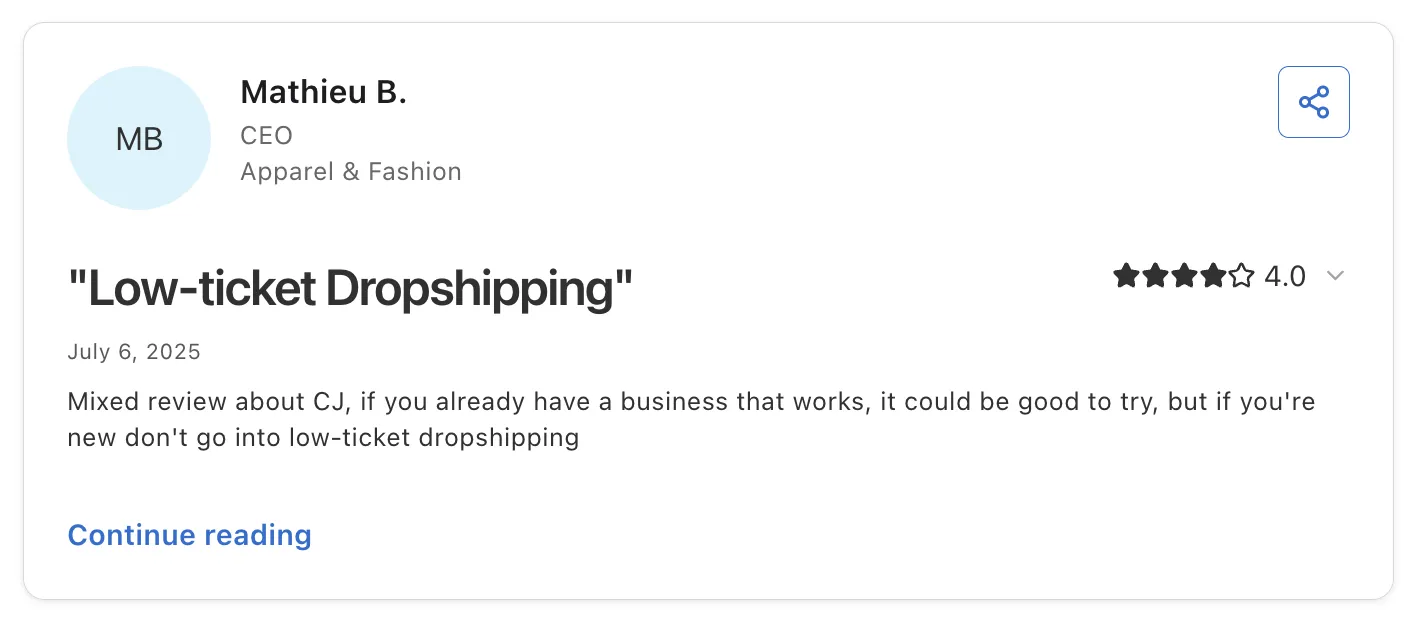
Criticism focuses on shipping speed and slow listing to other stores. One CEO warns newcomers off low-ticket dropshipping with CJ, and one low review alleges order sync failures between Shopify and CJ.
Final Verdict
CJdropshipping fits independent dropshippers who want a single agent for sourcing and shipping, especially across several stores.
Its catalog is built around generic products, so it serves price-led stores better than retailers adding recognized brands. Retailers and marketplaces that need brand approval and per-order settlement will want a different model.
7. Rokt Catalog (formerly Canal)

Overview
Rokt Catalog, formerly Canal, is a distributed commerce and marketplace network that links ecommerce retailers with curated third-party brands. It is part of Rokt.
It has two products. Rokt Catalog serves retailers and marketplaces that want more third-party assortment without inventory risk, and Rokt Catalog for Brands serves DTC and established consumer brands looking for distribution through retail partners.
Retailers connect through Shopify or a WooCommerce plugin and choose products from the brand network. Brands then ship the orders.
Ideal For
- Shopify and WooCommerce retailers adding curated third-party brands
- Media and content companies launching a shoppable marketplace
- DTC brands seeking placement with ecommerce retailers
Top Features
- Curated brand network for retailers, with one reviewer describing access to 900+ suppliers.
- Fast store connection: Shopify in under an hour, per one reviewer, and WooCommerce through a plugin with toggle-based product eligibility.
- Partner communication and reconciliation between retailers and brands in one place.
Why They Stand Out
Rokt Catalog is one of the strongest options for retailers that want curated third-party brands through a Shopify or WooCommerce store. Reviewers describe dropship agreements set up in minutes and thousands of SKUs available within days.
Support also earns steady praise. Reviewers describe a proactive team and a product group that ships requested improvements.
Pros
- Curated network of third-party brands
- Fast Shopify and WooCommerce connection
- Partner communication and reconciliation handled in one place
- Proactive, responsive support
Cons
- Some reviewers want a larger pool of dropship partners
- Payouts and monthly billing are not fully automatic or accounting-friendly
- Integration and shipping-setup limits for brands on some storefronts
- The dashboard and inventory organization can confuse new users
Customer Reviews
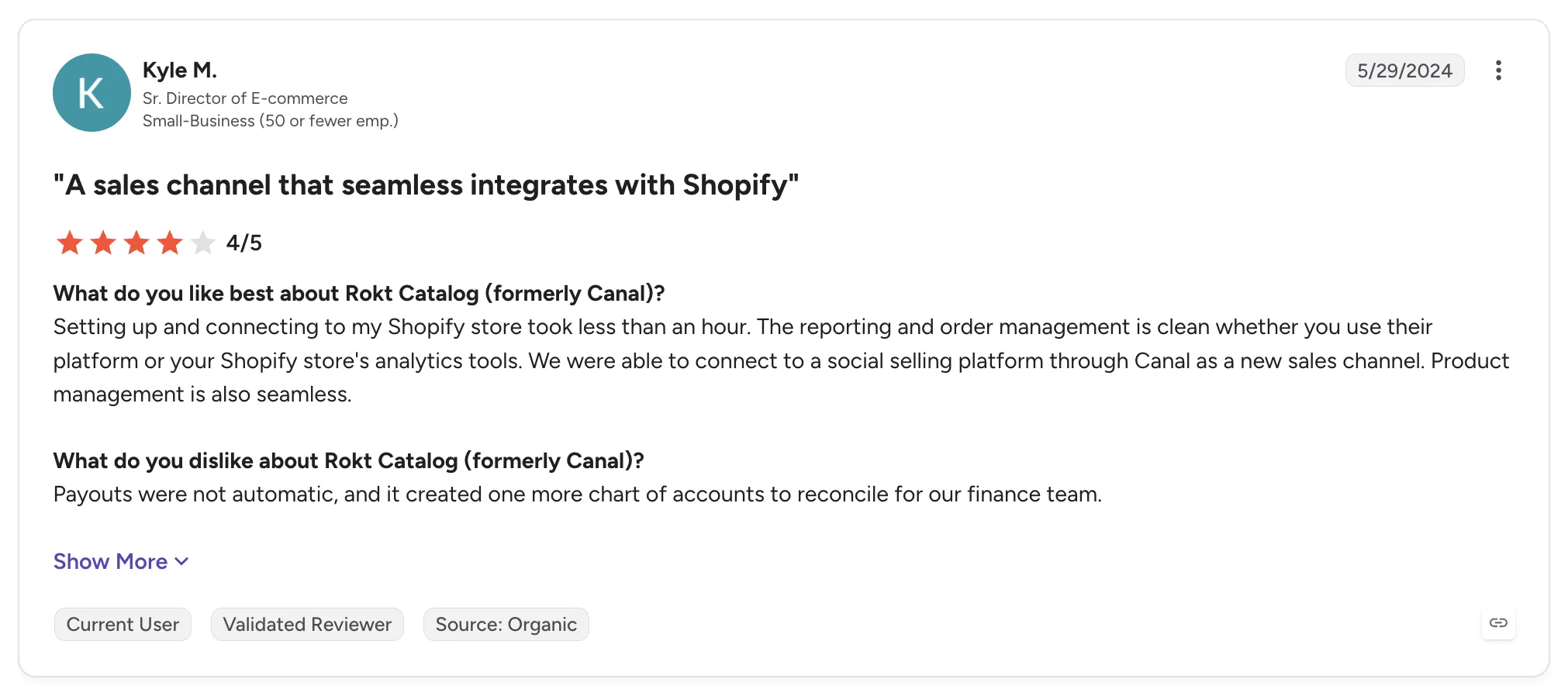
Rokt Catalog holds 4.7 out of 5 across 81 G2 reviews. Most visible reviews date from 2024, when the product was still called Canal.
Reviewers praise quick store connection and a ready network of suppliers, with one describing 900+ suppliers and thousands of SKUs available within three days. Proactive support and help with partner communication and finance reconciliation also stand out.
The main criticism is a limited partner pool. Reviewers also mention payouts that are not automatic and integration limits for brands, and some find the dashboard takes time to learn.
Final Verdict
Rokt Catalog fits Shopify and WooCommerce retailers, including media companies, that want curated brands without holding stock.
It is one of the closer alternatives to Carro on this list, and the gaps reviewers name sit around the partner pool and payouts. Retailers that want one commercial relationship covering authorized brand inventory, with settlement triggered by each shipment, should compare both closely.
8. Pietra

Overview
Pietra is software and services for small businesses and creators launching their own product brands. It brings sourcing and fulfillment into one account, pairing a marketplace of vetted manufacturers with its own 3PL warehouse.
Pietra calls itself AI-powered, and it adds ecommerce tools plus classes for founders. The model suits someone making a product under their own label, from sampling to the first production run.
Ideal For
- Creators launching a first product line under their own brand
- Emerging brands that want vetted manufacturers and fulfillment together
- Founders who want sampling help before a production order
Top Features
- Supplier marketplace of approved manufacturers and vendors, which lowers sourcing risk for first-time founders.
- Sampling and production management for developing a product before placing a full order.
- 3PL fulfillment: Pietra's warehouse stores your inventory and ships your orders.
- Ecommerce tools and education, including classes and brand reps.
Why They Stand Out
Pietra is one of the smartest choices for creators who want to make their own product and ship it without building a supply chain. Reviewers describe a responsive team that acts like an extension of their own.
Approved vendors and fulfillment under one roof remove much of the shipping anxiety for small brands. Fulfillment staff have also helped reviewers hit tight drop dates.
Pros
- Approved manufacturers and vendors
- Sourcing and fulfillment under one account
- Hands-on team and brand reps
- Classes and education for new founders
Cons
- Reports of late and missing shipments during peak season, with delays of up to 41 days
- Refund disputes, with credit offered in place of refunds
- Monthly and per-order fees stack up, and some suppliers also appear on Alibaba
- The warehouse does not ship on weekends
Customer Reviews
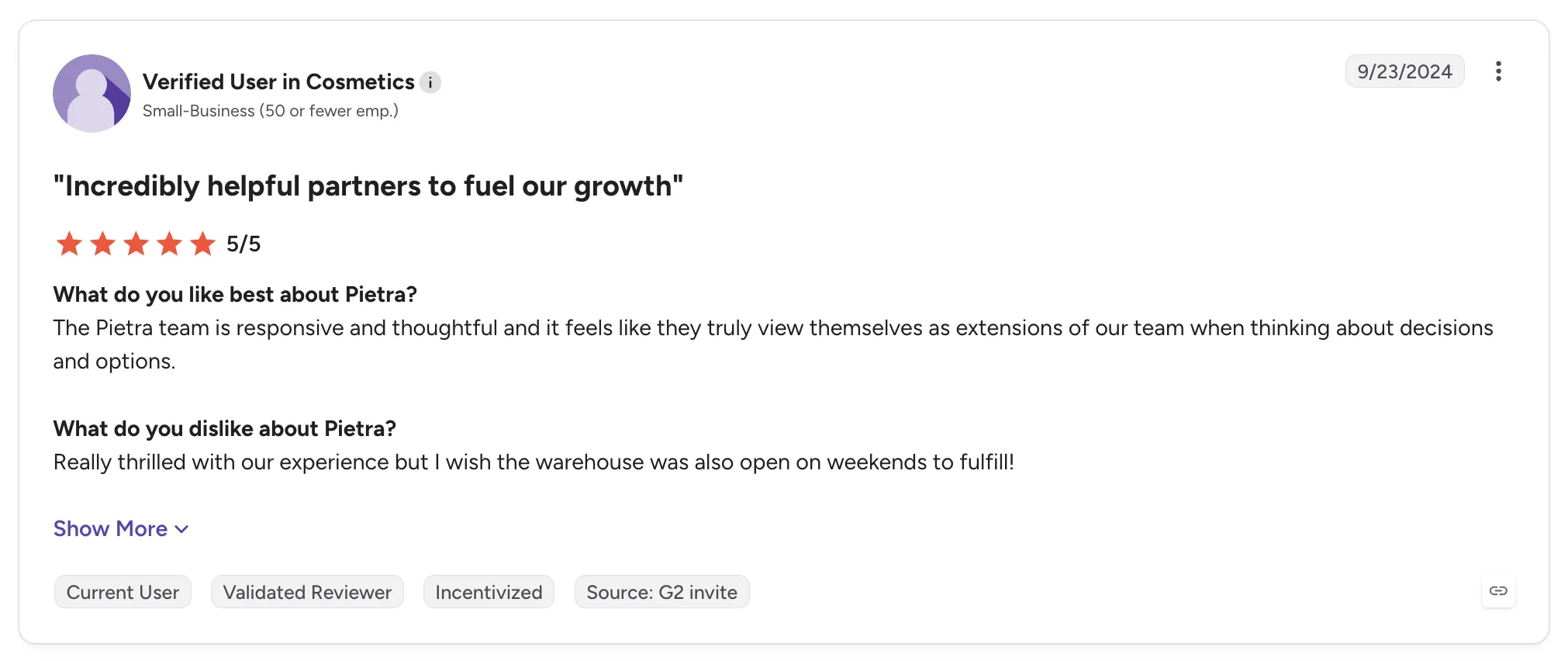
Pietra holds 3.3 out of 5 across 3 G2 reviews and 4.3 out of 5 across 19 Capterra reviews. Both samples are small, and recent reviews skew more negative than those from 2022 and 2023.
Reviewers praise a responsive, hands-on team that caters to small businesses, including fulfillment staff who help meet drop dates. Approved vendors and brand education also earn praise.
Criticism centers on peak-season fulfillment, with delays of up to 41 days reported. Reviewers also describe refund disputes and fee stacking, and one notes that many suppliers can be found on Alibaba.
Final Verdict
Pietra fits creators and emerging brands that want to source and ship their own product line through one partner.
Its model means buying inventory up front and storing it in Pietra's warehouse. Retailers and marketplaces that want to add other brands' products without holding stock need a different kind of sourcing.
9. Inventory Source
Overview
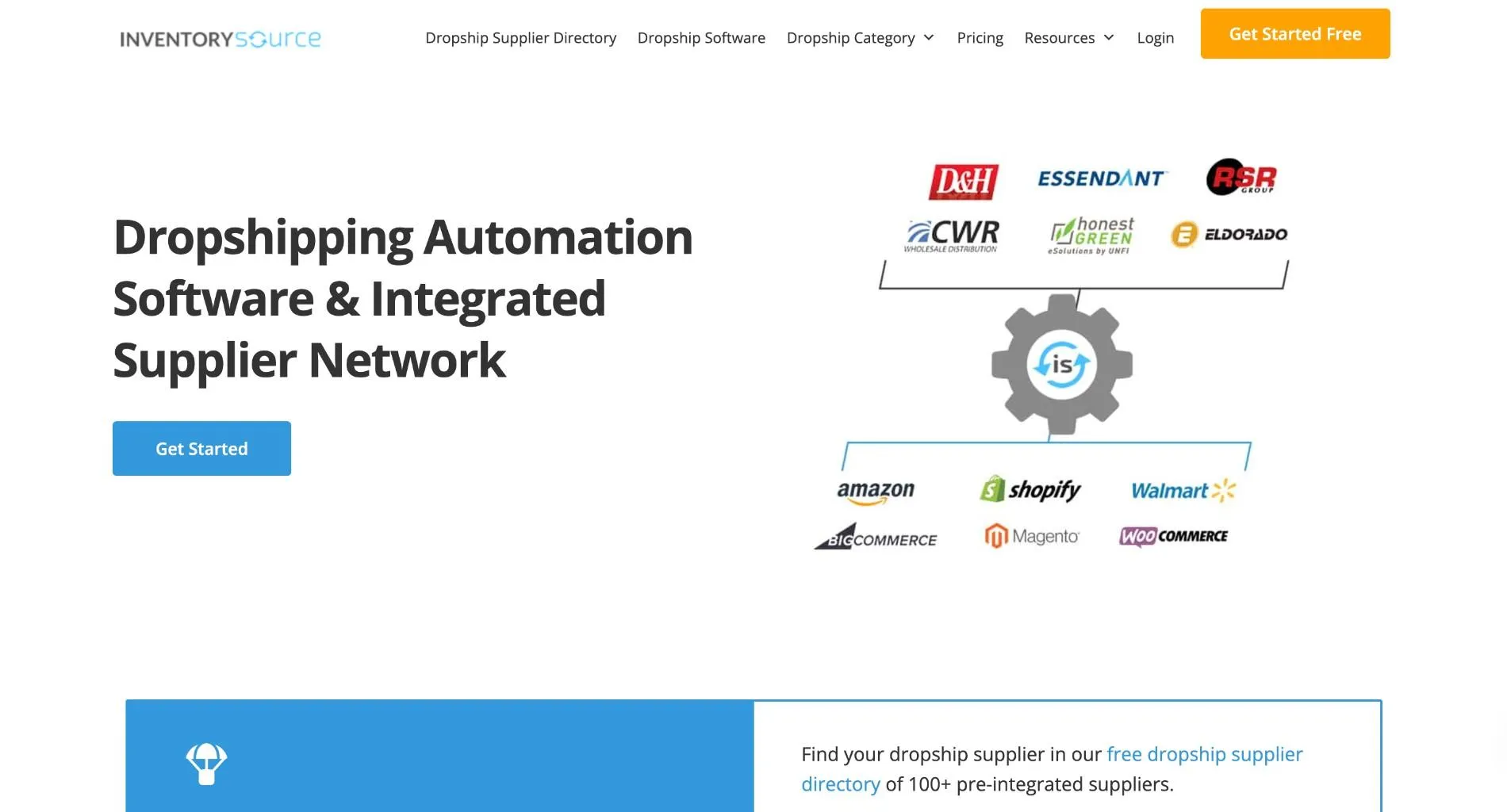
Inventory Source is dropship automation software that connects resellers to supplier and distributor dropship programs. Based in Jacksonville, Florida, it calls itself the world's largest and longest-running dropship data provider.
It handles product upload and inventory sync from each supplier to your store, plus order routing back to the supplier. Integrations include Shopify, BigCommerce, Adobe Commerce, Ecwid and ShipStation.
Ideal For
- Resellers selling distributor catalogs through their own store
- Store owners automating product uploads from many suppliers
- Sellers who need bulk pricing rules across large catalogs
Top Features
- Supplier directory of distributors with integrated dropship programs.
- Automated product upload, which spares sellers from listing thousands of products by hand.
- Inventory sync that keeps stock levels current with little upkeep once set up.
- Order routing and bulk pricing rules, with one reviewer pricing 13,000 products in seconds.
Why They Stand Out
Inventory Source is one of the strongest options for resellers who want distributor data flowing into their store automatically. Reviewers describe dependable sync with little upkeep once it is set up.
Its network of dropship suppliers is large. Bulk pricing rules help sellers manage catalogs that run into the thousands of products.
Pros
- Large network of integrated dropship suppliers
- Low-maintenance inventory sync once configured
- Bulk pricing across large catalogs
- Integrations with major storefronts and ShipStation
Cons
- Support rated below standard, with little phone-first help
- Reports of pricing bugs and outages that cost sales
- Costs climb for owners running several businesses
- Some reviewers report broken core features and a failed repricer integration
Customer Reviews
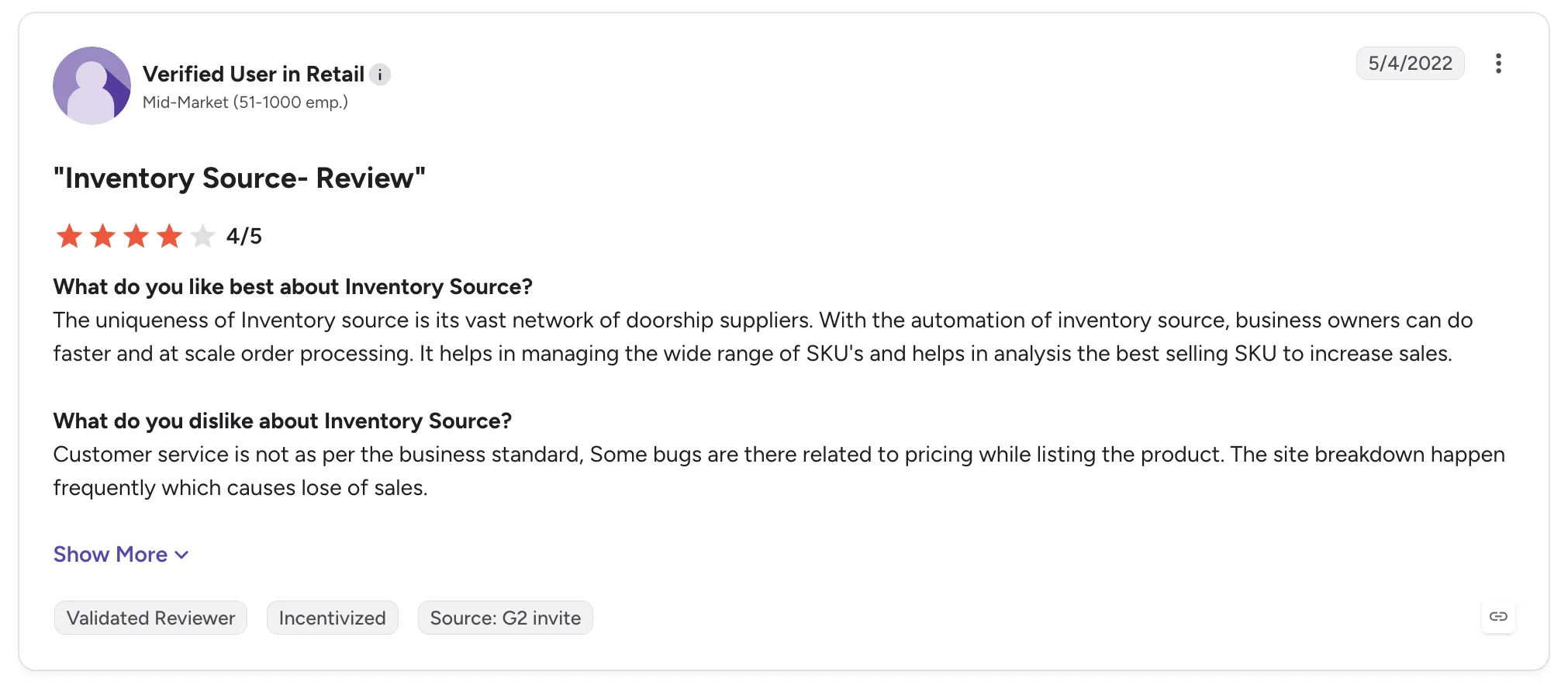
Inventory Source holds 4.6 out of 5 across 4 G2 reviews and 2.8 out of 5 across 6 Capterra reviews. Both samples are tiny, and all reviews date from 2021 and 2022.
Reviewers praise reliable, low-maintenance sync of distributor data and a large supplier network. One describes running much of the business on autopilot.
Criticism focuses on support quality, and reviewers report pricing bugs and site outages that cost sales. Capterra reviewers also report broken core features and a failed repricer integration.
Final Verdict
Inventory Source fits resellers who sell distributor catalogs and want uploads and stock sync automated.
Each distributor's dropship program usually comes with its own approval and terms. Retailers that want one commercial relationship covering many brands, with settlement tied to shipment, will find that model heavier to run.
10. AutoDS
Overview
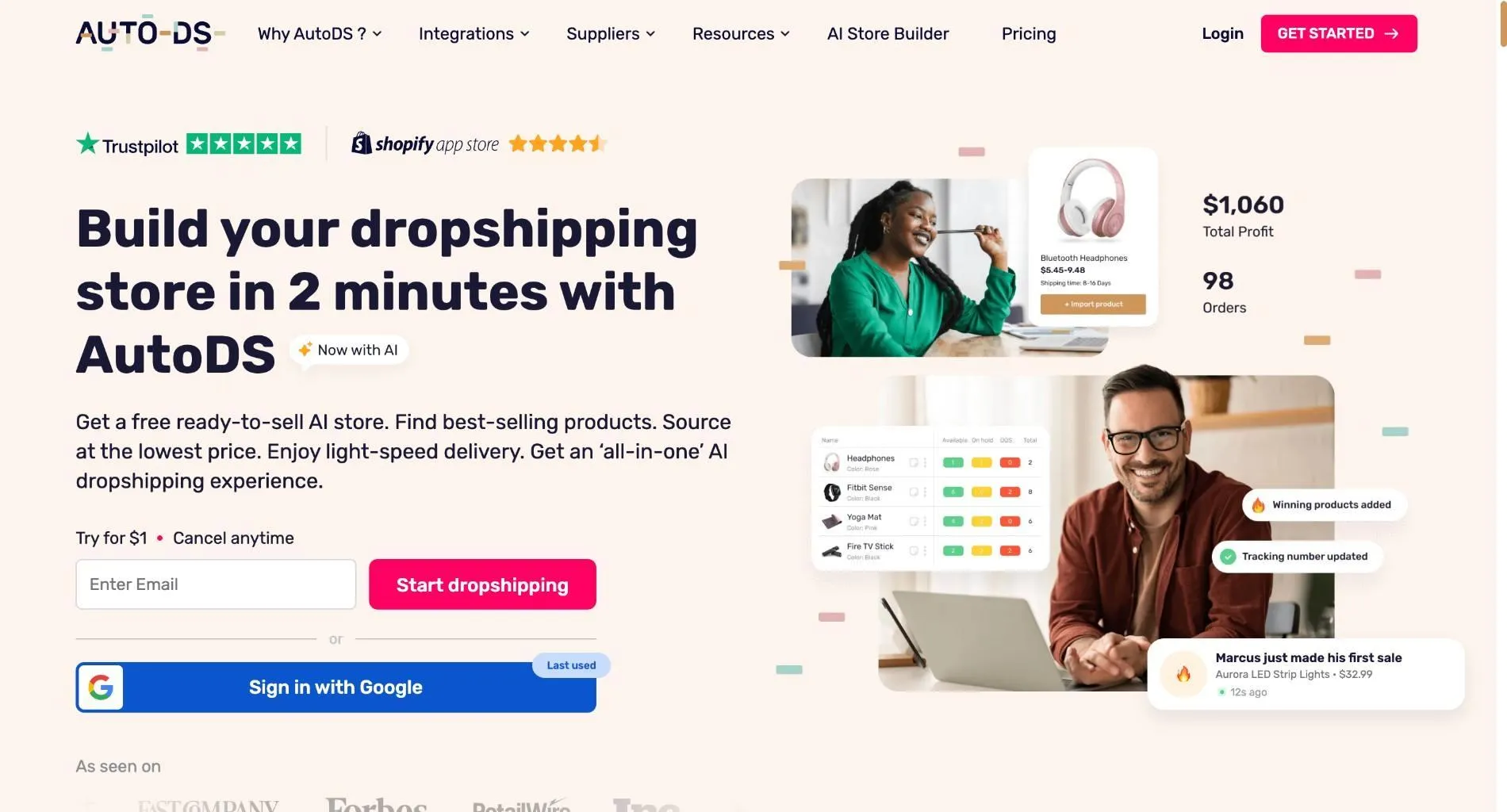
AutoDS automates the dropshipping workflow for sellers at any level. It imports products from 25+ global supplier sources, including Amazon, AliExpress and Walmart. Stock and price monitoring and automated order fulfillment run from there.
It connects with Shopify, eBay, WooCommerce and Amazon, so one seller can manage several stores and suppliers from one dashboard. Product research tools, including trending-product and TikTok analytics, help sellers pick what to list.
Ideal For
- Solo dropshippers running stores on Shopify, eBay, WooCommerce or Amazon
- Sellers who source from Amazon, AliExpress or Walmart
- Multi-store sellers who want one dashboard for price and stock changes
Top Features
- One-click import from 25+ supplier sources.
- Price and stock monitoring that catches supplier changes before they turn into cancelled orders.
- Automated order fulfillment, including supplier accounts and tracking for eBay orders.
- Product research: trending products and TikTok analytics.
Why They Stand Out
AutoDS is one of the strongest options for independent sellers who want to automate a marketplace-sourced dropship store. Reviewers describe time saved on monitoring and fewer errors from missed price and stock changes.
Support pairs an AI chat with quick escalation to a person, which reviewers single out.
Pros
- Automated price and stock monitoring
- One dashboard for multiple stores and suppliers
- Product research and trend data
- Easy initial setup
Cons
- Billing complaints, including charges after cancellation
- Frequent bugs and slow fixes reported
- Monitoring is unreliable for some suppliers, forcing manual checks
- Slow shipping and low margins on some products
Customer Reviews
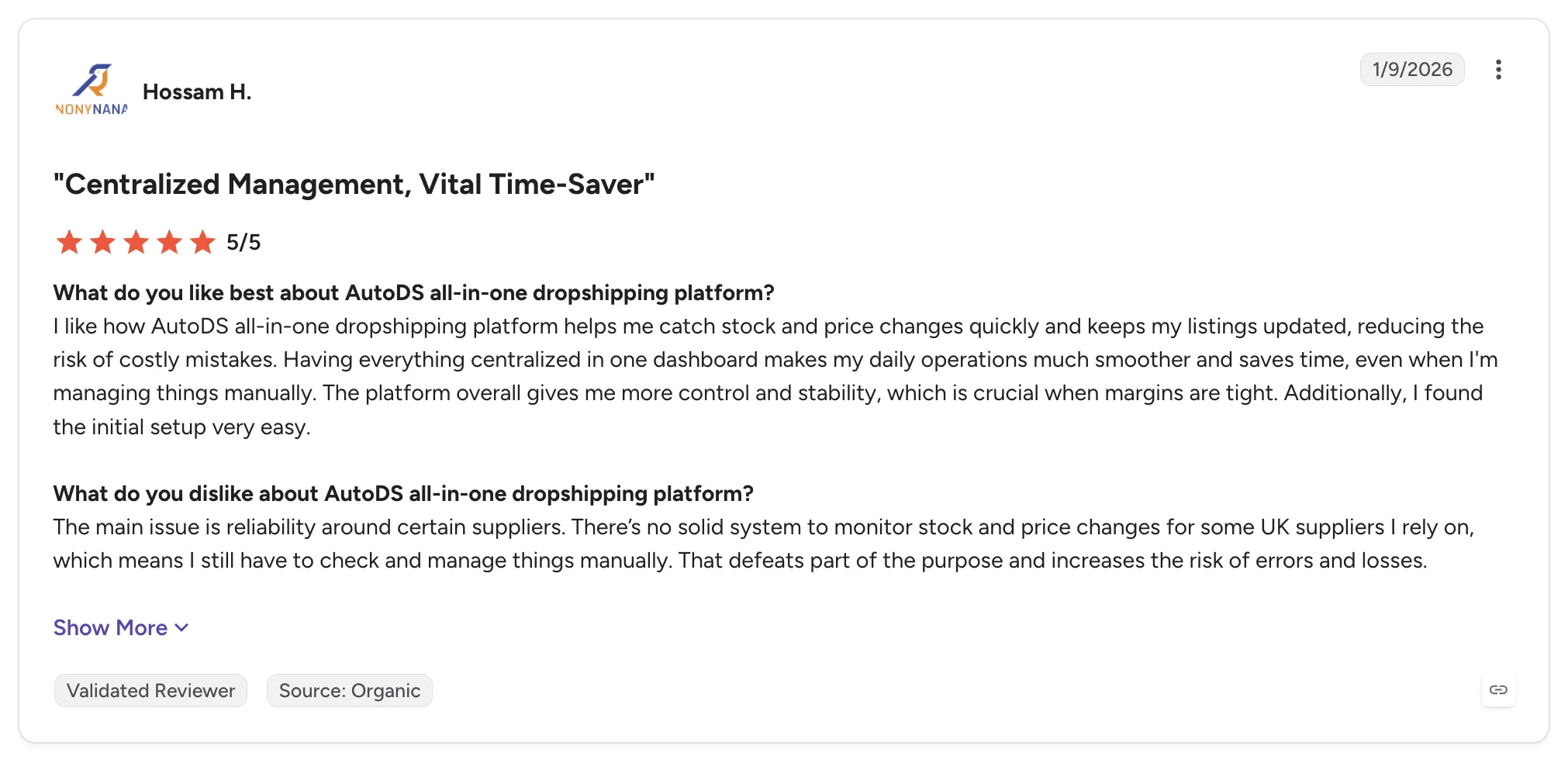
AutoDS holds 3.9 out of 5 across 19 G2 reviews and 4.0 out of 5 across 174 Capterra reviews, the largest combined review base on this list.
Reviewers praise automated stock and price monitoring and a central dashboard that cut errors and save time. Fast support, including an AI chat with human escalation, comes up often, and several reviewers mention easy setup.
Criticism centers on billing, including annual charges after monthly billing and charges after cancelling. Reviewers also report frequent bugs and gaps in monitoring for some suppliers, and a few mention slow-shipping products with thin margins.
Final Verdict
AutoDS fits solo sellers and small teams automating dropship stores that source from large marketplaces.
Its supplier sources are retail marketplaces and generic catalogs, so it is a weak match for retailers adding established brands under agreed terms. Those teams need brand approval and settlement that follows each shipment.
How to Choose the Best Product Sourcing Platforms (What To Consider)?
The right choice depends on what you need to happen after a supplier is found. Industrial buyers ordering parts from manufacturers will get more from a supplier directory. For retailers and marketplaces adding brands they will not stock, these seven factors separate tools that list suppliers from tools that turn them into shipped, paid orders.
1. Check How Brands Are Vetted and Matched to Your Audience
Vetting decides what your customers receive, so ask who checks each brand and how it is matched to your store. Directories often vet at the listing stage and leave the rest to you.
Curated networks start from established brands and distributors, then match them to your category and audience. Ask whether a person makes those introductions, whether you can also connect brands you already work with, and whether each brand approves the retailers that carry it. That mutual approval keeps quality and pricing consistent on both sides.
2. Count the Agreements Behind Each New Brand
Every supplier you add the traditional way brings its own supply agreement and payment terms. The paperwork grows with each brand, and past a few dozen suppliers it becomes a job of its own.
Ask whether the tool holds the authorization to represent the brands it offers in your selling channels. When one commercial relationship covers many brands, adding the next one takes a product selection, a confirmation of channel rights and terms, and a price, with no new contract to negotiate.
3. Test on Real Demand Before You Buy Stock
A product listed with no purchase order puts no stock on your balance sheet while you test it. Look for a tool that lets you list a brand's products first and keep them only if customers buy.
Testing on demand lets a merchandising team try a new category each season and drop what does not sell, with nothing left in a warehouse. You should still set the price and the merchandising yourself, and the sale should stay under your brand while the supplier ships behind the scenes.
4. Ask How a New Supplier Gets Onboarded
A brand you have agreed to work with is not sellable until its connection, product data and prices are in place. Ask how long that takes and who does the work, since many smaller brands have no developer.
Look for a defined sequence with visible progress: account details, connection, product data, partner price list, test order and go live. The test order matters most, because it checks fulfillment, tracking and invoicing before a customer ever orders. Suppliers that come on in days keep your assortment plans on schedule.
5. Check That Stock and Prices Stay in Sync
A sourced product is only as good as the stock and price your customer sees. Ask how stock moves from each supplier's system into your catalog, and how often each connection type updates it.
Partner price lists should set the cost for each relationship, so a supplier's price change reaches your catalog without anyone re-entering it. Your edits should change your copy of a product and leave the supplier's original alone. Validation that flags data problems before launch saves a round of fixes after it.
6. Follow the Order and the Payment After the Sale
Sourcing pays off only when the order reaches the supplier and the supplier gets paid. Check whether a customer order with products from three brands splits into three supplier orders, each routed into the system that brand already uses.
Then look at exceptions and money. Failed charges, SKU mapping errors and stalled orders should surface with enough detail for a person to act on, and supplier invoices should follow the shipment with fees and returns tied to the order. Reconciliation gets far easier when retailer and supplier read the same record.
7. Confirm It Connects to the Store You Already Run
A sourcing tool should connect to your current store, with no replatform and no custom build. Check support for your storefront, whether that is Shopify, Magento 2, WooCommerce or BigCommerce, and for EDI, API, SFTP or CSV on the supplier side.
Tools that run beside your existing payments, shipping, ERP and accounting avoid a replacement project. For stock you own and ship yourself, your inventory management software stays in place alongside the sourcing tool.
Everything You Need to Know About Product Sourcing Platforms
| Company | Pros | Cons | Ease of Use | Integrations | Support | Supplier Vetting | Supplier Onboarding and Sync |
|---|---|---|---|---|---|---|---|
| Carro | One relationship covers many brands; test with no purchase order; settlement follows shipment | USD settlement in Stripe-approved countries; hand-matched network on Growth plan; less suited to generic goods | ⭐⭐⭐⭐ | ⭐⭐⭐⭐⭐ | ⭐⭐⭐⭐⭐ | ⭐⭐⭐⭐⭐ | ⭐⭐⭐⭐⭐ |
| Thomasnet | Broad industrial directory; fast RFQ responses; certification details | Miscategorized listings; dated contact data; no order handling | ⭐⭐⭐⭐ | ⭐⭐ | ⭐⭐⭐ | ⭐⭐⭐ | ⭐ |
| SaleHoo | Pre-vetted suppliers; demand research; strong support | Cluttered interface; MOQs to check; few US supplier filters | ⭐⭐⭐ | ⭐⭐⭐ | ⭐⭐⭐⭐⭐ | ⭐⭐⭐⭐ | ⭐⭐ |
| Spocket | US and EU suppliers; wide catalog; easy Shopify import | Billing complaints; slow support; thin margins | ⭐⭐⭐⭐ | ⭐⭐⭐⭐ | ⭐⭐ | ⭐⭐⭐ | ⭐⭐⭐ |
| Syncee | Dropship and wholesale together; automatic upload; stock alerts | China-shipped items; billing complaints; high prices on some items | ⭐⭐⭐ | ⭐⭐⭐⭐ | ⭐⭐ | ⭐⭐⭐ | ⭐⭐⭐⭐ |
| CJdropshipping | Free sourcing requests; fulfillment included; multi-store support | Slow shipping; manual multi-store listing; generic products | ⭐⭐⭐⭐ | ⭐⭐⭐⭐ | ⭐⭐⭐ | ⭐⭐ | ⭐⭐⭐ |
| Rokt Catalog | Curated brands; fast Shopify setup; proactive support | Smaller partner pool; payouts not automatic; brand integration limits | ⭐⭐⭐⭐ | ⭐⭐⭐ | ⭐⭐⭐⭐⭐ | ⭐⭐⭐⭐ | ⭐⭐⭐⭐ |
| Pietra | Approved vendors; fulfillment included; hands-on team | Peak-season delays; stacked fees; inventory bought up front | ⭐⭐⭐⭐ | ⭐⭐⭐ | ⭐⭐⭐ | ⭐⭐⭐ | ⭐⭐ |
| Inventory Source | Large distributor network; reliable sync; bulk pricing | Weak support; pricing bugs; outages reported | ⭐⭐⭐ | ⭐⭐⭐⭐ | ⭐⭐ | ⭐⭐⭐ | ⭐⭐⭐⭐ |
| AutoDS | Price and stock monitoring; multi-store dashboard; product research | Billing complaints; frequent bugs; supplier monitoring gaps | ⭐⭐⭐⭐ | ⭐⭐⭐⭐ | ⭐⭐⭐⭐ | ⭐⭐ | ⭐⭐⭐ |
Add the Next Brand Without Buying the Stock with Carro
Carro lets you source from vetted brands and sell their products without buying the stock. Merchant Services gives you one commercial relationship for the brand and distributor inventory Carro represents, and you test each brand on real demand with no purchase order.
Suppliers onboard in days, and a test order checks fulfillment, tracking and invoicing before products go live. After launch, each order routes to the supplier holding the stock, and the shipment triggers that supplier's invoice.
The brands your customers want next may not be the ones you stocked last year. Adding them through Carro lets your team try new categories before the next buying cycle, with nothing committed to a warehouse, and Carro reports retailers growing catalog size by up to 3x.
PacSun uses Carro for faster product launches and to test brands without owning inventory. Vanity Planet and Glow Recipe cross-sold a holiday bundle through Carro and reached 478 customers with no extra marketing spend, and more Carro success stories show the same pattern across categories.
Book a demo with Carro and bring the list of brands you want to test next.
Frequently asked questions
What are product sourcing platforms used for?
Product sourcing platforms are used for finding suppliers and turning their products into items a business can sell. Industrial directories such as Thomasnet help buyers send RFQs to manufacturers, while dropship apps such as Spocket and AutoDS import supplier products into online stores. Curated networks such as Carro connect retailers with vetted brands that ship each order. The most complete product sourcing tools, such as Carro with its network of 1,500,000 products from established brands, also keep stock and prices in sync and send each order to the supplier who ships it.
What is the best product sourcing platform in 2026?
The best product sourcing platform in 2026 for retailers and marketplaces is Carro, because one commercial relationship covers the brand and distributor inventory it represents. Retailers test brands from a network of 1,500,000 products with no purchase order, and suppliers onboard in days. Carro reports that its retailers see up to 3x catalog size and up to 3.5x revenue growth. For industrial parts, Thomasnet is a strong directory, while AutoDS and Spocket are built for solo dropshippers.
What should I consider when choosing the right product sourcing platform for me?
When choosing the right product sourcing platform for you, consider whether the brands are vetted and matched to your audience, and whether one commercial relationship covers them. A tool that holds the authorization to represent brand and distributor inventory, as Carro does through Merchant Services, replaces a contract per supplier with one relationship. Check that you can test brands on real demand with no purchase order and keep only what sells. Then ask how new suppliers are onboarded and how stock and prices stay in sync, since Carro brings suppliers live in days with a test order before go-live.
What features should I look for in a product sourcing platform?
The features to look for in a product sourcing platform are a vetted brand network, one commercial relationship for the inventory it represents and the option to list products with no purchase order. Good product sourcing software onboards each supplier through a defined sequence of account details, connection, product data, partner price list, test order and go live. It should keep stock and partner prices in sync from each supplier's system and flag data problems before launch. Carro covers these features across a network of 1,500,000 products, then routes each order to its supplier and settles it when the shipment goes out.
How does Carro differ from similar alternatives?
Carro differs from similar alternatives by holding the authorization to represent brand and distributor inventory, so one commercial relationship replaces a separate supply agreement with every supplier. Directories such as Thomasnet and SaleHoo stop at the supplier introduction, and dropship apps such as AutoDS and Spocket mostly serve independent stores. Carro connects retailers and marketplaces with vetted, established brands from a network of 1,500,000 products, and you can test each brand with no purchase order. It then runs onboarding, catalog sync, order routing and settlement in one workflow, with suppliers paid the day an order ships.
How do I get started with Carro?
You get started with Carro by booking a demo and bringing the audience, categories and products you want to add. Carro reviews the brand and distributor inventory it can represent for that opportunity, along with the channel rights, terms and connection each relationship needs, and you mark the brands to test with no purchase order. Each supplier then moves through a defined onboarding sequence of account details, connection, product data, partner price list, test order and go live, and suppliers onboard in days. Marketplaces can open on an existing store in weeks.
How easy is it to switch to Carro?
It is easy to switch to Carro because the move changes the connection under your storefront and leaves the storefront itself in place. Carro has moved the customer bases of Modern Dropship and Onport onto its system, and sellers can follow the retailer across. It connects through Shopify, Magento 2, WooCommerce, BigCommerce, EDI, API, SFTP or CSV and runs beside existing payments, shipping, ERP and accounting systems. The FairGround migrated from Onport, with the Carro team meeting its brands directly to get them connected.
Can I control pricing and product quality when brands ship the orders?
You control pricing and product quality when brands ship the orders through Carro, because you choose which brands join and you set the price and merchandising yourself. Carro's network of 1,500,000 products centers on vetted, established brands, and each brand approves the retailers that carry it, so both sides agree to the relationship before a product goes live. Every order carries a documented state from confirmed through shipped with tracking, and stalled orders surface as exceptions with the detail needed to act. Underperforming partners can be removed, and the sale stays under your brand while the supplier packs and ships behind the scenes.