How To Start Dropshipping in Europe in 2026: Where To Start, Find Suppliers, and Launch Across Markets
OSS and IOSS rules, the 2026 customs change, market-by-market buying habits, vetted suppliers, and how to start dropshipping in Europe. Read the full guide.
Anyone asking how to start dropshipping in Europe is asking a harder question than it sounds: how do I sell into twenty-seven countries at once while the customer in each one believes they are shopping at a local store?
That is the defining feature of the market. A retailer selling into Germany, France, Spain, and the Nordics operates across different VAT positions, four languages, several payment preferences, and delivery expectations that range from next-day-as-standard to a comfortable week.
The customer sees one storefront. The retailer sees reconciliation.
Around 450 million consumers sit inside the single market, and the assortment opportunity that comes with it is the largest available to any ecommerce retailer outside the US.
The reason most retailers never capture it is not demand and not competition. It is that every additional supplier in a different country multiplies the operational cost rather than adding to it.
This guide covers the regulatory groundwork, how to find the best dropshipping suppliers in Europe without losing a year to the wrong sourcing route, and what has to be automated before a multi-country program becomes something a small team can actually run.
Key Takeaways (TL;DR)
- Europe is not one market. Different VAT positions, languages, payment preferences, and delivery expectations sit behind a storefront the customer assumes is unified.
- The customs rules changed in July 2026. The EU removed the €150 customs duty exemption on 1 July 2026, replacing it with a transitional flat €3 duty per tariff heading on low-value B2C consignments from outside the bloc.
- Import VAT already applied to everything. The €22 low-value VAT exemption disappeared in July 2021, so VAT has been due on every imported consignment regardless of value for five years.
- OSS and IOSS reduce registrations, not complexity. One VAT return covers intra-EU distance sales above the €10,000 threshold; IOSS covers imported consignments up to €150.
- Sourcing inside the bloc beats sourcing outside it. Intra-EU movement avoids customs entirely, which protects the delivery expectations European customers hold.
- The binding constraint is operational. Normalizing fragmented supplier data across countries, syncing inventory in real time, routing orders, tracking SLAs, and settling payouts is where multi-market programs stall.
- Carro absorbs that layer. Curated brand partners from a large and growing catalog of products, plus connections by EDI, API, SFTP, or CSV. Pricing scales with your sales volume, and enterprise programs are custom quoted to match scope.
How To Start Dropshipping in Europe in 2026: at a Glance
The whole program, in the order you actually do it.
| # | Step | What it involves | Why it matters |
|---|---|---|---|
| 1 | Register the business and VAT position | Domestic VAT registration, then OSS once cross-border sales pass €10,000 a year | One OSS return replaces registering in every country you sell into |
| 2 | Choose three markets, not twenty | Pick countries you can localize, price, and deliver to properly | Language, payment, and delivery cost all scale with market count |
| 3 | Set up the storefront and local payments | Shopify, Magento, WooCommerce, or BigCommerce, plus iDEAL, Bancontact, Klarna, BLIK as relevant | Missing the local payment method is a conversion problem before anything else |
| 4 | Source inside the bloc wherever possible | Prefer EU-established partners over non-EU suppliers | Intra-EU movement avoids customs entirely, and the €150 duty relief ended on 1 July 2026 |
| 5 | Source through a curated network | Partners matched on category, audience, and region, approved by you | Faster than country-by-country outreach and safer than an open directory |
| 6 | Check compliance per partner | EU responsible person for product safety, GDPR processing agreement, return destination | These obligations land on you, because your name is on the checkout |
| 7 | Automate sync, routing, and settlement | Real-time inventory, orders routed by line, payouts running on their own | Reconciliation across countries is where multi-market programs stall |
| 8 | Localize the catalog per market | Titles, descriptions, attributes, and sizing in each language, maintained as catalogs change | This scales with SKUs multiplied by markets, so it has to be systematic |
Steps one to three take a couple of weeks. Steps four to eight are the business.
Europe Is Not One Market

The single market removed the customs border between member states. It did not remove anything else.
1. VAT positions differ: standard rates run from 17% to 27% depending on the country, and reduced rates apply to different categories in different places. Your price display, your margin, and your reporting all move with the customer's location.
2. Language is a catalog problem, not a marketing one: selling into four countries means product titles, descriptions, attributes, and size guides in four languages, kept synchronized as suppliers update their catalogs.
This is the work that quietly defeats multi-market expansion, because it scales with SKU count multiplied by market count.
Two hundred products across four markets is eight hundred descriptions to maintain, and nobody budgets for the maintenance.
- Payment preference is local: iDEAL dominates in the Netherlands, Bancontact in Belgium, BLIK in Poland, Klarna across the Nordics and Germany, and card penetration varies more than most non-European retailers expect. Missing the local method in a market is a conversion problem before it is anything else.
- Delivery expectations are not uniform: next-day is close to standard in the Netherlands and Germany. Elsewhere, three to five days reads as normal. A single shipping promise across the region will be too slow in one place and unnecessarily expensive in another.
- Consumer rights are the one thing that is uniform: under EU law, distance sellers give consumers a 14-day right of withdrawal from receipt of the goods, with no reason required, plus a two-year legal guarantee on conformity. That applies to every order in every member state.
Here is the same picture as a comparison:
| Single-country program | Multi-market European program | |
|---|---|---|
| VAT handling | Domestic registration | OSS return above the €10,000 distance selling threshold, IOSS for imports up to €150 |
| Customs | None if the supplier is domestic | None intra-EU. Duty and clearance on anything from outside the bloc since 1 July 2026 |
| Product data | One language | Titles, descriptions, and attributes per market |
| Payment methods | Cards and one or two local options | iDEAL, Bancontact, Klarna, BLIK, SEPA, and cards, by market |
| Delivery expectation | One standard | Next-day normal in the Netherlands, more relaxed in southern markets |
| Returns | One address, one policy | 14-day withdrawal right everywhere, return destination varies by supplier |
| Supplier systems | Usually consistent | X12, EDIFACT, CSV, storefront apps, and a shared inbox, all at once |
| What limits growth | Assortment | Reconciliation, unless it is automated |
The combination is what makes Europe both the opportunity and the obstacle. The assortment is enormous, and the cost of reaching it multiplies with every country and every supplier you add.
The Regulatory Groundwork: VAT, Customs, Product Safety, and Data
None of this is legal or tax advice. Validate your specifics with a tax adviser and a lawyer in your primary market, because national implementation varies and the customs rules moved recently.
VAT: OSS and IOSS
Two schemes cover most of what a dropship retailer needs.
1. One Stop Shop (OSS) covers B2C distance sales of goods within the EU. Below an EU-wide threshold of €10,000 in annual cross-border sales, you charge your home country's VAT. Above it, you charge the customer's country rate and report it all through a single quarterly OSS return in your member state of identification, rather than registering separately in each country you sell into.
2. Import One Stop Shop (IOSS) covers goods imported from outside the EU in consignments valued up to €150. VAT is charged at the point of sale and reported monthly, which means the parcel clears without VAT being collected at the door. Sellers outside the EU generally need an intermediary established in the EU to use it.
The €22 low-value import VAT exemption was abolished on 1 July 2021, so import VAT has been due on every consignment regardless of value for five years. Anyone still planning around a VAT-free import threshold is working from a decade-old guide.
Customs: What Changed on 1 July 2026
This is the most significant recent change and the one most sourcing decisions now hinge on.
The EU removed the €150 customs duty relief for low-value consignments from 1 July 2026. In its place, a transitional flat customs duty of €3 applies to in-scope B2C consignments valued at €150 or less arriving from outside the bloc, charged per tariff heading rather than per parcel, under Council Regulation (EU) 2026/382. A parcel containing three different product categories attracts the charge three times.
Two more elements are worth planning around. Member states agreed to work toward an e-commerce handling fee, with several countries already introducing or considering national customs handling fees. And the full reform, including the EU Customs Data Hub, arrives around 2028, with online marketplaces treated as the importer for customs purposes and carrying the compliance liability that goes with it.
The practical consequence for a dropship retailer is straightforward. Sourcing from inside the bloc avoids all of it. Sourcing from outside adds duty, data requirements, and clearance time to products your European customers expect to receive quickly.
Product Safety and the EU Responsible Person
The General Product Safety Regulation, applicable since December 2024, requires products sold to EU consumers to have an economic operator established in the EU responsible for compliance. Selling a product with no EU responsible person is a compliance gap that sits with you, because your name is on the checkout.
This is a good reason to prefer partners already established inside the bloc, and a good question to put to any partner who is not.
GDPR and Fulfillment Partners
Every dropship arrangement involves sending customer names, addresses, and contact details to a third party who ships the parcel. Under GDPR that partner is processing personal data on your behalf, which means a data processing agreement, a defined purpose, data minimization (the supplier needs a delivery address, not a purchase history), and appropriate safeguards for any transfer outside the EEA.
For a network of thirty partners across eight countries, this is a set of agreements to maintain rather than a single document to sign. Build the template once, before partner number two.
Consumer Rights in Practice
The 14-day withdrawal right is the baseline everywhere, and it has an operational shape most retailers underestimate in a multi-partner program. The customer notifies you, the goods go back, and the refund is due within a defined period after notification. Where the goods physically go, who pays the return freight, and how fast the partner confirms receipt all determine whether you can meet that timeline.
A return that has to cross a border to reach the supplier who shipped it is a return that will test your refund deadline. Which is why return destination belongs in the supplier conversation rather than the support playbook.
How European Shoppers Actually Behave, Country by Country

Most European expansion advice stops at "localize your storefront." The more useful version is that each market has its own conversion rate, its own payment method, its own return culture, and its own patience with delivery, and treating them as one audience will flatter your weakest market while making your strongest one look broken.
Start with the baseline. In 2025, 78% of EU internet users bought goods or services online, and Western Europe still generates roughly 70% of the region's online retail turnover. Between a quarter and a third of European shoppers buy from a seller in another member state, which is why a well-run cross-border catalog is a viable business at all.
Conversion Rates Are Not Comparable Across Borders
Statista data from Q1 2026 puts ecommerce conversion at roughly 2.1% in Germany, 1.8% in the Netherlands, 1.2% in France, and 1.0% in Italy. DACH and the Nordics sit at the top of that spread, Southern Europe at the bottom.
France converting at roughly half the German rate is normal, not a broken funnel. Keep one scorecard per market you sell into and judge each storefront against its own country, because a blended European average describes none of them and will send you optimizing the wrong store.
Returns Are Highest in Europe, and Highest of All in Germany
European return rates run roughly 18% to 22% of orders across all categories, the highest of any region in the world. Apparel leads at around 25%.
Germany is its own case. All-category estimates put it at 30% to 35% of orders, with fashion-heavy framing pushing it toward 44%. The reason is structural: the EU's 14-day withdrawal right, near-universal free prepaid return labels, and a deep invoice-payment culture, Kauf auf Rechnung, where shoppers pay only for what they keep. That combination trains people to order the same item in three sizes and send two back at no cost or risk.
Plan for it in two places. Choose your German assortment knowing the return math, and pin down the return destination and who pays freight with every partner before the first order ships.
Payment Method Is the Difference Between a Sale and an Abandon
Account-to-account payment is the most popular online method in Poland at 68% of shoppers, the Netherlands at 64%, and Sweden at 30%. Buy now, pay later runs at 21% in both Germany and Sweden, 12% in Denmark, and 11% in the Netherlands. PayPal has been Germany's most popular online payment method since 2022, French shoppers lean on Carte Bancaire, and cash on delivery is still meaningful in parts of Southern Europe.
DHL's 2026 survey found 62% of shoppers abandon a purchase when their preferred payment method is missing. In a region this fragmented, that is the cheapest conversion problem you will ever fix.
The Markets, Side by Side
| Market | What defines it | Payment to have | Delivery expectation | Watch out for |
|---|---|---|---|---|
| Germany | Largest Western market, online at about 19% of retail, highest conversion in the EU | PayPal, invoice payment, Klarna | Fast, and price-competitive | Return rates of 30% to 35%, near 44% in fashion |
| Netherlands | Among the highest online participation in Europe, online at about 18% of retail | iDEAL, used for the large majority of transactions | Next-day is close to standard | Small market, so logistics has to be efficient per order |
| France | Biggest market by population, conversion around half the German rate | Carte Bancaire, PayPal | Pickup-point delivery is widely preferred | Language and returns expectations are demanding |
| Spain | Strong growth runway, lower penetration than the north | Cards, Bizum, some cash on delivery | More relaxed than DACH | Regional shipping variance, plus Canary Islands customs |
| Italy | Growth market, lowest conversion of the big four | PostePay, cards, cash on delivery in places | Patient by northern standards | Trust signals matter more than speed |
| Poland | Fastest-moving Central European market | BLIK and account-to-account at 68% | Parcel locker culture is dominant | Missing local payment methods kills conversion outright |
| Nordics | High spend per shopper, English-tolerant | BNPL at around 21% in Sweden, A2A at 30% | High, and matched by willingness to pay | Small individual populations, so treat them as a cluster |
What This Means for Sourcing
Two conclusions follow, and both point at the same operating requirement.
First, product data has to be local, not translated once and forgotten. A German product page describing last season's version because the supplier updated the source and nobody refreshed the translation is a return waiting to happen in the market that already returns most.
Second, delivery has to be measured per destination. A partner reaching Berlin in two days and Milan in nine belongs in one of those markets and not the other, and you will only know which is which if fulfillment performance is tracked per supplier and per country instead of averaged into a regional number that describes nowhere.
Finding the Best Dropshipping Suppliers in Europe
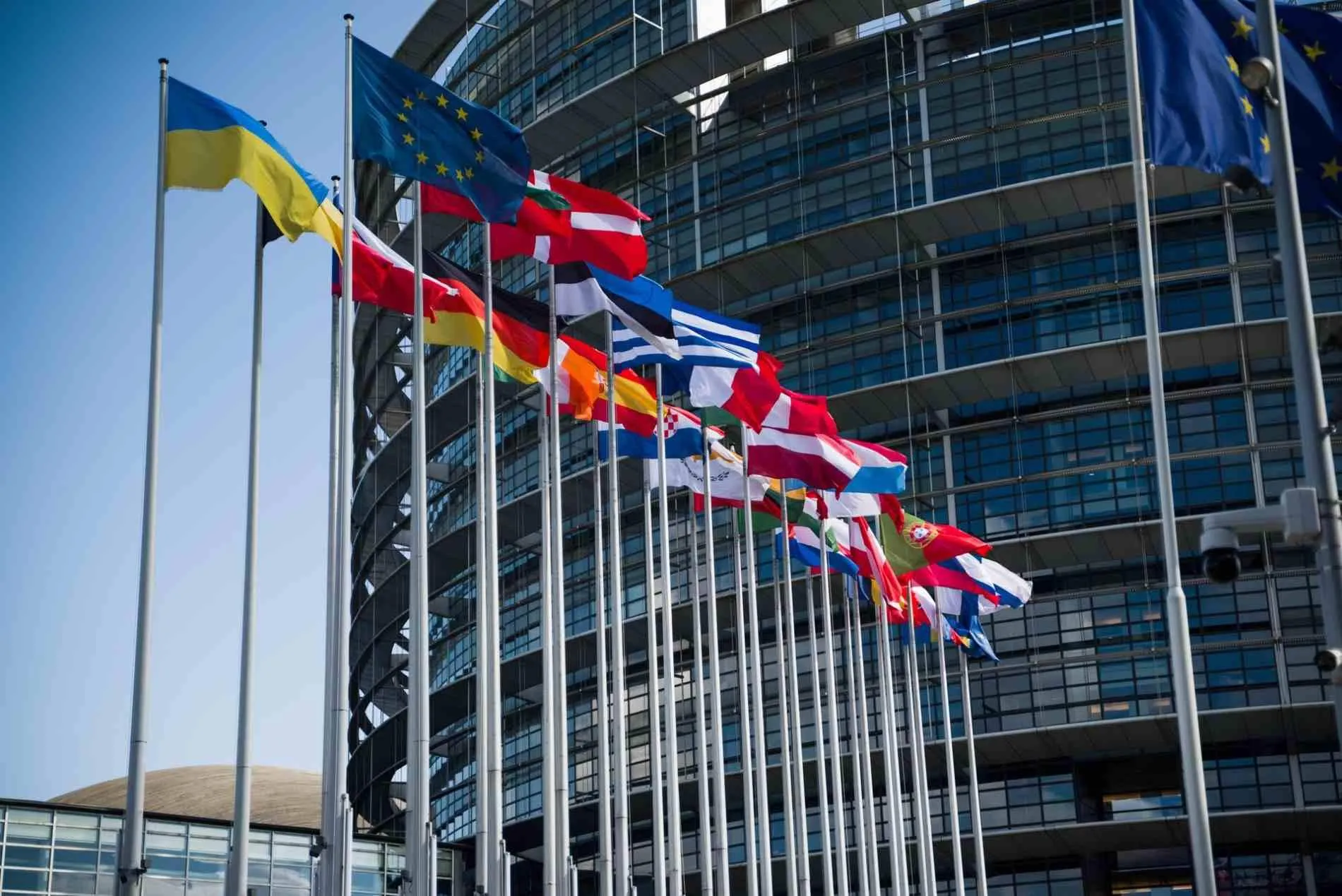
There are five routes to European supply. One of them still works at partner twenty and across three countries, so start there and read the rest as context for why.
1. Start Here: Curated Partner Networks
An account manager introduces brands matched on category, audience, price point, and region. You approve or decline each one, and every partner connects through the same system whether they are a distributor in Hamburg or a four-person brand outside Porto.
In a fragmented region this route does something the alternatives structurally cannot. It gives you partners across several countries without making you negotiate each relationship in a different language and then build a different connection for it. Carro's account managers work from a large and growing catalog of products from vetted brands, and the retailer approves every partner before a product reaches the storefront.
- What it gets you: partners live in days, product data that arrives structured rather than scraped, and one integration surface however many countries the network spans.
- What it costs: a platform fee, and the discipline to decline introductions that do not fit your market plan. An easy yes in a category nobody asked for is a partner you will remove in six months.
- Where it breaks: nowhere obvious, provided you keep approving partners against the five criteria further down this page instead of accepting everything on offer.
Option 2: Direct Outreach to European Brands
You identify brands whose products fit your assortment, find the right contact, pitch the arrangement, negotiate terms, agree data exchange, and go live.
- What it gets you: the best commercial terms available, and partners nobody else in your market has. Worth doing for the three or four brands that genuinely define your assortment.
- What it costs: you are negotiating country by country, frequently in the local language, with partners whose systems rarely resemble yours. A German distributor may run EDIFACT over their own SFTP. A Portuguese brand may run a Shopify store and an inbox. An Italian family manufacturer may have a PDF catalog and a phone number.
- Where it breaks: around partner five or six, when acquisition and onboarding start consuming the person who is supposed to be merchandising. Every conversation is a fresh discovery process, and none of the learning transfers.
Option 3: Regional Wholesale Directories and Trade Fairs
Europe's trade fairs are genuinely good at discovery. Category shows put you in front of established brands that appear in no dropship app anywhere.
- What it gets you: names, credibility with brands who prefer meeting a buyer, and a view of a category you cannot get from a search engine.
- What it costs: everything after the handshake. A contact is not a catalog feed, an inventory sync, an SLA, or an agreed return path.
- Where it breaks: the maintenance burden accumulates quietly. Fifteen partners sourced this way is fifteen formats, fifteen update cadences, and fifteen independent sources of breakage. It is the failure mode described in our guide to marketplace EDI, where handling every partner bespoke works until it suddenly does not.
Option 4: Pan-European Open Marketplaces
Register, browse, import, sell. Fastest path to a live product page by a wide margin.
- What it gets you: speed and volume.
- What it costs: the reputational problem that made dropshipping a dirty word. Suppliers are unvetted or lightly vetted, margins are thin because every subscriber has the same catalog at the same cost, and your product pages compete on price with stores that have no brand to protect. Product safety obligations, including the EU responsible person requirement, land on you regardless of who listed the item.
- Where it breaks: the first quality incident, or the first compliance question you cannot answer about a product you never inspected.
Option 5: Sourcing From Outside the Bloc
Asian and other non-EU suppliers open enormous selection at low unit cost.
- What it gets you: breadth and price.
- What it costs: since 1 July 2026, duty on every consignment plus the data requirements that come with a real customs entry. Transit times stretch to weeks. Returns go to an address your customer will never use, which turns low-value returns into refunds you absorb.
- Where it breaks: the delivery expectation, and the clock. European customers in the strongest markets treat two-day delivery as normal, and the 14-day withdrawal right does not pause while a parcel clears customs.
The Five Routes, Side by Side
| Route | Vetted supply | Infrastructure included | Customs exposure | Where it caps out |
|---|---|---|---|---|
| Curated partner network | Yes | Yes | None if partners are EU-established | Your merchandising discipline |
| Direct outreach | Yes, by your own diligence | No | None intra-EU | Around partner five |
| Directories and trade fairs | Partly | No | None intra-EU | Maintenance burden |
| Open marketplaces | No | Partly | Varies, often non-EU | The first quality incident |
| Non-EU sourcing | No | No | Duty and clearance on every parcel | Delivery expectations |
Read down the first two columns and the conclusion is already visible. What a European retailer needs is vetted partners and infrastructure that normalizes the differences between them, and only one row delivers both.
What Curation Actually Buys You
Carro's model is curated introductions instead of an open directory, and the approval step is the part worth dwelling on.
Anyone can add SKUs. A catalog that grows by ten thousand unvetted products has more listings, no more revenue, and a support burden it did not have last month. Adding assortment is a different exercise: products that fit the audience, fulfill reliably in the markets you serve, and hold up against the standards you set.
You approve every partner before a product reaches your storefront, and you define the standards those partners meet. Decline the supplier who cannot state a delivery window for Madrid. Decline the one whose product data exists only in English. The catalog you end up with is the sum of those refusals.
If you are still deciding which categories deserve the slots in the first place, our product sourcing guide covers how to prioritize before you start taking introductions.
The Operating Layer That Makes Multi-Market Work
In a fragmented region the binding constraint is not supply. It is reconciliation.
Here is what that consists of, and what Carro absorbs:
- Normalizing fragmented supplier data. European partners run a wider spread of systems and technical maturity than any single-country network does. Titles formatted differently, attributes named differently, variants structured differently, units and sizing conventions that differ by country. Carro resolves all of it into one internal model: a stock update becomes a variant record, a purchase order becomes an order, a ship notice becomes a fulfillment. Your team sees the same shape regardless of how the data arrived.
- Real-time inventory and pricing sync. A daily stock file is wrong for most of the day, and shared stock pools make that worse, because the same units are visible to several sales channels at once. Carro syncs continuously, with webhooks that fire the moment a supplier's inventory changes.
- Automated order routing. A basket spanning a Spanish brand and a Dutch brand becomes two supplier orders, routed automatically to whoever holds each line. Nobody opens the order and works out who ships what. That manual version is workable at fifty orders a week and impossible at five hundred, which is the point most multi-market programs discover the hard way.
- SLA tracking across uneven logistics profiles. A German distributor and a small Italian brand will not have the same dispatch performance, and averaging them tells you nothing. Track acknowledgement speed, time from order to ship notice, and rejection rate per partner, and the two suppliers generating most of your exceptions become a specific, solvable problem.
- Structured settlement. Invoices generate once a ship notice is accepted, and payouts run through Stripe. Reconciling thirty supplier invoices monthly across several countries is work that scales directly with partner count, and it lands on finance rather than operations, which is why it survives most evaluations unexamined.
- Connections by EDI, API, SFTP, or CSV. This matters more in Europe than anywhere else. A distributor with X12 or EDIFACT capability uses it. A brand on Shopify integrates natively. A five-person manufacturer seeds a catalog by CSV with template mapping. Nobody is excluded for lacking a capability they were never going to build, which keeps the differentiated smaller brands in your pipeline instead of filtering them out. Our comparison of EDI vs API covers which method suits which partner.
Adding a supplier does not add an integration to maintain. Your integration surface stays at one however many countries the network spans, and that is the specific property that lets assortment grow across markets without headcount growing beside it.
How To Start Dropshipping in Europe: The First Week

Read each step as a manual process removed, not a feature acquired.
Step 1: Connect the Storefront
Shopify, WooCommerce, BigCommerce, and Adobe Commerce connect natively, so the connection is a login and an authorization, not a development project. Headless and custom setups use the API and webhooks, including a notification that fires the moment a supplier's inventory changes.
Do this first because it decides what every later step costs. In a multi-market program the storefront is also where localization, local payment methods, and per-market delivery estimates live, so a connection that feeds it structured product data is worth more here than in a single-country program.
Manual process removed: a custom build per partner.
Step 2: Define the Categories and the Markets
Decide which countries you are seriously serving rather than which ones you will accept orders from. Three markets served properly outperform eight served partially, because language, payment, and delivery cost all scale with market count while your attention does not.
Then write the category brief. Which gaps in your assortment matter, which price bands you sell into, and which standards a partner has to meet in each market. That document is what your account manager works from, and it is what stops you accepting an easy introduction from a supplier who cannot deliver to two of your three countries.
Manual process removed: guessing which categories to test with inventory money.
Step 3: Get Matched With Brands That Fit the Audience and the Region
Account managers introduce partners on category, audience, and price point from a large and growing catalog of products. You review each one and approve or decline.
Preferring partners established inside the bloc does two jobs at once. It keeps customs out of the customer's experience, and it answers the product safety question about an EU-based economic operator before it becomes a compliance gap you discover during an inspection.
Manual process removed: country-by-country cold outreach in four languages.
Step 4: Sync Catalog and Inventory
Product data, pricing, and stock flow in and stay current without manual uploads. Partners connect by EDI, API, SFTP, or CSV depending on what they can actually produce, which matters more in Europe than anywhere else given the spread of systems and maturity levels.
Attach localization to this ingested catalog rather than to a spreadsheet somebody maintains separately. Translations that live alongside the source data stay synchronized when a supplier updates a product. Translations in a separate file drift, and the drift is invisible until a customer reads a German product page describing last season's version.
Manual process removed: stale stock counts and the oversells that follow.
Step 5: Automate Order Routing
Orders reach the correct supplier directly, split by line where a basket spans partners in different countries. A Spanish brand and a Dutch brand in one cart become two supplier orders without anyone deciding who ships what.
The manual version scales linearly with volume, which is why it survives a pilot and fails a peak season. Someone opens each mixed order, works out which partner holds which line, and forwards the parts separately. Minutes per order is fine at fifty a week and impossible at five hundred.
Manual process removed: manual order splitting and forwarding by email.
Step 6: Monitor Fulfillment Performance Per Partner and Per Market
Track dispatch speed and rejection rate by supplier, and delivery time by destination country. A German distributor and a small Italian brand will not post the same numbers, and averaging them describes neither.
Per-market tracking is what tells you whether a partner belongs in a market at all. A supplier reaching Berlin in two days and Lisbon in nine has answered a merchandising question for you, and the answer is to sell their products in one market and find someone else for the other.
Manual process removed: hearing about a supplier problem from a customer.
Step 7: Review Payouts and Partner Performance Monthly
Invoices generate once a ship notice is accepted and payouts run through Stripe, so month-end stops being a reconciliation exercise across several countries and currencies.
Your monthly review then becomes a commercial conversation instead of an accounting one. Look at exception volume by supplier, because concentration is good news: five partners causing most of your issues is a specific problem with a specific conversation attached. Our guide to marketplace vendor onboarding covers how to keep that process repeatable as partner count grows.
Manual process removed: reconciling supplier invoices by hand across markets.
What Week One Realistically Covers
Steps one through four: a connected storefront, a market and category brief, your first approved partners, and a catalog syncing on its own.
Steps five through seven are what makes country three possible, and they are the steps nobody thinks about while they are excited about assortment.
What the Model Produces
Retailers running curated partner programs through Carro report up to 4.5x year-over-year sales growth, up to 350% higher AOV on carts with Carro products, and up to 3x catalog growth in under a year, without buying inventory.
For a European retailer the catalog multiple is the number that changes what markets you can credibly enter, because assortment depth is what makes a storefront look local rather than opportunistic in a market you did not start in.
The FairGround shows curation and automation working together rather than as alternatives: "Automating inventory and product tagging makes it easier to scale. It allows us to manage a curated selection of products effectively, keeping control over what goes live while growing the business."
Curation without automation caps you at the partners one person can maintain by hand. Automation without curation gives you a large catalog nobody wants. Programs that grow across borders have both.
European Supplier Evaluation Criteria
This is where competing guides are thinnest. They list suppliers and stop.
These five questions are the diligence that separates a program built to scale across markets from one that breaks the first time a customer in a second country places an order:
| Criterion | The question to ask | Pass | Fail |
|---|---|---|---|
| Cross-border delivery time by market | How many days to Berlin, Madrid, and Stockholm, and how much does each vary? | Per-destination windows with known variance | One European average that describes nowhere |
| Landed cost and VAT treatment | What does this cost delivered, including VAT treatment and any duty for non-EU origin? | A per-market landed figure you can price against | A unit cost and a shrug about the border |
| Return destination and cost | Where does a returned item physically go, and who pays the freight? | An in-market or in-bloc address, cost agreed in writing | A return that crosses a border and misses your refund deadline |
| Language and localization support | Is product data available in the languages of my markets, and who maintains it as the catalog changes? | Structured multilingual feed, or a normalization path you control | English only, translated manually, permanently out of date |
| Inventory accuracy across shared pools | How often does stock update, what triggers it, and how many channels draw on the same pool? | Real-time or event-driven, monitored per partner | A daily file and an oversell you learn about from a customer |
Two notes on using this list.
Ask the delivery question per destination market rather than as an average. A supplier who reaches Germany in two days and Portugal in nine has told you which markets they belong in, which is more useful than a single number that flatters both.
And measure per partner rather than as a program average. Concentration is good news: five partners causing eighty percent of your exceptions is a specific problem with a specific conversation attached.
Everything You Need to Know About Dropshipping in Europe
| Topic | What you need to know |
|---|---|
| The core problem | Europe is one storefront and many markets. VAT positions, languages, payment methods, and delivery expectations differ while the customer assumes a single experience. |
| VAT | OSS covers intra-EU distance sales above the €10,000 threshold through one return. IOSS covers imported consignments up to €150. Import VAT has applied to all values since July 2021. |
| Customs | The €150 duty exemption ended 1 July 2026, replaced by a transitional flat €3 duty per tariff heading on low-value B2C consignments from outside the bloc. An EU handling fee and the Customs Data Hub follow. |
| Product safety | Products sold to EU consumers need an economic operator established in the EU responsible for compliance, which favors partners already inside the bloc. |
| Data protection | Sharing customer data with fulfillment partners requires processing agreements, data minimization, and safeguards for transfers outside the EEA. |
| Consumer rights | A 14-day right of withdrawal applies everywhere, plus a two-year legal guarantee. Return logistics determine whether you can meet the refund deadline. |
| Sourcing routes | Direct outreach (best terms, does not scale), directories and fairs (names, no infrastructure), open marketplaces (fast, unvetted), non-EU sourcing (breadth, customs and transit). |
| What to demand from suppliers | Delivery times by destination market, landed cost and VAT transparency, return destination and cost, localization support, and inventory accuracy across shared pools. |
| The binding constraint | Reconciliation. Normalizing supplier data, syncing inventory, routing orders, tracking SLAs, and settling payouts across countries. |
| Where Carro fits | Curated brand partners from a large and growing catalog of products, one internal model for every partner, native storefront integrations, plus EDI, API, SFTP, and CSV. |
| Reported results | Up to 4.5x year-over-year sales growth, up to 350% higher AOV on carts with Carro products, up to 3x catalog growth in under a year. |
| Pricing | Pricing scales with your sales volume, and enterprise programs are custom quoted to match scope. There is no upfront inventory cost. |
Why Carro Is the Right Move
Three things separate Carro from the four sourcing routes above.
1. Curated partners, not a directory: brands are hand-matched on category, audience, and price point from a large and growing catalog of products, and you approve every one before it touches your storefront. Nobody appears in your catalog because they paid for a listing.
2. One internal model for a fragmented supply base: X12, EDIFACT, CSV, storefront app, or API, from any country, resolving into one product catalog, one inventory position, and one order flow. Adding partner twenty does not add a twentieth thing to maintain, which is the property that makes multi-market expansion survivable.
3. Assortment growth without headcount growth: automated order routing, per-supplier fulfillment tracking, and settlement through Stripe remove the reconciliation work that caps European programs somewhere around partner fifteen.
Carro is built for retailers and marketplace operators on Shopify, Magento, WooCommerce, or BigCommerce who are running an assortment across more than one market and would rather grow the catalog than grow the team. It is a poor fit for anyone chasing the cheapest possible non-EU SKUs, which is deliberate, and it is worth confirming market availability for your entity with the Carro team as part of the demo.
Pricing scales with your sales volume, and enterprise programs are custom quoted to match scope. There is no upfront inventory cost. The first partner tests the model. The tenth is where the operating layer pays for itself.
Your Plain-English European Dropshipping Checklist
Everything above, stripped back to what you actually have to do. Work down the list in order.
Before you sell anything
☑️ Register your business and your domestic VAT number
☑️ Ask a tax adviser when you need to register for OSS. The short answer is once your cross-border sales inside the EU pass €10,000 a year
☑️ Register for IOSS as well if you plan to import parcels worth up to €150 from outside the EU
☑️ Pick three countries to sell to properly, and write them down. Resist the urge to add a fourth this quarter
☑️ Set up your store on Shopify, Magento, WooCommerce, or BigCommerce
☑️ Add the payment methods people actually use in your three markets, such as iDEAL in the Netherlands, Bancontact in Belgium, BLIK in Poland, and Klarna in Germany and the Nordics
Deciding what to sell
☑️ Look at what customers search for on your site and find nothing
☑️ Write down 3 to 5 categories that would make people spend more per order
☑️ Prefer suppliers based inside the EU. Parcels moving between EU countries have no customs at all, while parcels from outside now pay duty on every consignment since 1 July 2026
☑️ Note that every product you sell needs a business inside the EU responsible for its safety, which is much easier when your supplier is already here
Finding suppliers
☑️ Sign up with a curated partner network like Carro, where account managers introduce brands that match your categories, customers, and markets, from a large and growing catalog of products
☑️ Say no to any introduction that does not fit your three markets
☑️ Ask every supplier five questions: how many days to each of my markets, what does it cost delivered including VAT, where do returns go and who pays, is your product data available in my languages, and how often does your stock update?
☑️ Approve two or three partners to start with, not twenty
Getting live
☑️ Connect your store to Carro so product data, prices, and stock update on their own
☑️ Get your product pages translated properly, and keep the translations attached to the product data rather than in a separate file
☑️ Sign a data processing agreement with every partner who receives customer addresses, and send them only what they need to ship the parcel
☑️ Place a test order spanning two suppliers in different countries and watch both reach the right place
☑️ Set delivery estimates per market rather than one promise for the whole continent
☑️ Publish your returns policy with the 14-day withdrawal right stated clearly, and make sure you can actually meet the refund deadline
Once orders are flowing
☑️ Check each supplier once a month: shipping on time, rejecting orders, stock accurate?
☑️ Compare delivery times by destination country, not as one European average
☑️ Let payouts run automatically through Stripe instead of reconciling invoices by hand
☑️ File your OSS return each quarter
☑️ Add a fourth market only when the first three are running cleanly
If most of the "getting live" and "once orders are flowing" boxes look like they would need a spreadsheet and a spare afternoon each week, that is the work Carro exists to remove. In a region this fragmented, it is also the difference between selling in one country and selling in five.
FAQs About How To Start Dropshipping in Europe
How do I start dropshipping in Europe?
To start dropshipping in Europe, register your business and VAT position, decide which three or four markets you are seriously serving, set up a Shopify, Magento, WooCommerce, or BigCommerce storefront with local payment methods, then source partners inside the EU wherever possible so customs stays out of the customer's experience. Register for OSS once cross-border sales exceed the EU-wide €10,000 threshold, and for IOSS if you import consignments valued up to €150. Connect partners through a system that normalizes their data and routes orders automatically, because reconciliation across countries is where multi-market programs stall. Carro handles that layer and hand-matches partners from a large and growing catalog of products.
Is dropshipping legal in Europe?
Dropshipping is legal across the EU and operates under the same rules as any other distance selling arrangement, including VAT collection, the General Product Safety Regulation, GDPR obligations for customer data shared with fulfillment partners, and a 14-day consumer right of withdrawal. You are the seller to your customer regardless of who ships the parcel, so product compliance, labeling, and advertising obligations stay with you. Products sold to EU consumers need an economic operator established in the EU responsible for compliance, which is a practical argument for partners already inside the bloc. Confirm your specifics with a tax adviser and a lawyer in your primary market.
Who are the best dropshipping suppliers in Europe?
The best dropshipping suppliers in Europe are the ones that meet five criteria: stated delivery windows per destination market, landed cost and VAT transparency, a return destination inside the bloc, product data in the languages of your markets, and real-time inventory accuracy across shared stock pools. Suppliers established in the EU beat non-EU suppliers on all five, because intra-EU movement avoids customs entirely and keeps returns local. Rather than working directories, curated networks introduce partners matched on category, audience, and price point, with the retailer approving each one. Carro's account managers do that matching across a large and growing catalog of products from vetted brands.
How does VAT work for dropshipping in the EU?
VAT for EU dropshipping works through two schemes: OSS for goods already inside the EU and IOSS for goods imported from outside it. Below €10,000 in annual cross-border B2C sales you charge your home country's rate, and above it you charge the customer's country rate and report everything through one quarterly OSS return rather than registering in each country. IOSS covers imported consignments valued up to €150, with VAT charged at the point of sale and reported monthly. The €22 low-value import VAT exemption was abolished on 1 July 2021, so import VAT is due on every consignment regardless of value.
Do I have to pay customs duty on parcels shipped into the EU?
You have to pay customs duty on low-value parcels shipped into the EU since 1 July 2026, when the €150 duty relief threshold was removed and replaced with a transitional flat €3 customs duty on in-scope B2C consignments valued at €150 or less. The charge applies per tariff heading rather than per parcel, so a consignment containing three product categories attracts it three times. An EU-wide handling fee and the full customs reform, including the Customs Data Hub, follow in the years after. Sourcing from partners established inside the EU avoids the charge, the data requirements, and the clearance delay entirely.
Which European countries are best to start dropshipping in?
Germany, France, the Netherlands, and the Nordics are the strongest European starting markets by ecommerce spend per capita, though the Netherlands and Germany also carry the toughest delivery expectations, with next-day treated as close to standard. Spain, Italy, and Poland are large and growing with more relaxed delivery norms and stronger local payment method requirements, including BLIK in Poland. Pick three markets you can localize properly rather than twenty you can accept orders from, since language, payment, and delivery cost all scale with market count. Serve the first three well before adding the fourth.
How long does dropshipping delivery take in Europe?
Dropshipping delivery within the EU typically takes two to five business days from a partner in a neighboring country, and next-day is achievable within a domestic market. Shipments from outside the bloc take considerably longer and now clear customs on every consignment following the July 2026 rule change, which adds variability rather than a fixed number of days. Set your checkout promise against your slowest supply route, because the 14-day withdrawal right and the refund deadline that follows it do not pause while a parcel clears. Multi-partner orders arrive as separate parcels and should be tracked per supplier.
Is it worth dropshipping in Europe given all the regulation?
Dropshipping in Europe is worth it because the regulatory work is fixed cost while the assortment opportunity across roughly 450 million consumers is not. VAT registration, OSS setup, processing agreements, and localization templates are built once and reused for every partner and market that follows. The variable cost is reconciliation across suppliers and countries, and that is the part worth automating rather than absorbing, because it is what caps partner count well before demand does. Retailers running curated partner programs through Carro report up to 3x catalog growth in under a year and up to 350% higher AOV on carts with Carro products without holding inventory.